
Whether you’ve got limited space or simply want your home to function more efficiently, multifunctional furniture is one of the most underrated design solutions. From occasional chairs that fold away to ottomans and side tables that double as extra seating, flexible pieces can make a noticeable difference to how your home feels and functions day to day.
And one of the most impactful? An extendable dining table. With a simple adjustment, these tables can go from everyday family use to comfortably seating a larger group in seconds, making them a smart choice for modern Australian homes where flexibility is key.
Related article: How to style your dining table (when it’s not being eaten at!)
Related article: How to style a sideboard, console or hall table: Home décor to use and top styling tricks
The real cost of the oversized table
Let’s be honest about what a massive dining table actually costs you, beyond the price tag.
For roughly 350 days of the year, a ten-seater table in a three-person household is taking up precious floor space without offering much in return… other than perhaps a very large, very expensive shelf. In interior designer, we often talk about ‘negative space’ (the breathing room around furniture) and how important it is to make a room feel calm and considered. An oversized table in most households takes up this negative space year-round. It can obstruct flow between your kitchen and living, creating uncomfortable pinch points you need to navigate around just to move through your home.
There’s also the clutter trap. A big, underused flat surface is basically a magnet for unopened mail, school bags, and laundry that needs folding. We’ve all been there.
The good news is you don’t have to choose between a table that seats your family of three and one that can handle a long Sunday lunch with the whole crew.
How extendable tables have changed
If the words ‘extendable table’ give you mental images of two people wrestling a heavy frame and fetching extra pieces of a tabletop from storage, think again.
Modern extension mechanisms have come a long way. Retailers like POVISON offer designs with concealed butterfly or hidden-track systems built directly into the table frame, so there are no loose parts to store, nothing to retrieve, and no construction required. A single person can expand a four-seater into an eight-seater in under 10 seconds with a smooth, one-handed pull.
Design-wise this matters too. Cleaner mechanisms don’t intrude on the table’s aesthetic and look cleaner overall when extended. Because the last thing you want when hosting a big group is to feel like you’re sitting around a table that’s been pieced together!
Choosing the right style for Australian interiors
Extendable dining tables come in a wide range of looks, and the right one depends on the overall feel of your space.
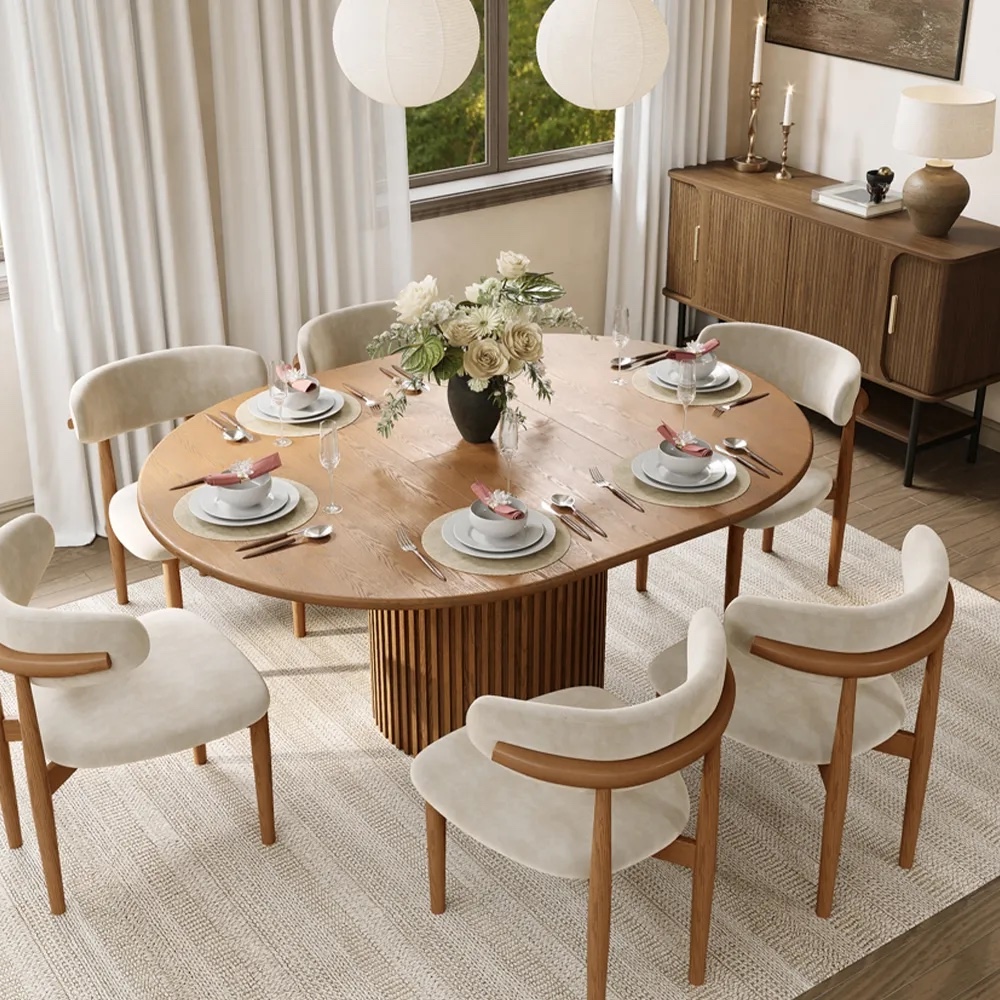
Timber remains the most popular choice in Australian homes and for good reason. This material brings warmth, texture, and a connection to natural materials that suits our relaxed aesthetic beautifully. Look for solid timber or quality timber veneer rather than MDF with a timber-look finish, which tends to show wear much faster. If your dining table is exposed to direct sunlight, cheaper MDF dining tables can also warp, peel and discolour. Round or oval extensions work particularly well in open-plan layouts as they soften the visual weight of a large table.
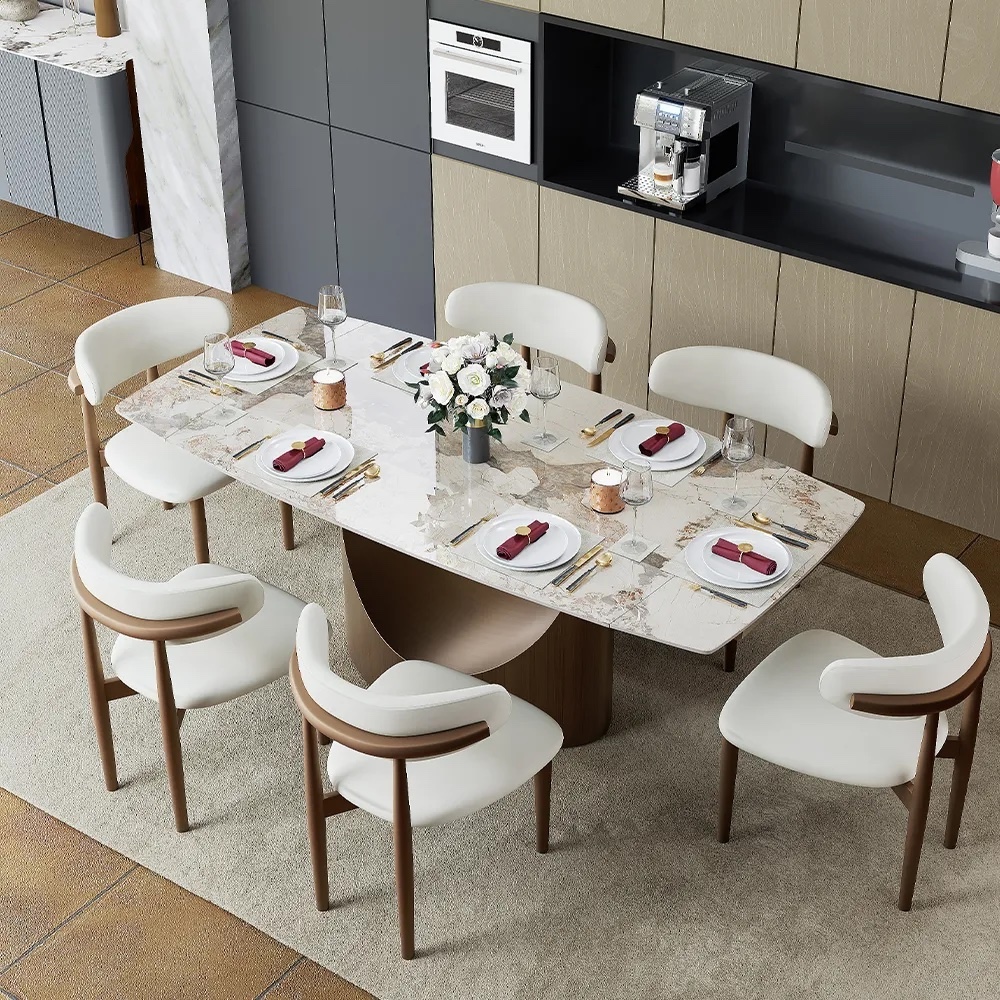
Stone and sintered stone tops are having a serious moment right now, and they suit the luxe, contemporary Australian look very well. They’re a popular option for aesthetic and practical reasons. The veining and colour palette aligns with natural material trends while non-porous surfaces don’t stain, don’t need sealing, and can take a hot dish straight from the oven without concern. For households who use their dining table as a multifunctional surface, such as homework, craft projects and work-from-home overflow, this type of dining table could be the best option.
Powder-coated steel bases pair beautifully with both timber and stone tops, and add an architectural, slightly industrial edge that works in contemporary and mid-century styled rooms alike. They’re also typically more durable than solid timber legs over the long term.
Practical things to check before you buy
Not all extendable tables are created equal, and a few things are worth looking at closely before you commit.
The extension mechanism should feel smooth and require minimal effort. If it sticks or requires two people to operate when new, expect this to get harder over time. We always suggest testing the table out in store if possible, or look for video reviews online.
Check how the table looks when extended. Some cheaper designs develop a slight bow in the middle, or show a visible join that detracts from the overall look. The best designs are engineered to remain completely flat and level across the full length.
Think about proportions. A table that seats four comfortably at 150cm and extends to eight at 250cm is doing a lot of heavy lifting, but only if the width keeps pace. A table that becomes very long but remains narrow can feel awkward. Allow at least 70–75cm of width per side for comfortable seating.
Finally, consider your chairs. Stackable or lightweight chairs that tuck away neatly mean you can pull out extras for a dinner party without them taking up permanent floor space in the meantime. Bentwood, rattan, or slim metal frames are all good options.
The design payoff
There’s something genuinely freeing about a dining space that adapts to your lifestyle rather than dictating how you use it. Compact during the week, it keeps your floor plan open and your home feeling spacious. Extended on the weekend, it becomes the generous, welcoming table that makes a long lunch feel effortless.
In Australian homes, especially, where alfresco living is so central to how we entertain, having an indoor table that flexes means you’re not trying to split guests awkwardly between inside and outside. Everyone can sit together, which is kind of the whole point.
Choosing the right dining table is about more than just size — it’s about how your home functions every day. An extendable design offers the flexibility to balance both, giving you a space that feels open and practical during the week, and generous and welcoming when you’re entertaining.