
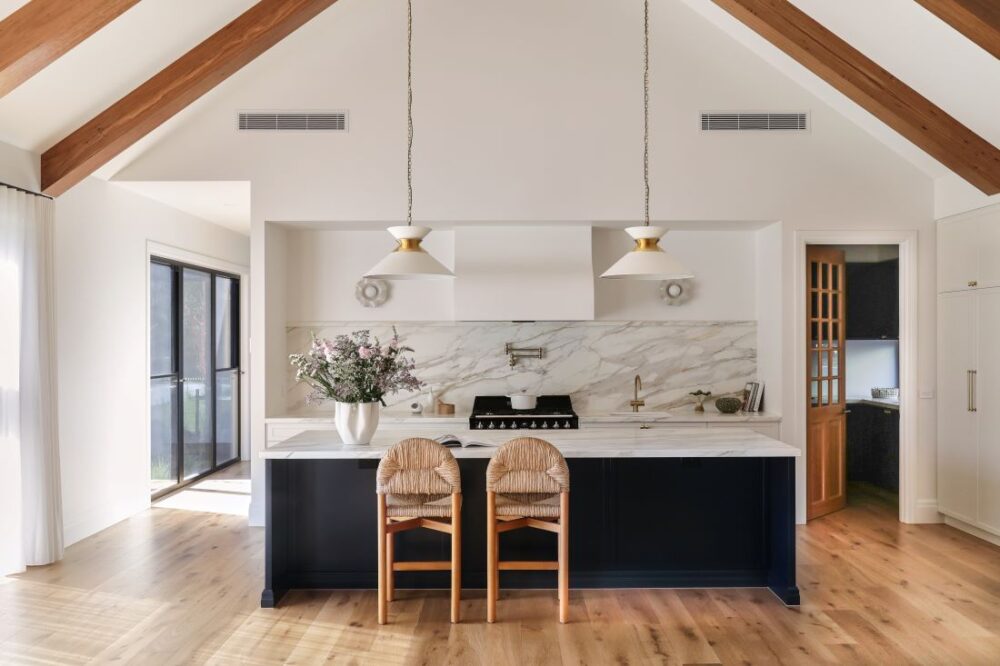
Australia runs on renovation. We knock down walls, raise rooflines, add a storey, build out the back, and spend months agonising over tile grout. More space, a better layout, a home that finally works; the result is absolutely worth it.
But there’s a step that happens after the builder packs up and leaves that a surprising number of homeowners either don’t know about or quietly skip. It’s called the Occupation Certificate, and the consequences for not having one can range from a difficult sale to a very expensive demolition order.
Here’s what it means, which renovations need one, and what happens when it’s missing.
Related article: Renovate or move? How to decide when your home no longer works
Related article: Planning a renovation? How to find, vet and hire a local tradie
Words by Sydney Wide Certifiers
What’s an occupation certificate?
An Occupation Certificate (OC) is the official sign-off that confirms completed building work was carried out in accordance with the approved plans and meets the relevant building standards under the Environmental Planning and Assessment Act 1979. It is issued by a council or an accredited certifier, not the builder.
The Complying Development Certificate (CDC) or Construction Certificate (CC) approvals give you permission to start. The OC is what closes out the project at the other end. It confirms the finished result matches what was approved. Without it, the renovation may be physically done, but it is not legally finished.
Which renovations need one?
Not every renovation triggers the OC requirement. Small, low-risk works can qualify as exempt development under NSW planning rules, which means no formal approval and no certificate at the end.
But if your project required a CDC or a Construction Certificate to begin, it also requires an Occupation Certificate at completion. The rule of thumb: if you needed approval to start, you need sign-off to finish.
One of the most useful renovation tips you can take into any project is to ask about the full approval pathway before work starts: not just “do I need approval” but “what documentation do I need at every stage, including at the end.”
Where the costs actually show up
At the point of sale
Most people first discover the problem at settlement. When a property is sold in NSW, the conveyancing process involves searches that reveal unapproved or uncertified building work. Buyers’ solicitors will flag it. Lenders may refuse to finance the purchase. And vendors in NSW carry a warranty in the contract of sale that no demolition or upgrade order is justified in relation to the property. Uncertified work puts that warranty at risk.
Disclosing it to the buyer feels like a fix, but it rarely solves the problem. Even when buyers accept the property as-is, their lender may not. And those who do proceed will almost always negotiate the price down to reflect the cost of rectifying the situation themselves. The saving from skipping the OC process tends to come back multiplied at settlement.
With your insurer
Home and contents insurance policies typically exclude damage caused by or related to unapproved or uncertified building work. If a claim involves any part of the home affected by a renovation that was never certified, the insurer can decline the claim on those grounds. The assumption that your policy covers your whole house does not extend to work the insurer was never informed about and the certifier never signed off on.
Through council enforcement
Fines for unauthorised or uncertified building work in NSW can be substantial under the Environmental Planning and Assessment Act 1979. The maximum penalty for individuals reaches $1 million for the most serious offences, with additional daily penalties for continuing breaches. Beyond financial penalties, councils can issue stop work orders, rectification notices, and in serious cases, demolition orders requiring uncertified work to be removed entirely.
In practice, councils do not always act immediately, and many homeowners assume the window has closed, but it has not. Neighbour complaints, future development applications on the same property, and conveyancing searches during a sale frequently trigger council enforcement action.
The two assumptions that make it worse
“Nothing bad has happened in years.” Time does not resolve uncertified work. The risk sits dormant until something activates it: a sale, a refinance, an insurance claim, or a neighbour’s DA. The fact that several years have passed without incident provides no protection at any of those trigger points.
“My builder said everything was fine.” Builders manage construction. They do not issue Occupation Certificates. In NSW, only an accredited certifier registered under the Building and Development Certifiers Act 2018 has the authority to do that. If your builder told you the job was done and handed back the keys, that was the end of their role. The OC is a separate step that requires a different professional.
If you’re already in this situation
Retrospective certification is possible in some cases, but the path depends on your situation. If the work had development approval but the OC was never obtained at the end of the project, a certifier may be able to conduct a final inspection and issue it retrospectively.
If the work was never approved at all, you may need to get a Building Information Certificate (BIC) from council. Although council can issue one to prevent enforcement action, it is not the same as formal approval.
Neither outcome is guaranteed. Work completed years ago may no longer meet current standards, and in some cases, inspectors need to open walls to see what lies behind them. Addressing it earlier rather than later expands the options available.
In any case, the process is typically more expensive and disruptive than obtaining the OC as part of the original project.
The simplest renovation tip of all
Engage an accredited certifier at the beginning of any renovation that requires formal approval, and make sure the Occupation Certificate is part of the project plan from day one, not an afterthought once the builder has left.
Without an Occupation Certificate, you haven’t legally finished your renovation, no matter how good the tiles look.
About the author:
Sydney Wide Certifiers is a NSW-accredited building certification team with more than 5,000 certificates issued across Greater Sydney since 2004.