
Your front fence is one of the first things people notice about your home, yet it’s often treated as an afterthought. Beyond defining your boundary, the right fence can enhance your home’s architecture, complement your landscaping and boost its street appeal.
In Australia’s climate, choosing a fence also means considering durability, maintenance and exposure to the elements. From traditional timber pickets to low-maintenance PVC fencing, there are plenty of options to suit different home styles.
If you’re considering PVC fencing, here’s how to choose a design that complements your home, including tips on proportions, privacy, landscaping and practical planning.
Related article: How to affordably landscape your garden: Wow factor on a budget
Related article: Maximising design potential on corner block homes: Layout strategies and architectural details
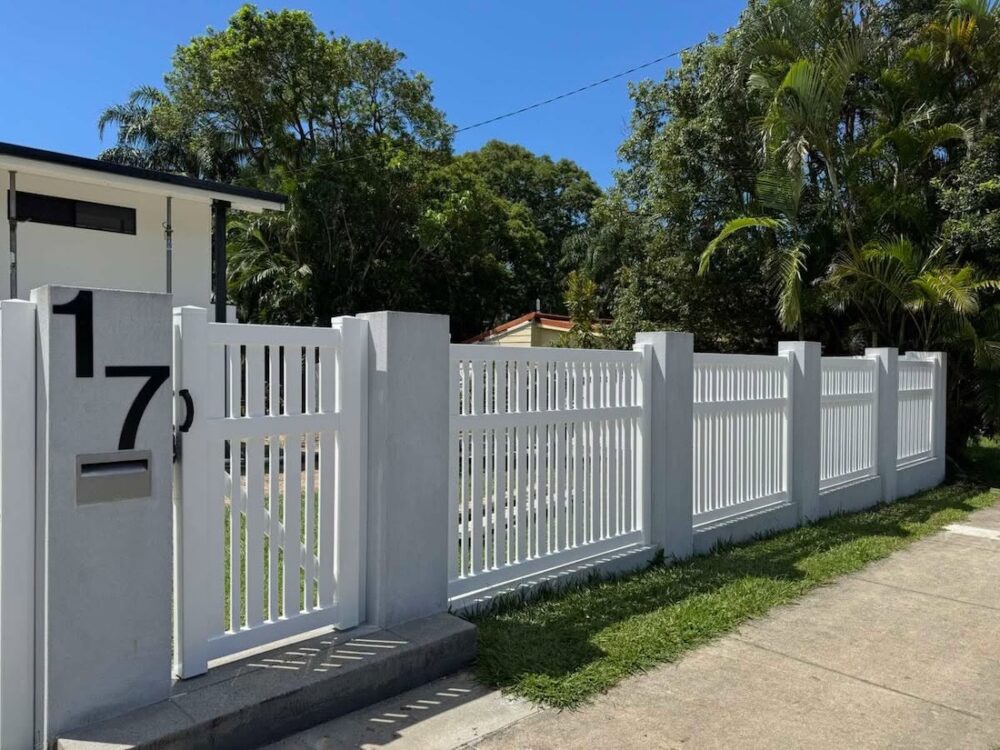
Match your fence to your home’s architecture
The trick to a seamless look is picking up on your home’s dominant lines. If you have weatherboards and long eaves, horizontal slats will feel right at home. If your home features VJ panelling and tall sash windows, vertical pickets are the way to go.
- Hamptons and Coastal Homes: Crisp white is non-negotiable, but the finishing touches sell the look. Opt for panels with a capped top rail and consider substantial posts (around 125mm square) to echo your verandah pillars. Picket tops on side returns can help lighten up long, solid runs.
- Queenslanders and Cottages: A traditional hip-height picket fence is the perfect partner for a classic timber home. Keep the pickets narrow with even gaps, and consider a low garden bed just inside the fence line so flowers can peek through to the street.
- Contemporary Homes: Keep it sleek by stripping back the decoration. Full tongue-and-groove privacy panels with a flat top sit beautifully against modern rendered homes. Using a single, consistent material across the entire boundary looks deliberate and sophisticated.
- Farmhouse and Acreage Properties: Open styles are best here to protect your sense of space. A classic low garden fence safely sections off the house yard for kids and dogs without obstructing your rural views.
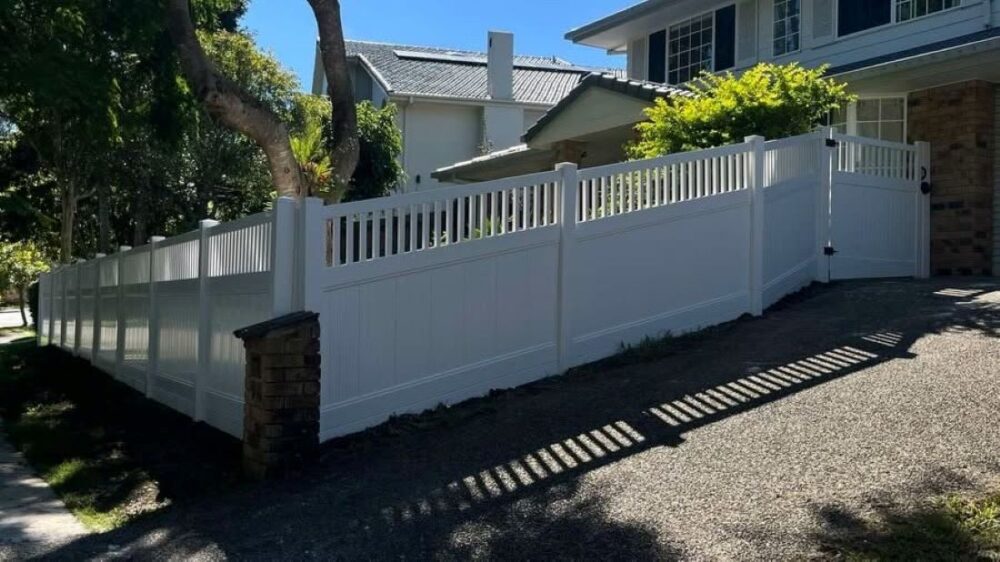
Getting the height right: boundary by boundary
A good rule of thumb for a front fence is to keep the top line below the windowsills of your front rooms, ensuring the fence frames the facade rather than hiding it.
- Street Frontage (1m to 1.2m): This height suits most homes perfectly. It keeps pets and small children secure while leaving your home’s facade proudly on display.
- Side Returns and Gates (1.5m to 1.7m): This is the sweet spot for side gates. A semi-privacy panel with picket tops, screens bins and air-conditioning units without looking too heavy or boxed in.
- Rear and Side Boundaries (1.8m): This is the standard height for privacy. It is also the upper limit of what Queensland’s dividing fence laws treat as a “sufficient fence,” which is important when splitting costs with a neighbour.
- Maximum Heights (Up to 2m): Two metres is generally the practical ceiling for residential fences. In Queensland, a fence up to 2m around an existing house usually doesn’t require building approval (provided it isn’t a pool barrier or retaining wall), but it is always best to double-check with your local council.
Is PVC fencing right for your home?
White fencing is a timeless choice, particularly for Hamptons, coastal and traditional-style homes. It makes green landscaping pop and complements almost any roof colour. The traditional catch? Maintenance. In our humid climate, painted timber requires ongoing sanding and repainting. Once the paint cracks, moisture seeps in and rot quickly follows.
This is where premium PVC fencing stands out. Because the colour is baked into the material, there is no paint film to blister or fail. The secret to longevity in the harsh Australian sun is the formulation, always look for virgin, UV-stabilised PVC to prevent the vinyl from turning yellow or chalky.
Structure is just as important as the material. Quality PVC fencing uses aluminium-reinforced rails to prevent sagging over long spans, and routed posts (where the panels slide directly in) mean there are no exposed screws to rust or work loose over time.
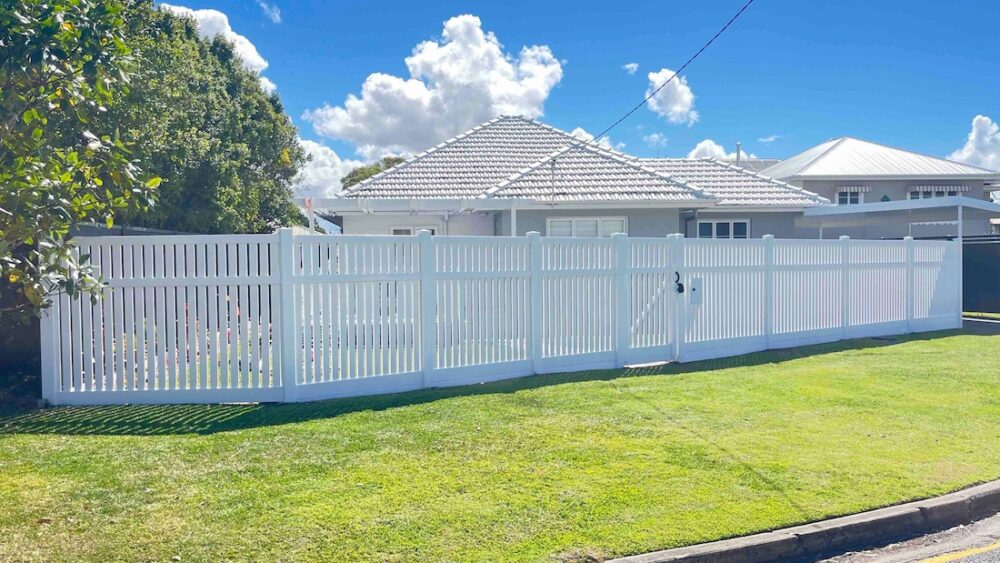
Styling and planning your fence line
- Smart landscaping: A fence looks truly finished when paired with greenery. Just remember to leave a 500mm to 600mm gap between hedges and the fence to allow for growth and so air can circulate. Lilly pillies clipped to fence height offer great privacy and thrive in South East Queensland, while strappy natives like Lomandra create a beautiful, low-maintenance border.
- Lighting: Finish the look by adding a few low uplights at the base of the fence. This throws a soft wash of light up the white panels at night, making your yard feel larger and more inviting.
- Modular planning: PVC fences are modular, typically coming in 2.4-metre panel widths. Measure your boundary and divide by the panel width to see if you’ll end up with awkward offcuts. Sometimes, simply shifting a gate by a few centimetres ensures you use full panels for a cleaner finish.
- Handling slopes: Decide how to handle uneven ground early. On steep blocks, panels are usually “stepped” down the hill. On gentle slopes, the bottom of the panels can often be trimmed to follow the ground while keeping the top rail perfectly straight and clean.
- Talk to your neighbours: If you share a boundary, the style is a joint decision. In many states, neighbours usually split the cost of a standard dividing fence 50/50. If you want an upgrade in height or material, you will generally cover the difference. Get the style and cost-split agreed upon in writing before ordering to keep things friendly.
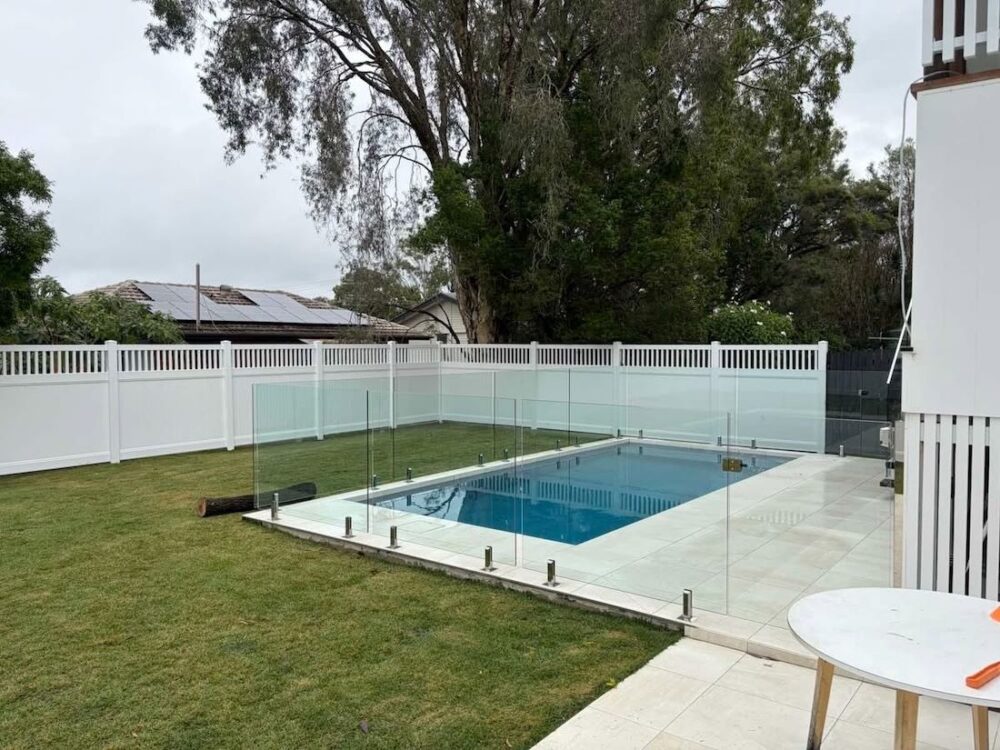
Frequently asked questions
How do I keep a white PVC fence clean? Simply hose it down two or three times a year. For stubborn marks, use a soft brush and mild soapy water. Avoid abrasive scouring pads or harsh solvents. If you use a pressure washer, keep it on a low setting and stand well back.
Can I mix fence styles on one property? Absolutely. A low picket fence at the front paired with full-height privacy panels along the sides and back is a classic, practical combination. Just keep the colour and post profiles consistent so it all reads as one cohesive design.
What height should a front fence be? For many suburban homes, a front fence between 1 and 1.2 metres high strikes a good balance between street appeal and defining your property boundary without obscuring the home’s facade. If privacy or security is a priority, a taller fence may be more suitable. Always check your local council’s regulations and any estate guidelines before building, particularly on corner blocks where clear sightlines are important for road safety.
Is PVC a good choice near the coast? It is one of the best options available. PVC won’t rust, warp, or rot, making it highly resistant to salt air and coastal humidity compared to steel or timber.
Do I need approval for a 2-metre fence? Approval requirements vary depending on your location, fence design and property conditions. In Queensland, a fence up to 2 metres high may not require building approval if it meets certain conditions. However, additional rules can apply to pool fencing, retaining walls, corner blocks and properties with specific planning restrictions. Always check with your local council before installing a new fence to ensure your plans comply with local requirements.
The right fence should feel like a natural extension of your home’s architecture, balancing street appeal, privacy and practical considerations. Whether you’re drawn to traditional pickets or contemporary privacy panels, take the time to consider proportions, materials and landscaping before committing to a design.