
If there’s one thing worth investing in, it’s suitable storage and organising systems that work for the way you live. A well-organised home supports everyday life, helping things run more smoothly and simply making life easier.
But according to expert organisers Natalie and Lilly of That Organised Life, more storage isn’t always the answer.
After decluttering and transforming more than 100 spaces, they’ve learnt a thing or two about what works — and what doesn’t. Today, they join us to share their top dos and don’ts of home organising, including how to make better use of the storage you already have and create systems you can actually maintain.
Related article: How to organise your laundry in four simple steps
Related article: How to organise your first aid kit
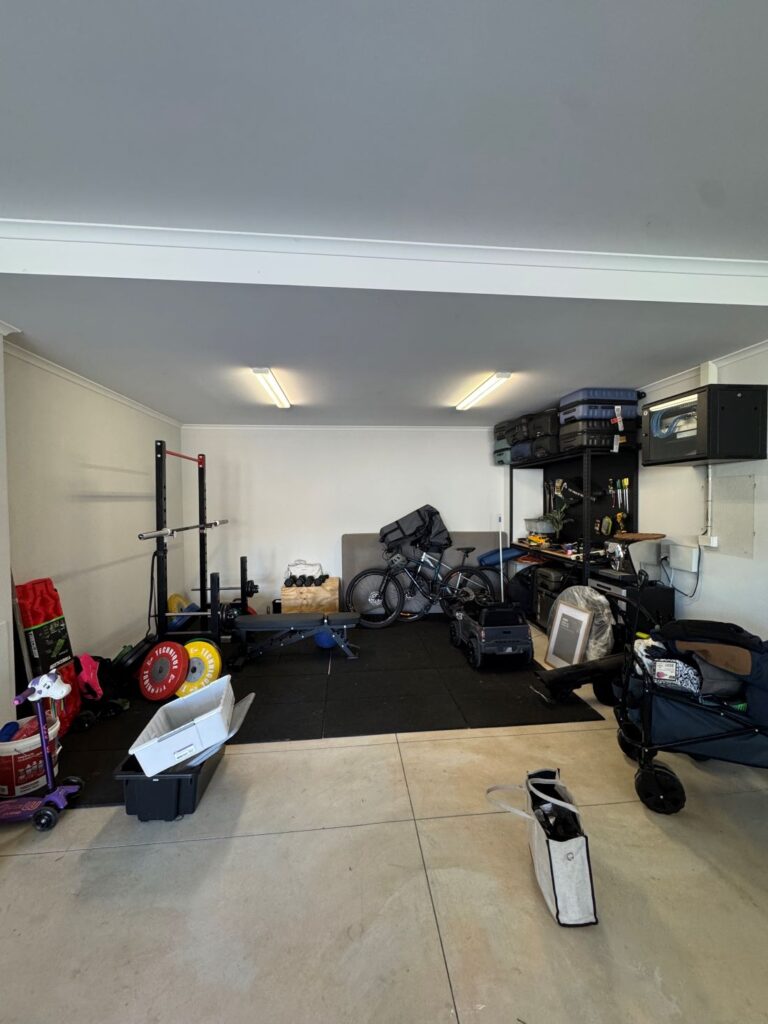
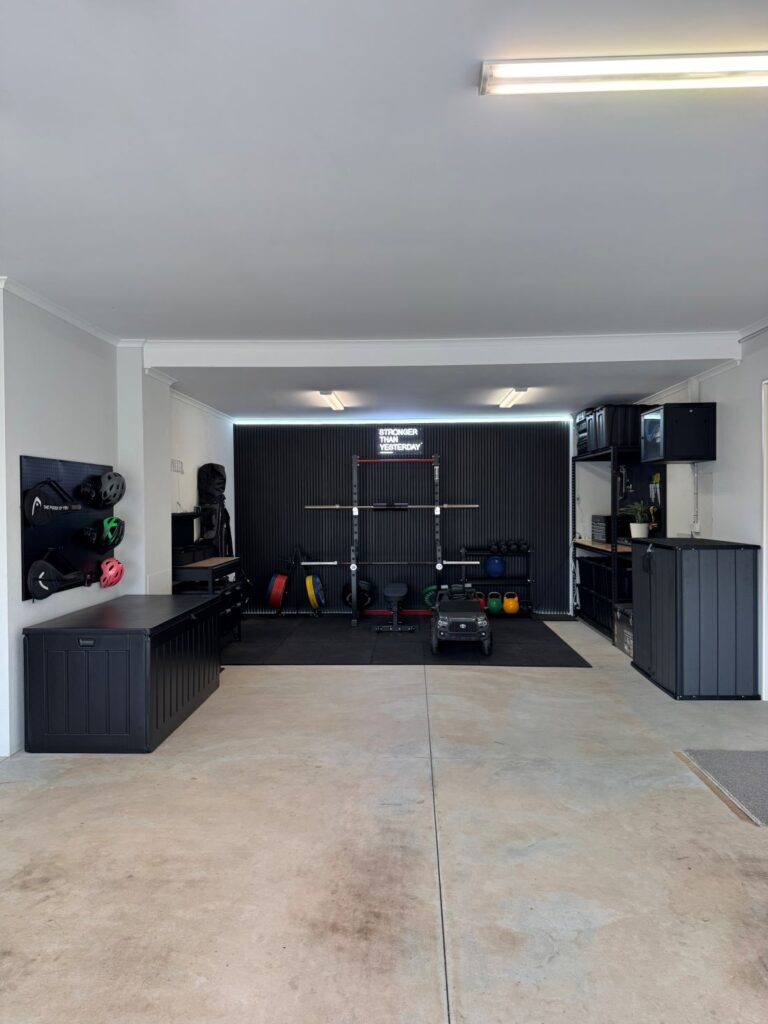
Words by Natalie and Lilly
One of the most common things we hear when we first walk into a client’s home is: “We just don’t have enough storage.”
But more often than not, that’s not actually the problem.
After organising more than 100 spaces across Perth homes, we’ve found that most people have more storage than they realise – they’re just not using it to its full potential. Add in the fact that, these days, we tend to buy and own a lot of things, and it’s easy for even a generously sized pantry, wardrobe or kitchen to feel like it’s bursting at the seams.
Sometimes decluttering is part of the answer. But very often, the biggest difference comes from looking at the storage that’s already there and asking: How could this space work harder?
Before adding more storage, look at what you already have
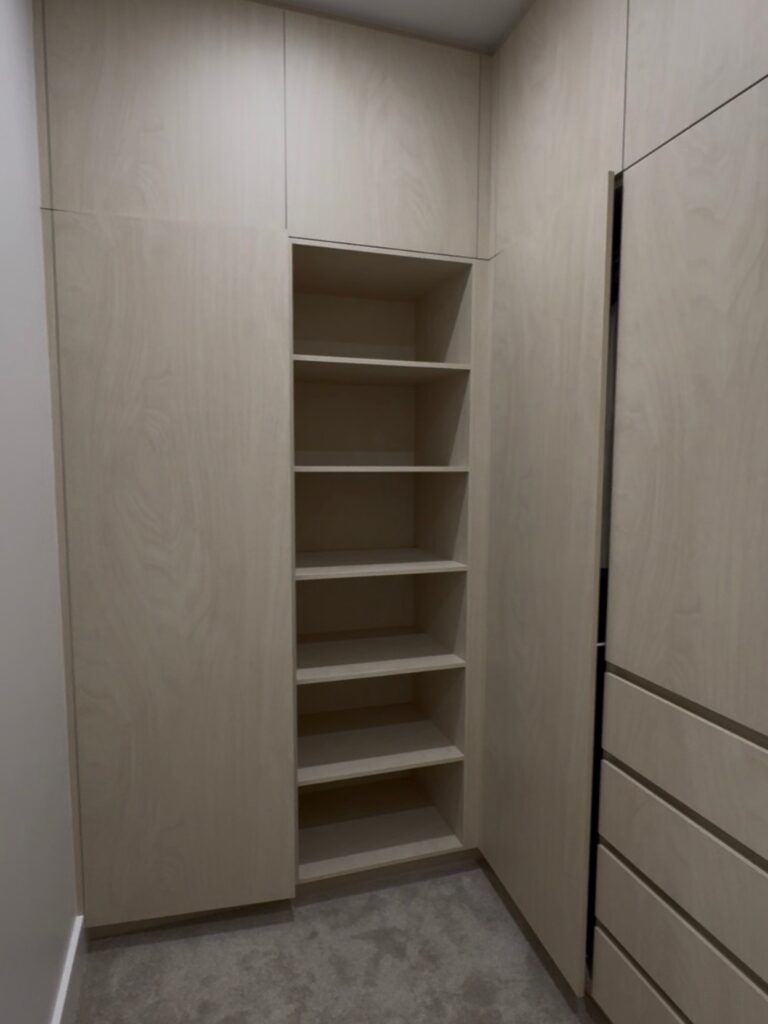
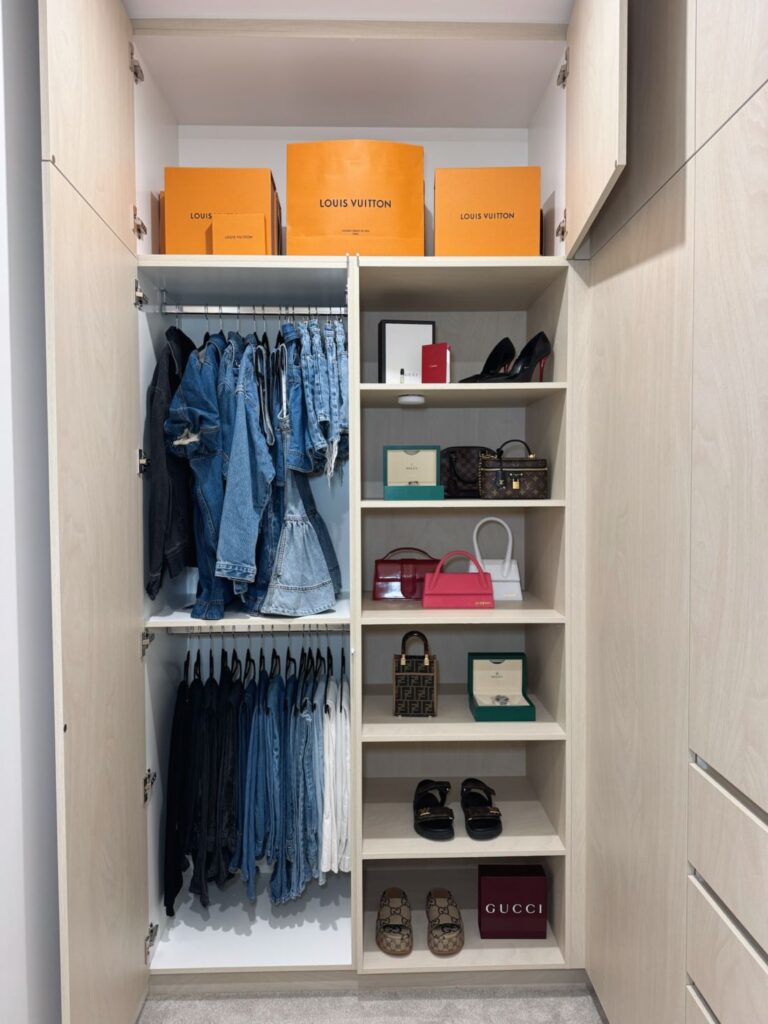
We once worked with a client who had converted an entire room into a wardrobe. Despite having a whole room dedicated to clothing, it was overflowing and she felt like she had run out of space.
The solution wasn’t another wardrobe.
We went through everything together, identified pieces that could be donated, and then completely reconsidered how the room was being used. We created dedicated zones and introduced baskets and storage systems that allowed her to actually see what she owned and, just as importantly, easily put everything back.
By the end, the amount of physical storage hadn’t changed — but the way it functioned had.
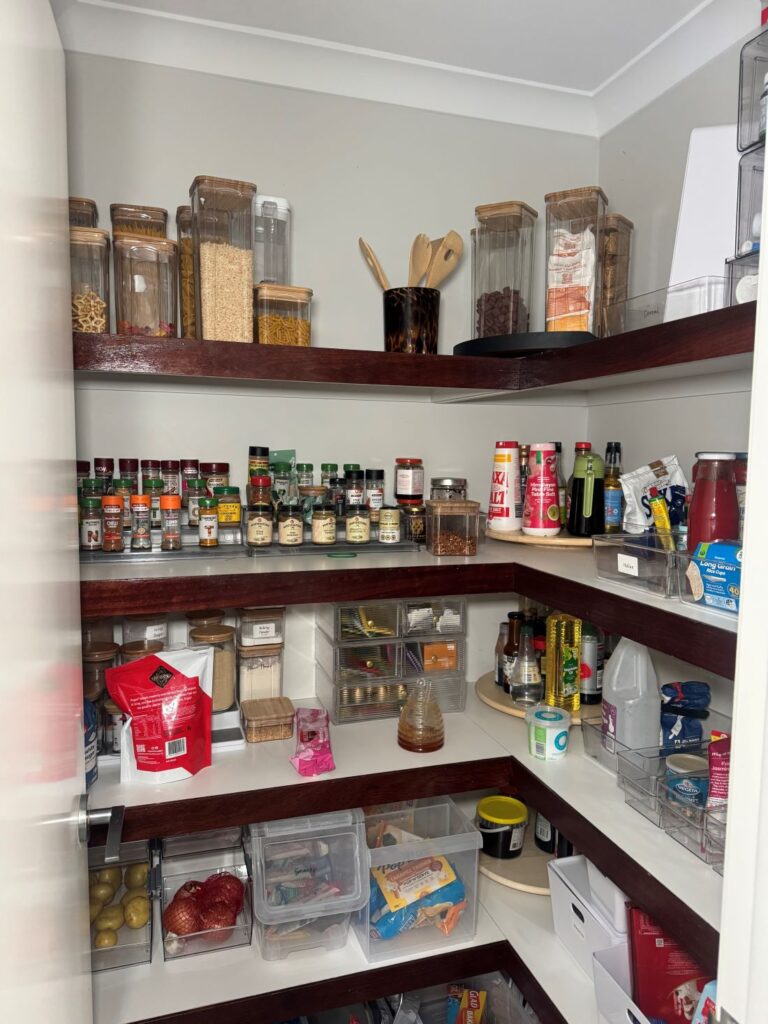
We’ve seen exactly the same thing happen in pantries. One client had a large pantry within their scullery as well as additional drawers and cupboards, yet food had started spilling across all of these areas because there were no defined systems.
Once we created zones, added the right storage and labels, and made better use of the cabinetry, everything fitted comfortably. We actually had spare space left over.
That’s why we’d always recommend working with what you have before assuming you need to add more.
Don’t buy storage just because it looks good
This is probably one of the biggest mistakes we see.
People see a beautiful organising product online or in a store, buy several of them and then try to make their pantry or cupboard fit around the product.
We approach it the opposite way.
The storage should be chosen for the space, not the space adapted to the storage.
Before we source anything for a project, we’re considering the width, height and depth of the cabinetry, what needs to live there, how often those items are used and how the client needs to access them.
We’ve also changed our own approach to storage products over the years.
When we first started organising professionally, we used a lot more storage from Kmart. While we still use certain Kmart products that we genuinely love, we’ve learnt that sourcing everything from one retailer rarely gives you the best result. Different spaces need different solutions, and quality matters when you’re creating a system that’s going to be used every single day.
Food storage jars are a good example. We’ve replaced plenty of inexpensive jars in clients’ homes because they weren’t keeping food fresh. We now prefer good-quality glass jars, often sourced from Kitchen Warehouse or Little Label Co, particularly for pantry staples.
It may cost a little more initially, but we’d rather create a system that lasts than something a client needs to replace six months later.
Use the whole cupboard — not just the part you can see
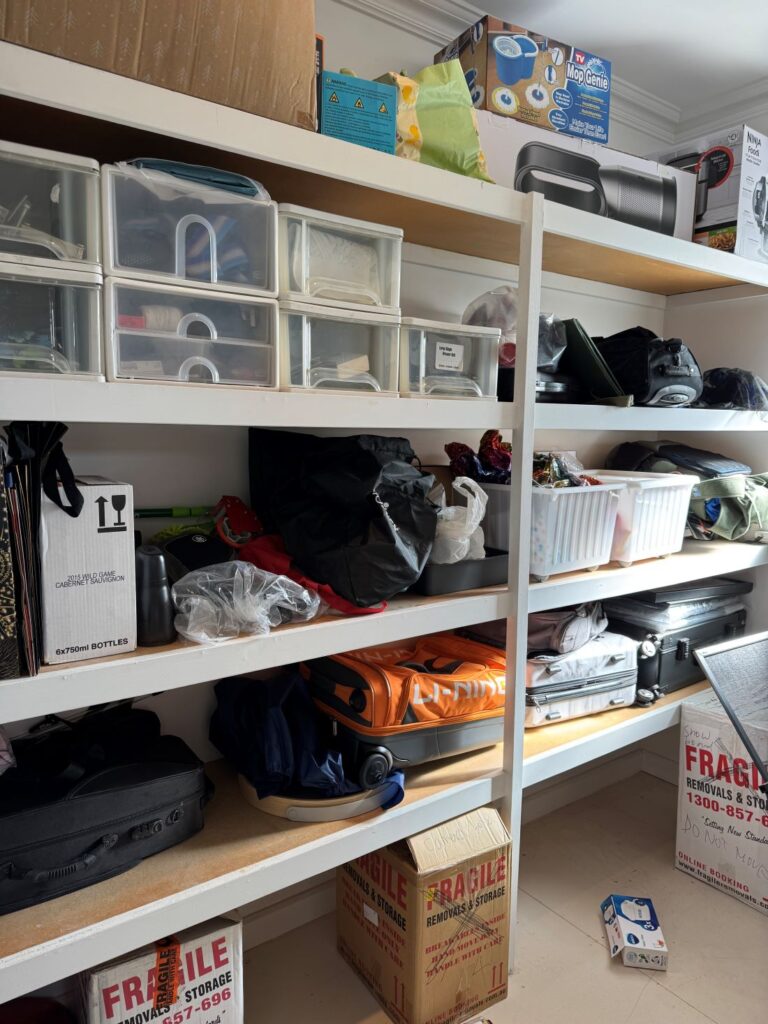
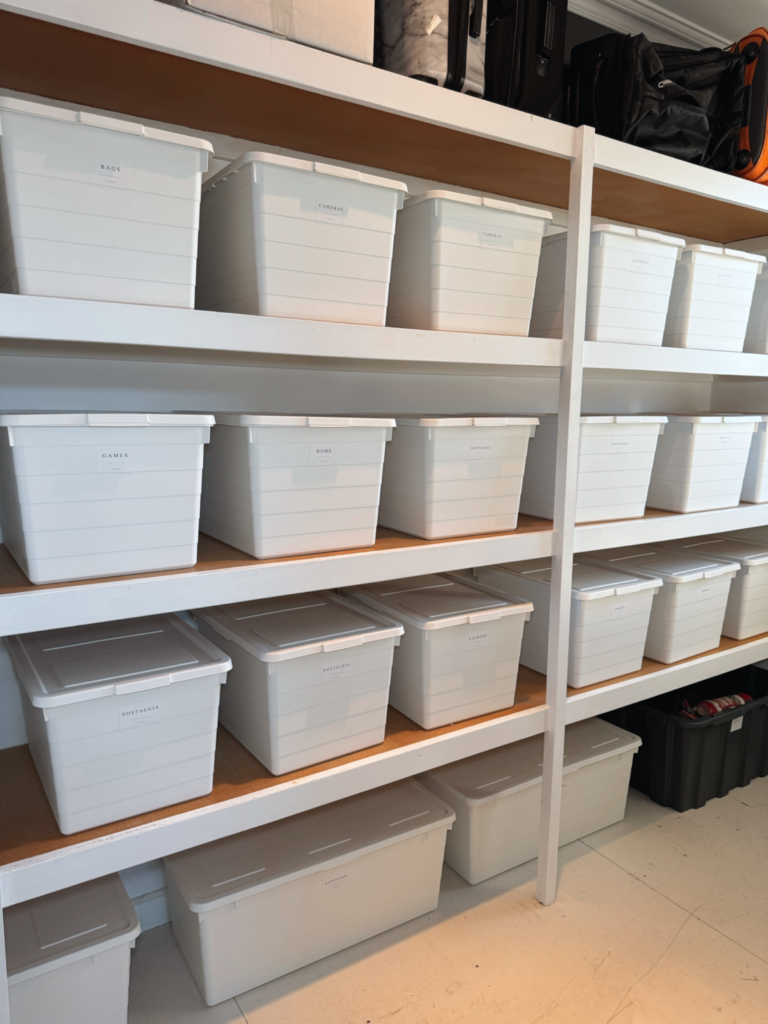
Unused height and depth are two of the biggest opportunities we notice when we walk into a home.
A deep shelf can look completely full at the front while having a huge amount of inaccessible space behind it. Likewise, tall shelves often have products sitting along the bottom with 20 or 30 centimetres of empty space above them.
The trick isn’t necessarily fitting more in. It’s making all of the available space accessible.
For deep cupboards, we often use long baskets that can be pulled out like a drawer. Turntables are brilliant in awkward corners because they allow you to access items that would otherwise disappear at the back. Where there’s unused height, shelf inserts and risers can effectively create another level of storage.
One surprisingly useful product we sometimes use is an expandable pull-out tray from Kmart. It’s a simple way of making the back of a deep shelf accessible without changing the cabinetry.
On the other hand, one product we rarely use anymore is the traditional three-tier spice or can shelf.
They look great when they’re styled, but many aren’t deep enough to utilise the full depth of a pantry shelf. You end up gaining visibility at the front while sacrificing valuable storage behind it.
It’s a good example of why a popular organising product isn’t automatically the right organising product.
Good organisation starts with zones
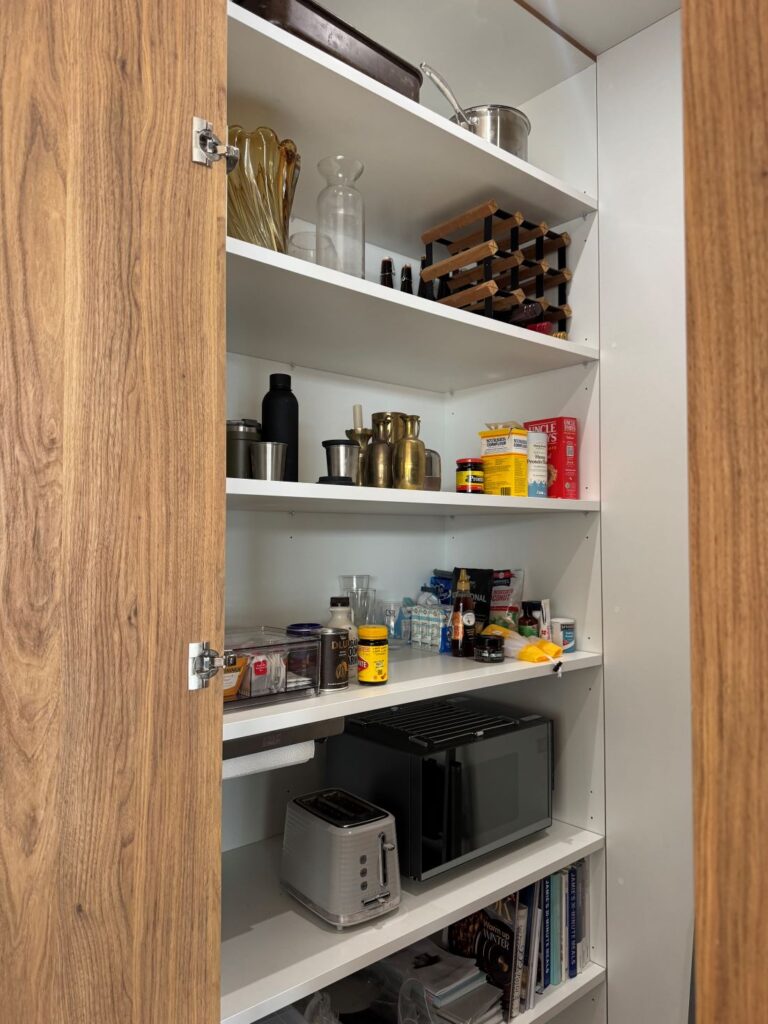
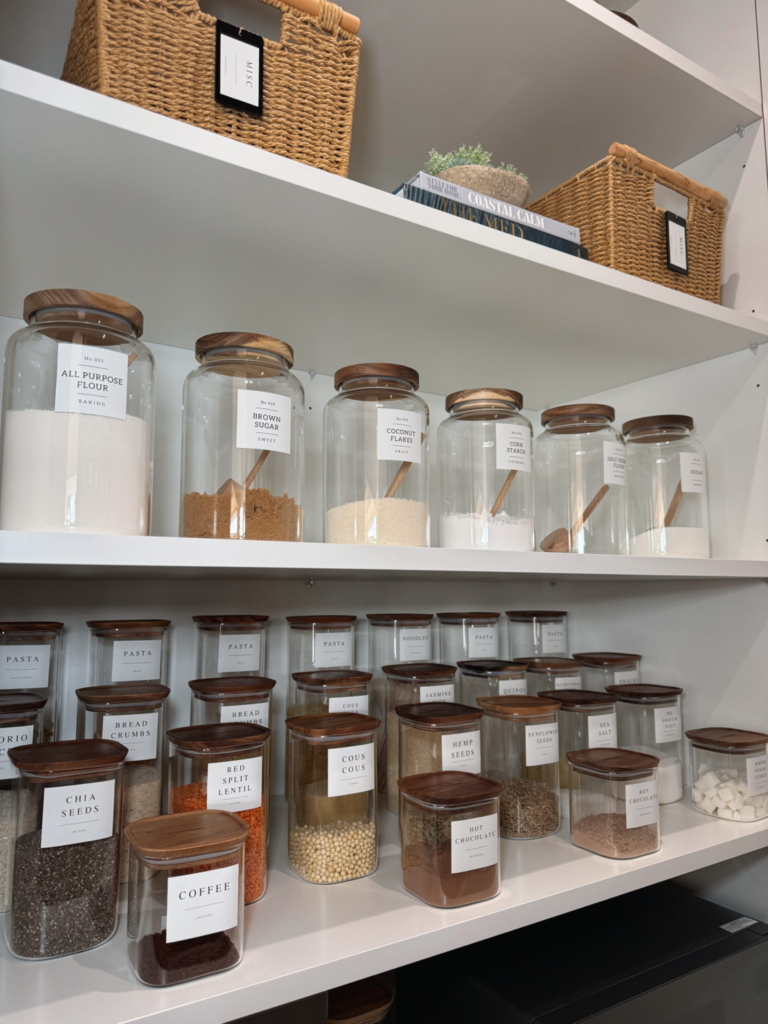
If there’s one thing we introduce into every pantry we organise, it’s zoning.
Instead of food being placed wherever there’s an empty spot, we create logical homes for categories: snacks together, baking together, condiments together, breakfast items together, decanted staples together.
It sounds incredibly simple, but it makes a huge difference.
The reason is that good organisation isn’t really about how a pantry looks on transformation day. It’s about whether the client can keep it organised once we leave.
If a system is overly complicated, it’s not going to last.
We regularly check in with clients 6 or even 12 months after a transformation, and some of our favourite feedback is seeing a pantry still functioning almost exactly as it did on the day we finished it.
That’s the real test of a good organising system.
Labels play an important role here too. They’re not just an aesthetic finishing touch. They
remove the decision-making around where something belongs. Everyone in the household
knows where to find something and, importantly, where to put it back.
You don’t need to decant everything
We’ll admit it: aesthetically, we love a beautifully decanted pantry.
But we don’t think every pantry needs to have every single item removed from its original packaging.
Before deciding what to decant, we think about the client and what they’re realistically going to maintain.
If someone is incredibly busy, creating a system that requires them to refill 100 containers every time they grocery shop probably isn’t going to make their life easier. And making life easier is ultimately the whole point.
There are certain staples we almost always recommend decanting. Flour, rice and pasta, for example, can be difficult to keep tidy in opened packaging, and good airtight containers make them much easier to store and access.
But individually packaged kids’ snacks, popcorn, chips and similar foods? Often a labelled basket is the better solution. Open the packet, put it in the right basket and you’re done.
A pantry can still look beautiful without everything matching.

Stop organising for the version of yourself you see on Pinterest
One of the biggest lessons we’ve learned is that there isn’t one “correct” way to organise a home.
Before designing a space, we want to understand how that particular household actually lives.
Do they cook every night? Do they bake regularly? Are there young children who need to be able to reach their own snacks? Which appliances are used every morning and which come out twice a year? What does their daily routine look like? How much time do they realistically want to spend maintaining the system?
We also consider the aesthetic of the home and the client’s budget because both influence the storage we recommend.
Functionality is always our number-one priority. We obviously want the finished space to look beautiful — that’s a huge part of what we do — but if we have to choose between the most aesthetically pleasing option and the one that will genuinely work better for that client, we’ll choose function every time.
That’s also why clear storage isn’t automatically better, not everything needs to be decanted, and sometimes the organising product that’s trending online is completely wrong for the space in front of us.
Being able to see what you own can stop you buying more
Another issue we see frequently — particularly in pantries — is accidental overbuying.
When there’s no system and products are hidden behind one another, people simply don’t know what they have.
It’s surprisingly common to pull everything out of a pantry and discover multiples of the same item. Five bottles of tomato sauce isn’t particularly useful if you bought four of them because you couldn’t see the first one.
Creating clear categories and making products visible doesn’t just make a pantry look neater. It makes it much easier to check what you already have before shopping, which can reduce unnecessary purchases and prevent food from expiring unnoticed at the back of a cupboard.
The goal isn’t perfection — it’s making everyday life easier
Clients often tell us after a transformation, “I can’t believe how much space we actually have.”
But some of the feedback that means the most to us has nothing to do with how the space looks.
They tell us it’s easy to keep organised. That getting ready in the morning is simpler. That putting the groceries away doesn’t feel like a chore anymore. Or simply that having the space organised has taken a weight off their shoulders and made their home feel calmer.
And really, that’s what good organisation should do.
After working across hundreds of spaces, the biggest thing we’ve learned is that every home is different. The system that works beautifully for one family could be completely unrealistic for another.
You don’t necessarily need a bigger pantry, another wardrobe or more cabinetry.
Sometimes you just need to make the space you already have work better for the way you actually live.
Because at the end of the day, everyone is busy — and our job isn’t simply to make a home look organised. It’s to create systems that are easy to maintain and bring a little less stress to our clients’ everyday routines.
More organising tips and tricks
About Natalie & Lilly

Natalie and Lilly are the founders of That Organised Life, a Perth-based professional home organising studio specialising in beautiful, functional and maintainable organisation systems.
Together, they’ve transformed more than 100 spaces across Perth, including kitchens, pantries, wardrobes, laundries, children’s spaces and garages. Their work has been featured on 7NEWS, and That Organised Life Co has received only five-star client reviews.
Web: thatorganisedlifeco.com.au
Instagram: @thatorganisedlifeco