
You’ve likely heard the term biophilic design floating around, but what does it actually mean — and more importantly, how can you use it to create a home that feels calmer, more restorative and genuinely good to live in?
We were curious about this too, so we invited interior designer Nina Di Marco from YDM Design Studio to share her expertise. Nina specialises in creating nature-inspired interiors that support wellbeing, and her approach to design goes far beyond aesthetics. She takes us through the main zones of the home and how you can embrace biophilic design in each area.
For most of human history we lived outdoors, surrounded by landscapes, plants, water, and natural light. As our bodies and brains evolved within these natural environments, we are still attuned to them now, and spending time in nature continues to promote relaxation, safety, and mental restoration.
Related article: Design greenery into your renovation: How to create an indoor outdoor connection
Related article: How to incorporate elements of Feng Shui into your home
Words by Nina Di Marco
Overview of biophilic design
Natural environments help shift the body from the sympathetic nervous system (fight or flight) into the parasympathetic nervous system (rest and restore). Many researchers refer to this human–nature connection as Biophilia — and biophilic design is an approach to interior design that aims to reap the benefits of this connection to create restorative spaces that feel like a sanctuary.
Biophilic design uses key elements from the outdoors — such as light, plants, layouts and colours — to help us to reconnect with nature within our homes and move us into the rest and restore mode. Today we live very fast paced stressful lives and often come home to a space that feels equally chaotic and stressful. Not having a space that can help to move from that fight or flight response, to rest and restore can be harmful to our health long-term — leading to many issues like increased anxiety, bad sleep, a weakened immune system and difficulty concentrating.
Whilst biophilic design can have a positive impact on you in every space of the home, there are three particular spaces that we will focus on today to get the maximum benefit: bedrooms, lounge and home office.
Biophilic design in the bedroom
From regulating our mood, hormones and metabolism to helping the body repair and improve our immune system, sleep is vital for our health in many ways. If you struggle to sleep or you just want to get better sleep, biophilic design can allow you to create an environment that can help with this.
Strategic lighting
Our circadian rhythm is an important indicator of how well we sleep. Our bodies need sunlight in the morning and day, and minimal lighting in the evening, to regulate our circadian rhythm. This mimics what our ancestors did, going out into the bright sunlight during the day and enjoying only the low glow of a fire once the sun has set. It’s therefore important to switch from bright overhead lights to warm lights that are eye-level or lower during the evening. This could be wall sconces, table lamps, floor lamps or low hanging pendants — and always with a warm white globe. This is particularly important in your bedroom, and any adjacent walk-in robe and ensuite, to set the tone for your body when getting ready for bed.
Creating ‘refuge’
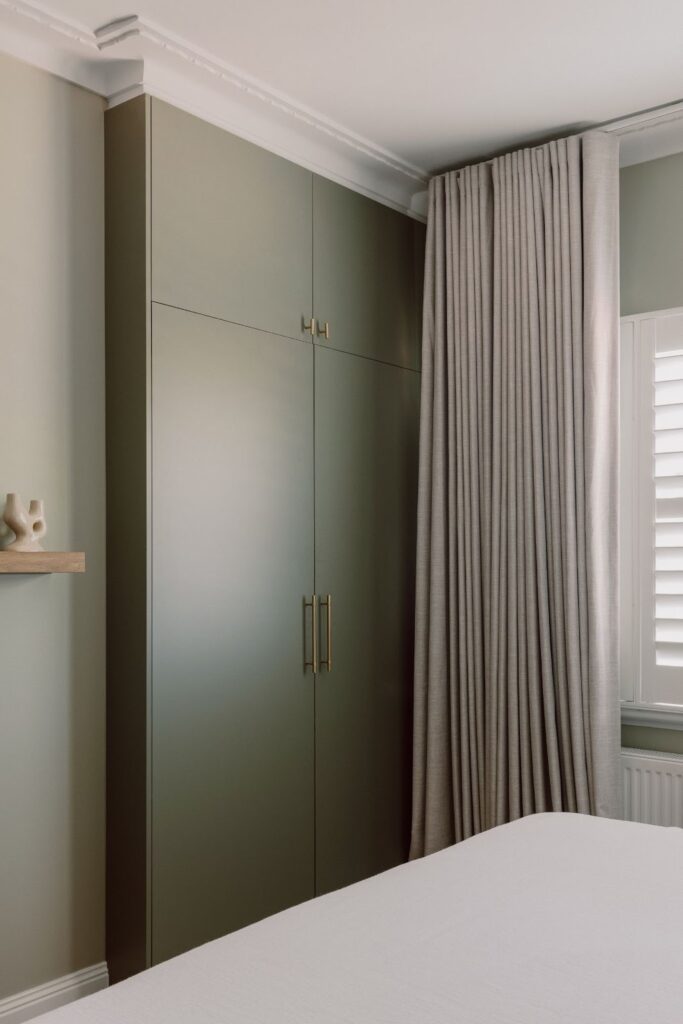
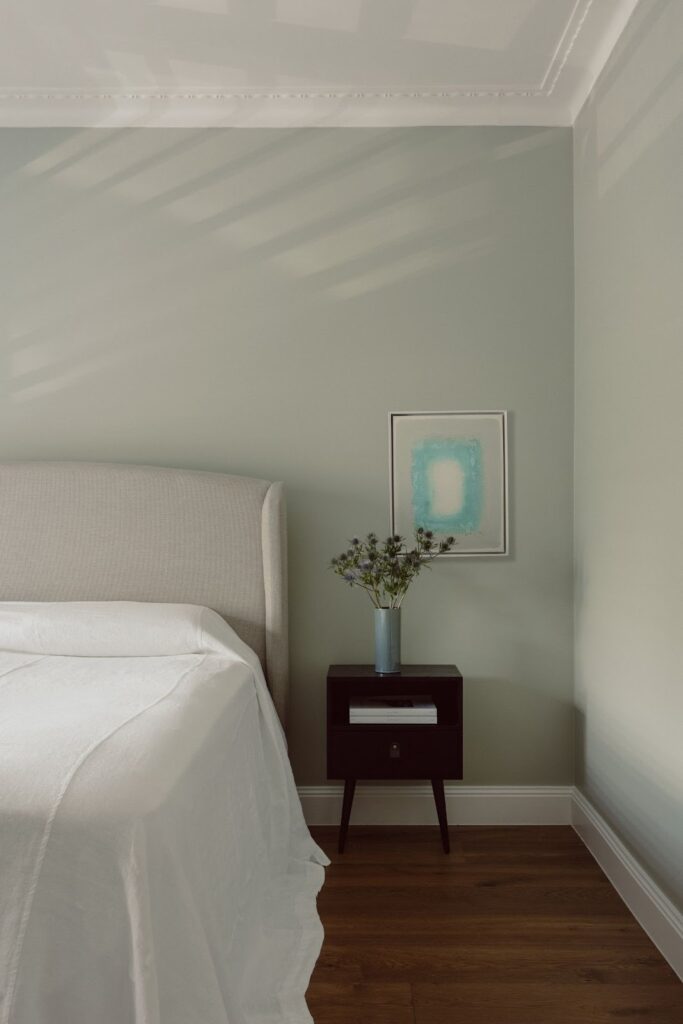
As our ancestors did when seeking refuge in a cave or a thick canopy of trees, we usually feel safer and more comfortable in spaces that feel enclosed and protected. This cocooning effect allows us to relax and slow down, and can be particularly helpful in the bedroom to create the right atmosphere for sleep. A popular way of creating this is colour drenching — which is where you use a single colour across most (or all) surfaces in a room. When colour-drenching a bedroom, we also recommend using a soothing nature-inspired colour. Green is ideal as it reminds us of plants and landscapes. Blue is another good choice as it brings forth images of water and the sky.
Natural materials
As well as selecting colours that have a connection to nature, we recommend bringing natural materials and textures into the bedroom. This could be timber and stone furniture pieces, linen fabrics for the bed and/or curtains and wool carpets or rugs. Introducing natural materials that are soft and textured not only triggers that human–nature connection that helps us relax, but they will also help to absorb some noise, creating better acoustics for sleep as well.
Biophilic design in the lounge
The lounge is usually the main place in the home that we go to when we want to relax and slow down. Whether you’re entertaining, reading, or watching TV, using biophilic design principles is sure to make a big difference to how you feel in the space.
Indoor outdoor connection
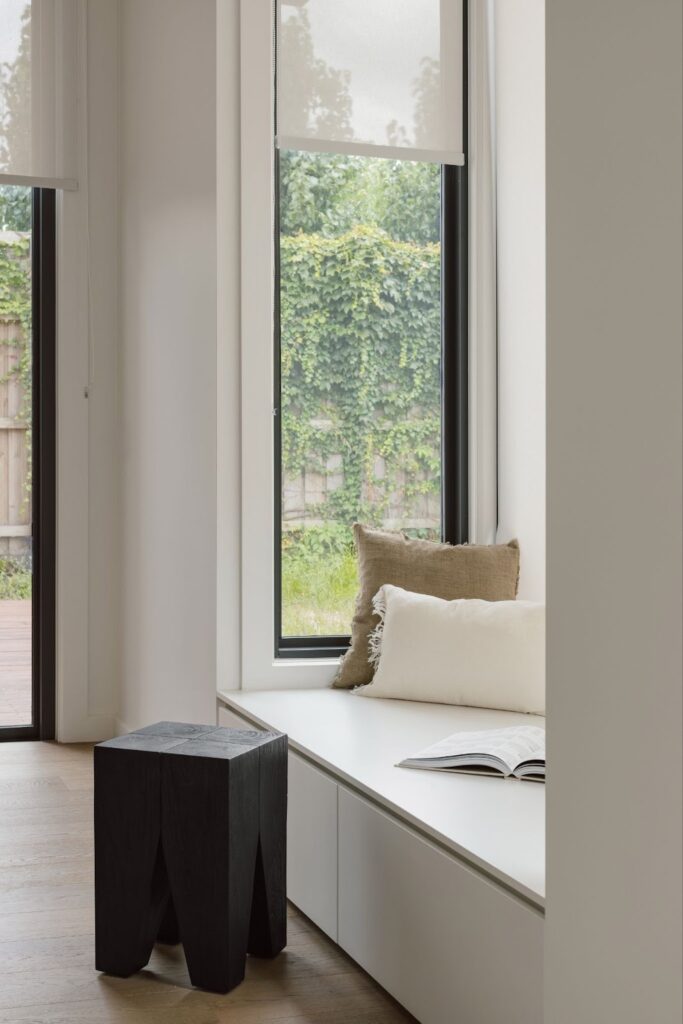
A visual connection to an outdoor area through large windows and/or doors, is one of the best ways to bring biophilic design into a living space. As well as providing a relaxing view, windows and doors will bring in natural light and a soft breeze once opened, both of which can help with reducing stress. If you can, position some of the seating to face these outdoor views. Whilst humans seek a space that feels like refuge at night, we tend to prefer having a clear view of our surroundings with long sight-lines during the day.
If you have small windows or your view is lacking, the next best option is to bring in plants into the space. As well as helping to create a relaxing environment, the plants can help clean the air in your home. When selecting indoor plants, consider the size of the plant and the amount of water and light they require. By selecting the right type of plant for each location (and for your lifestyle) you can be sure to keep your new plants alive and your home healthier and happier.
Embracing organic shapes
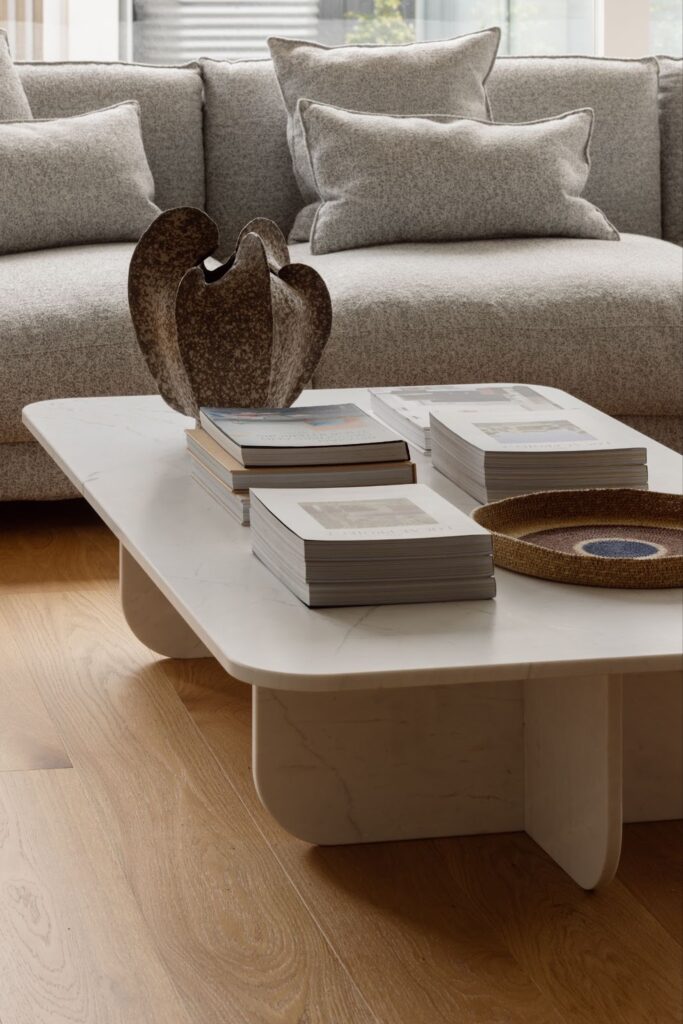
Nature always favours its organic, irregular and flowing forms. Bring this into the lounge by introducing curved and rounded furniture pieces, and imperfect handcrafted forms for your decor. It’s also important to consider our preference for organic rounded shapes when it comes to arranging our furniture. In particular we always recommend arranging seating this way (with some extra armchairs, stools or ottomans), as it also helps with encouraging a deeper connection with your family and guests. In a circular/organic arrangement, everyone can see each other and feel like they are equal participants in the conversation. Choosing modern sofas with soft, flowing silhouettes can further enhance this sense of balance, helping the seating layout feel more cohesive and naturally aligned with organic design principles.
When it comes to prints for fabric, or even art pieces, there is a type of natural pattern called fractals which humans tend to be very drawn to. These patterns repeat themselves at different scales so that the same shape or structure appears again and again, whether you’re viewing it from far away or up close. Examples of this in nature include the veins on a leaf and branches on a tree, snowflakes, the irregular rhythms of a coastline, and the pattern of cracked dry dirt.
Transitioning the space
This touches on two points already discussed in the bedroom section, but is important to mention this for the lounge as well. As you move from day to evening, it’s essential to transition the space to suit. This means turning off overhead lights and switching to lamps with warm white globes, and creating a more cocooning feeling in the room. An easy way to do this is through blockout curtains, which create a wall of soft and cosy fabric.
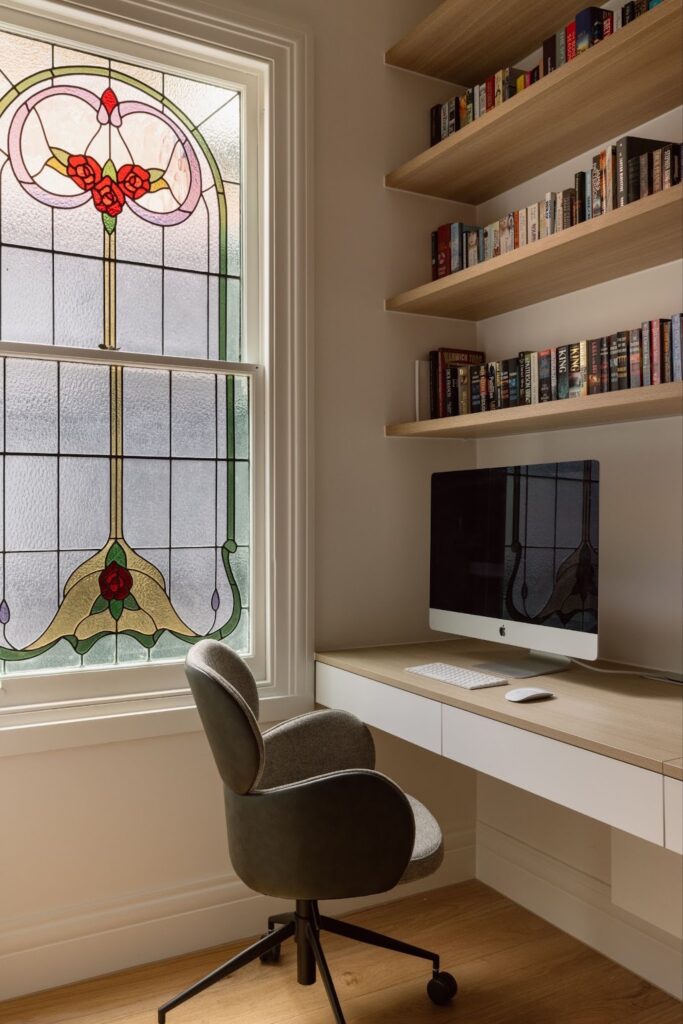
Biophilic design in the home office
In a home office, biophilic design plays an important role in reducing fatigue, supporting focus and mental clarity. Having items that can reconnect us to the natural environment during small breaks from looking at a screen can be greatly beneficial.
Natural light
Natural light in a workspace is incredibly important to improve your mood and productivity. As mentioned previously, our body relies on its circadian rhythm to know when it needs to be awake and when it needs to rest. Giving ourselves access to natural light during the day signals to the body that it’s time to be alert and focused. Whilst natural light is important, it can also be quite harsh if it gets very bright or produces glare. Sheer curtains or blinds are the perfect solution to be able to adjust the amount of light that comes in as the day progresses.
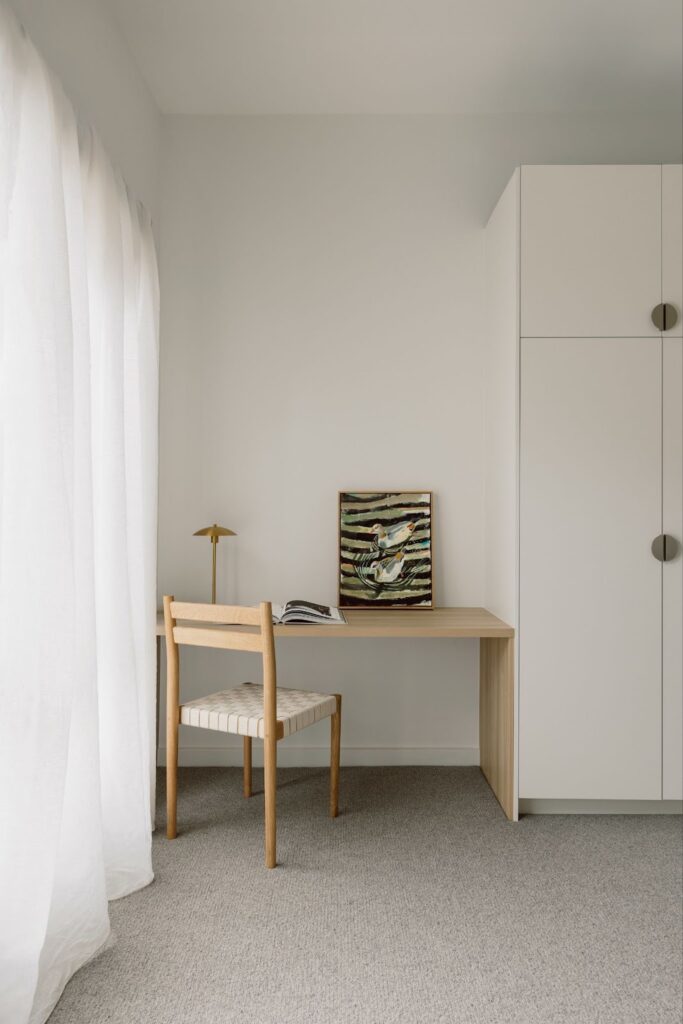
Non-Rhythmic Sensory Stimuli
Non-Rhythmic Sensory Stimuli (or NRSS) refers to gentle, unpredictable moments in nature that capture our attention without demanding it. This could be softly shifting sunlight, trees swaying in the breeze, or slow moving water. As our brains are constantly processing information, this means that highly uniform, static environments can become mentally draining over time. Whilst NRSS might seem like a small thing, it gives the brain small moments of rest and recovery that can help to create a calmer atmosphere. This can be particularly helpful for home offices to let the brain rest without disengaging completely.
Some examples of how you could incorporate this in a home office are: the natural movement of plants (indoors or through a window), a flickering flame from a candle or a small water feature on your desk. Indoor plants are particularly helpful, as exposure to them in a workplace setting has been linked to improved concentration and mental clarity.
Tactile natural finishes
Having access to natural materials and finishes within a touching distance can help to keep you grounded and calm in the face of stressful situations. Examples of this could be a timber desk, ceramic accessories, linen curtains, wool rugs and woven baskets. Whilst some decor is helpful, do keep in mind not to overwhelm the space as visual clutter can have the opposite effect on our moods. This also goes for cables, devices, stationary and paperwork — which is always best tucked away when not needed to reduce mental stress.
Thank you Nina for sharing your expert insights on how to embrace biophilic design in different areas of the home. From improving sleep to creating more calming, restorative spaces, it’s a beautiful reminder that good design isn’t just about how your home looks — but how it supports the way you live and feel. For more design advice delivered straight to your inbox each week, subscribe to Style Curator.
About the author

Nina Di Marco is the founder and interior designer behind YDM Design Studio. She specialises in creating thoughtful, nature-inspired interiors, with a strong focus on biophilic design and wellbeing. Through careful use of natural materials, light and spatial planning, Nina designs spaces that feel calm, functional and deeply connected to their environment.
Web: ydmdesignstudio.com
Instagram: instagram.com/ydm_design_studio
Facebook: facebook.com/ydm.design.studio.melbourne