
One of the joys of living in Australia is opening up the doors and letting the outdoors in. But come dusk, that dream can quickly be interrupted by mosquitoes and other unwanted visitors. The irony is that many Australian homes are designed to blur the line between indoors and out, yet mosquito season often forces us to keep the doors firmly shut.
The good news is that insect screening has come a long way, and it no longer has to be the ugly afterthought bolted onto a beautiful home. Here’s how to keep the bugs out while keeping your design intact.
Related article: 9 ways to design indoor outdoor living into your home
Related article: Creative patio paving concepts to elevate your outdoor sanctuary
Why Australian homes are especially exposed
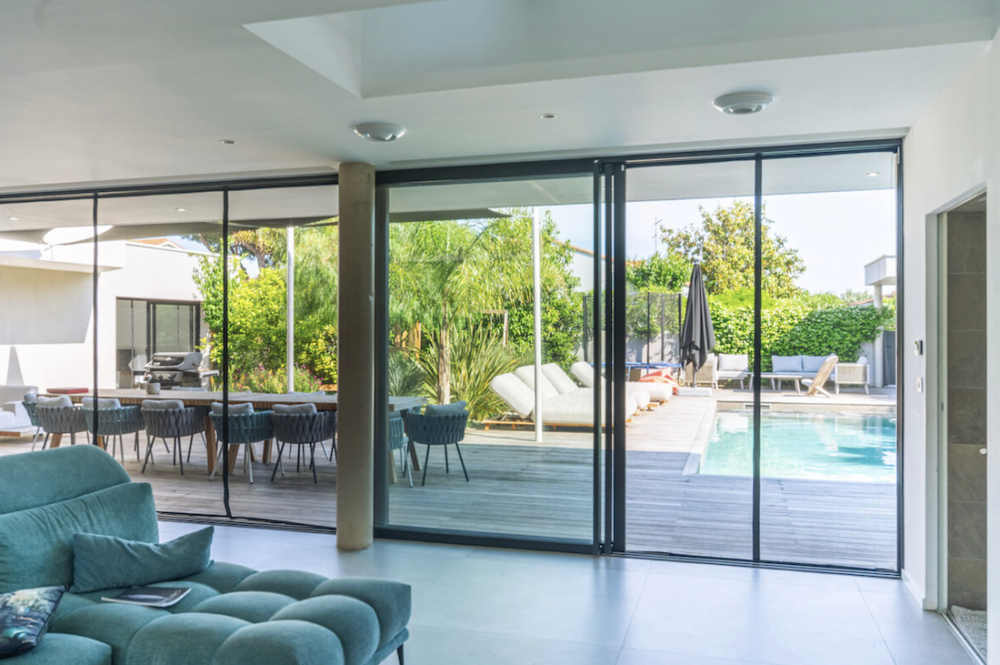
Australian architecture has spent the last two decades opening up. Bi-folds, stacker doors, sliding walls of glass, servery windows, covered alfrescos and pergolas, the boundary between inside and outside has been deliberately dissolved. It’s one of the things that makes contemporary Australian homes so liveable.
But every one of those openings is also an invitation. A stacker door that opens 3.5 metres wide is a 3.5 metre wide entry point for mosquitoes, flies and everything else. And unlike a standard hinged door, it’s open for hours at a time, precisely during the golden hour when insects are most active.
Add to that our climate. In the northern states, mozzies are a year-round reality. In the south, they arrive with the first warm evenings and stay until autumn. Either way, they show up exactly when you most want the house open.
The homes we love most — open, light-filled, connected to the outdoors — are the ones most vulnerable to insects. That’s the design problem worth solving.
Why traditional fly screens disappoint
Traditional fly screens haven’t always been known for their looks. Framed aluminium screens are functional, but they’re rarely beautiful. They come in a handful of standard sizes that never quite match your opening. The frames are chunky, the colours are limited, and the whole thing tends to read as an add-on rather than part of the design.
Then there’s the installation. Most traditional screens require drilling into the frame — a hard no if you’ve just paid for new windows and doors, if you’re renting, or if you’re working with a heritage home where the window surrounds are original.
And retractable screens, while sleeker, come with a price tag that can rival the doors themselves once you’ve covered every opening in the house.
So most of us end up compromising or doing nothing. We buy a citronella candle, wave a tea towel around at dusk, and close the doors earlier than we’d like.
The design-led alternative: custom magnetic fly screens
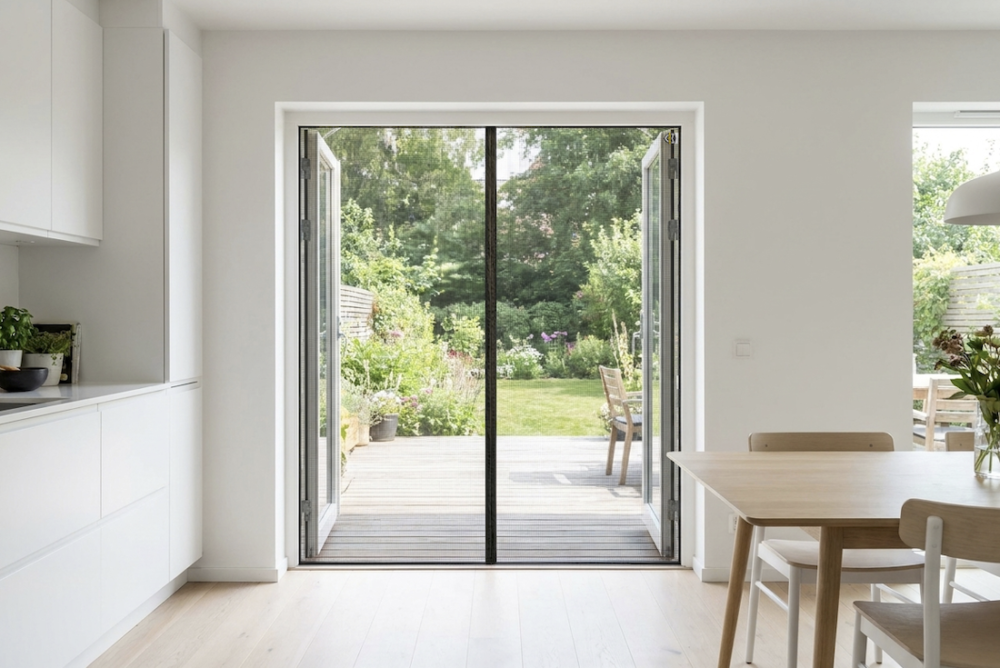
This is where custom magnetic fly screens come into their own. Instead of a rigid frame, you get a fine mesh panel made to the exact dimensions of your opening, held in place by a discreet adhesive strip and closed by a line of magnets down the centre.
Walk through with a tray of drinks and it closes behind you. No handles, no catches, no free hand required. And because it’s cut to your measurements rather than a standard size, there’s no sagging, no gaping and no awkward overlap.
Brands like Moskera offer made-to-measure magnetic fly screens for doors, windows and large openings in a range of colours, making it easy to match them to your existing joinery.
The design logic is the same one we apply to a custom kitchen or a built-in wardrobe: when something is made to fit, it stops looking like an addition and starts looking like part of the house.
Matching the screen to the opening
Not every opening in your home has the same problem to solve. Here’s how to think about it room by room.
Doors
The main entry, the back door and the door to the deck are your highest-traffic openings, and the ones most worth screening first. A magnetic door screen closes automatically after each pass, which matters when you’ve got kids or pets running in and out all afternoon. Look for a mesh that’s dark enough to be visually recessive, counterintuitively, a black or charcoal mesh is far less noticeable against a bright outdoor scene than a silver or white one.
Windows
Windows are where you can be most discreet. A magnetic or hook-and-loop screen fitted around the reveal keeps the airflow while staying almost invisible from inside. This is particularly useful in bedrooms, where sleeping with the window open through summer is the difference between a good night and a long one. And also in kitchens with gas strut servery windows where you don’t want to welcome a swarm of insects inside every time you open it up.
Large openings, bi-folds and pergolas
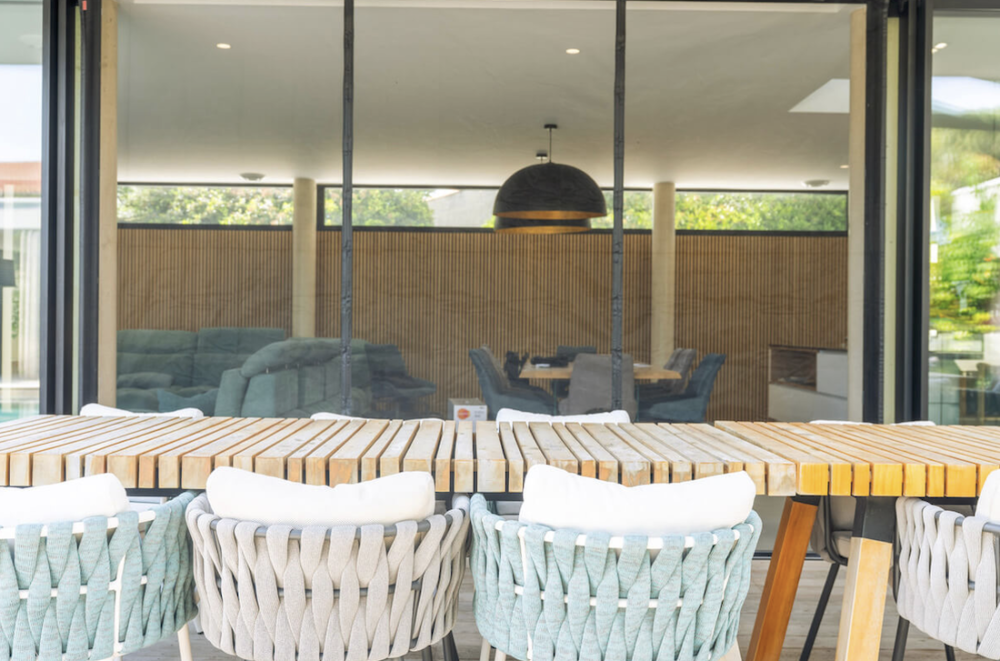
This is the category most people assume can’t be screened, and it’s the one that benefits most. Wide stacker doors, bi-folds, servery windows and open pergolas need a multi-panel screen with reinforced magnets, standard magnets simply aren’t strong enough to hold a wide panel closed against a breeze. Done properly, you can screen an entire alfresco opening and still walk straight through to the barbecue.
Arched and asymmetric windows
Period homes, converted warehouses and architect-designed builds often have openings that are anything but rectangular, arched windows, raked ceilings, angled reveals. These are exactly the openings where off-the-shelf screening fails completely, and where a made-to-measure panel cut to the arch or the angle is the only solution that looks intentional rather than improvised.
5 things that make the difference
If you’re shopping for screens, these are the details worth paying attention to.
- Measure the reveal, not the door. Measure the surface where the adhesive strip will sit, not the door leaf itself. Take three widths (top, middle, bottom) and three heights, because very few Australian homes are perfectly square, particularly older ones. Use the largest measurement to ensure full coverage.
- Choose fibreglass mesh over polyester. Coated fibreglass holds its shape, resists sagging and lasts several seasons. Cheap polyester stretches, puckers and tears within a summer.
- Match the colour to your joinery. Black against dark aluminium, white against painted timber. The right colour makes the mesh visually disappear while the wrong one draws the eye straight to it.
- Don’t skimp on the magnets. On anything wider than a standard door, ask specifically about reinforced magnets. This is the single most common point of failure.
- Go custom on anything unusual. Arched, asymmetric, extra-wide or extra-tall openings will never work with a standard size. Made-to-measure isn’t a luxury here, it’s the only thing that works.
Installation: the no-drill advantage
Here’s the part that makes magnetic screens particularly appealing for renters, renovators and anyone with new joinery: there’s no drilling involved.
Installation takes about ten minutes and requires nothing more than a tape measure, a clean cloth and some methylated spirits. The critical step is preparation, degrease the frame thoroughly and let it dry completely before applying the adhesive strip. Skip this and the strip will lift within a fortnight. It’s the same principle as any adhesive project.
Apply the strip along the top first, working it down with your thumb to push out air bubbles, then run the two verticals. In the corners, fold the strip rather than cutting it, so the fixing stays continuous. Hang the mesh from the centre top and work outwards, then leave it a few hours before the first walk-through so the adhesive can reach full strength.
For renters, this is the whole point: it goes up without a single hole, and comes down at the end of the lease without a trace.
Looking after them
At the end of the season, peel the adhesive strip away slowly at a 45-degree angle. If it resists, warm it gently with a hairdryer and it will release without lifting the paint.
Wash the mesh in warm soapy water, let it dry completely, then roll it rather than folding it, folds leave permanent creases that never quite hang out. Stored properly, a good screen will see you through several summers.
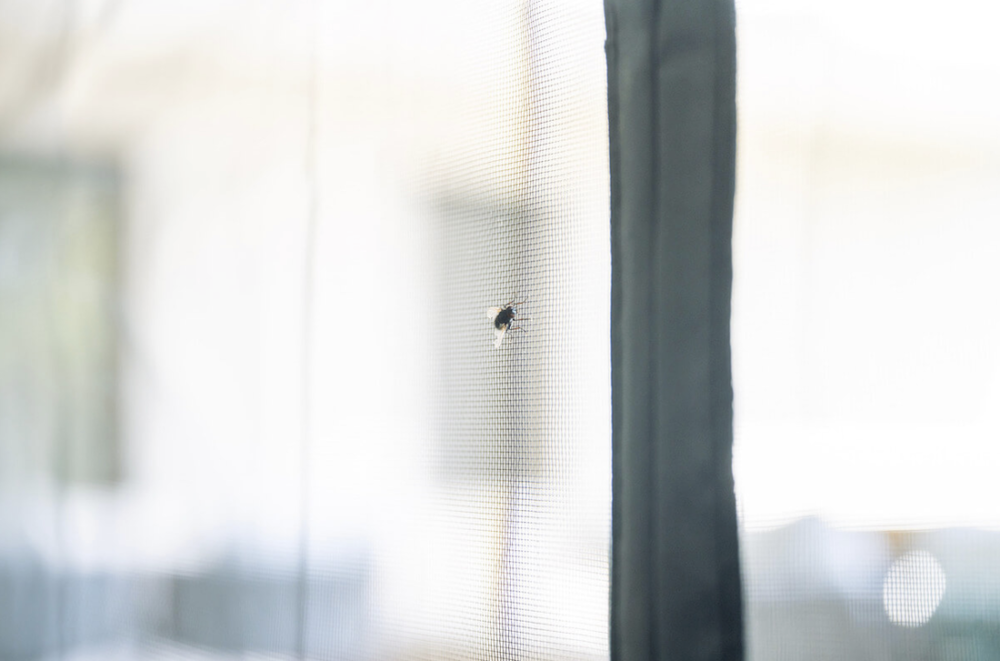
The best home improvements blend seamlessly into your home. A well-designed fly screen should keep insects out without distracting from the look of your space, so you can enjoy fresh air, indoor-outdoor living and summer evenings exactly as they were meant to be.
More home building and renovating tips
Frequently asked questions
Do magnetic fly screens actually keep mosquitoes out?
Yes, provided they’re correctly sized. The mesh itself is an effective physical barrier. The failures almost always come down to gaps at the edges caused by a screen that’s too small for the opening. This is why accurate measuring, and custom sizing on unusual openings, matters so much.
Will the adhesive damage my paint or window frames?
Not if it’s removed properly. Peel slowly at a 45-degree angle, using a hairdryer to warm the adhesive if it resists. Because there’s no drilling involved, magnetic screens are one of the few screening options genuinely suited to rentals and heritage homes.
Can you screen bi-fold or stacker doors?
You can, but you need a multi-panel screen with reinforced magnets rather than a standard single-door product. Wide openings put far more load on the closure, and standard magnets will let the panels drift open in a breeze.
What colour mesh is least visible?
Darker meshes (black or charcoal) are far less visible from inside than white, because the eye reads them against the bright outdoor scene rather than against the frame. Match the trim colour to your joinery for the most seamless result.
How long do they last?
A coated fibreglass mesh, taken down, cleaned and rolled at the end of each season, will comfortably last several summers. Polyester meshes tend to stretch and tear within a year or two, which is why the mesh material is worth spending a little more on.