
With more people working from home or splitting their time between home and the office, that makeshift workspace you set up during lockdown probably isn’t doing you any favours anymore. If you’re working from the kitchen table, perched on a dining chair or squeezed into a tiny desk, it’s no surprise if your body is aching or productivity lacking. The good news? A few smart furniture choices can make a world of difference.
Choosing the right home office desk isn’t just about finding one that looks good. The right desk can improve your posture, boost productivity and make those long workdays far more comfortable. In this guide, we’ll walk you through everything you need to know to choose an ergonomic home office desk. From desk size and height to materials, storage and sit-stand options, we’ll help you find a desk that suits your space, supports your body and looks great in your home.
Related article: My home office reveal: Stylish home office ideas (even for renters)
Related article: Designing your dream home office: A space that fuels inspiration
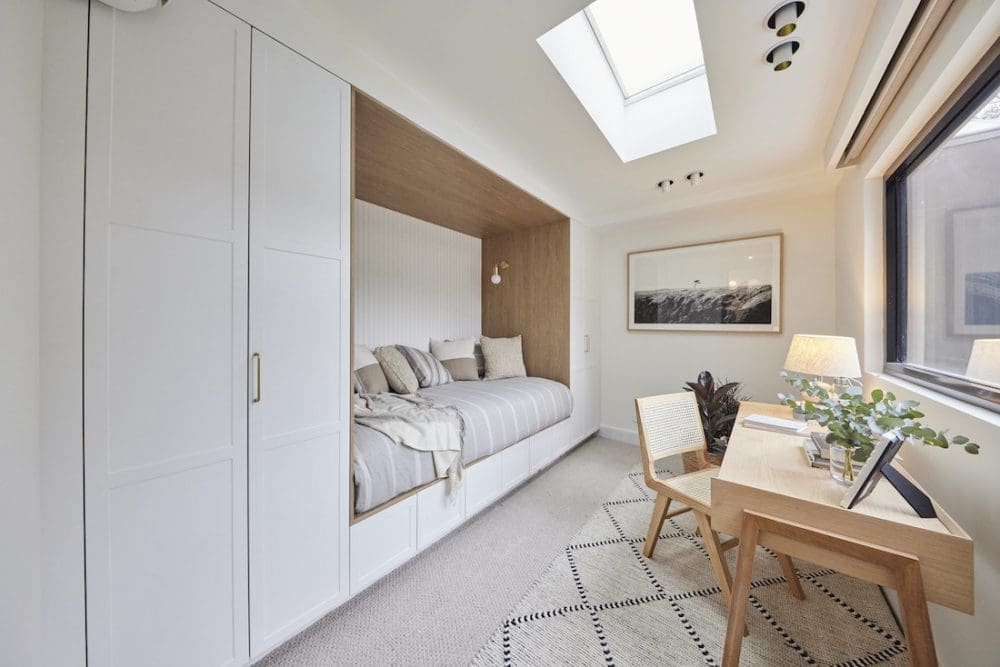
Why ergonomics is non-negotiable for home office workers
While the dining table or kitchen bench might be fine as a temporary work setup, spending hours there every day can take a real toll on your body. If you’re constantly hunched over a laptop or reaching awkwardly for your keyboard, you could end up with more than just a sore back. Poor posture over time can contribute to ongoing neck, shoulder and wrist pain, repetitive strain injuries and other musculoskeletal issues that are much harder to fix than they are to prevent.
Thankfully creating a more ergonomic workspace doesn’t have to be complicated. Choosing the right desk is one of the biggest improvements you can make. It helps you position your screen at the right height, keep your arms in a comfortable position and sit with better posture throughout the day.
It’s not just your body that benefits, either. When you’re comfortable, it’s much easier to stay focused and productive. Instead of constantly shifting in your chair or stretching out sore muscles, you can concentrate on the task at hand. Many studies have even found that well-designed workspaces can improve productivity and reduce fatigue.
Unlike a traditional office, there’s no workplace ergonomics team coming to assess your home office. That means it’s up to you to create a space that supports your health and helps you do your best work.
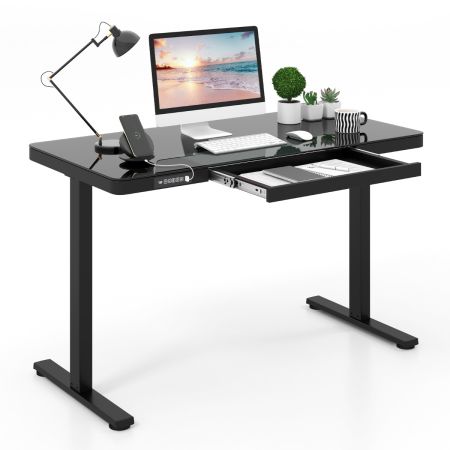
Key features to look for in an ergonomic home office desk
Not all desks are created equal. Before you buy, think about how you work and the features that will make your day easier. Here’s what to look for.
Choose the right size
Start by measuring your space before you fall in love with a desk.
Your desk should be deep enough to position your monitor about an arm’s length away. As a guide, look for a desk that’s at least 60cm deep. If you use two monitors or like to spread out with notebooks and paperwork, you’ll also want plenty of width.
Don’t forget to allow space for everyday essentials like a desk lamp, speakers, charging dock or even your morning coffee.
Consider a height-adjustable desk
If your budget allows, a height-adjustable desk is one of the best investments you can make for your home office.
Being able to switch between sitting and standing throughout the day helps reduce stiffness, encourages movement and can make those afternoon slumps a little easier to get through.
Electric sit-stand desks are the easiest to use, with the touch of a button adjusting the desk to your preferred height. Many even let you save your favourite sitting and standing positions. Manual models are usually more affordable but take a little more effort to adjust, so you may be less likely to use the feature regularly.
Look for quality materials
A desk gets used every day, so it’s worth investing in one that’s built to last.
Steel frames are generally the most stable, particularly for height-adjustable desks. Timber, engineered wood and quality laminate tops are all durable options that can handle everyday wear while looking great in your home.
If you’re considering a sit-stand desk, check reviews to see whether it stays stable when fully raised. A desk that wobbles every time you type will quickly become frustrating.
Think about storage and cable management
A cluttered desk can make it harder to concentrate.
Drawers are handy for storing stationery and paperwork, while built-in cable management keeps cords tucked away and your workspace looking tidy.
If your desk doesn’t include storage, you can always add a small set of drawers or shelving nearby to keep everything within easy reach.
Pick a desk that suits the way you work
The best desk is the one that fits both your work and your home.
A standard office desk is ideal if you mostly work on a laptop, write, attend video meetings or tackle everyday admin.
If your work involves multiple monitors, video editing, graphic design or gaming, you may prefer a larger computer or gaming desk. These often include wider work surfaces, cable management features and extra space for your equipment.
No matter which style you choose, comfort should always come first. A desk that supports good posture and gives you enough room to work comfortably is an investment in both your productivity and your wellbeing.
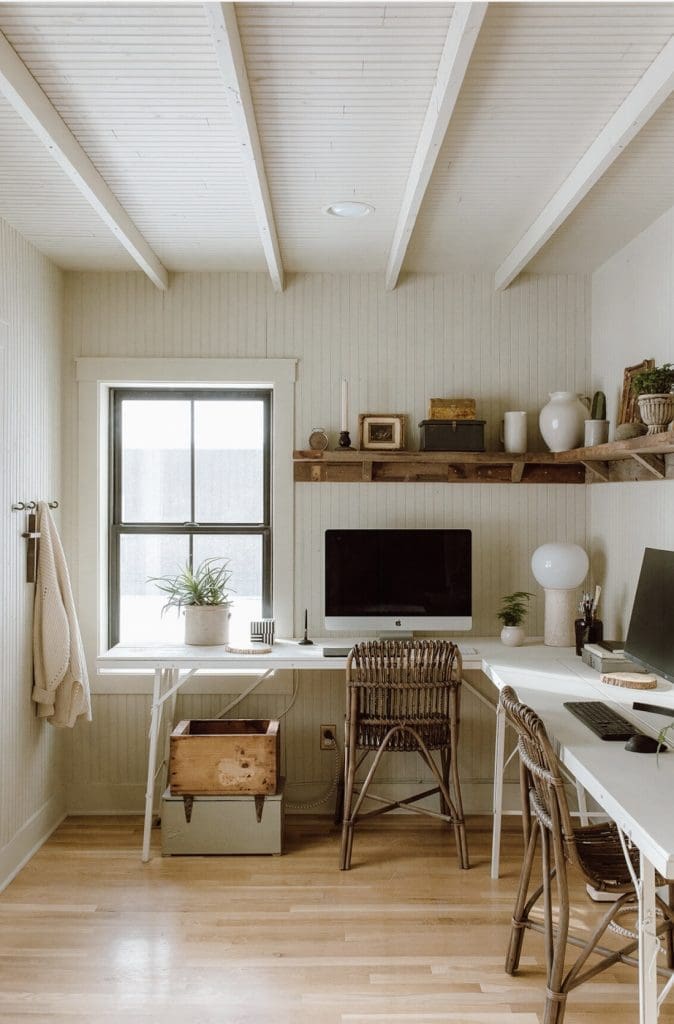
How to choose the right home office desk
With so many options available, choosing the right desk can feel overwhelming. The good news is that once you know what to look for, it becomes much easier to narrow down your choices.
1. Measure your space first
Before you start shopping, grab a tape measure.
Measure the area where your desk will sit and make sure there’s enough room to comfortably pull your chair out and move around. If you’re considering a sit-stand desk, check that you’ll also have enough space when it’s fully raised.
It’s also worth thinking about where your power points and windows are. Natural light is great, but you don’t want glare on your screen all day.
2. Think about how you work
Everyone works differently, so choose a desk that suits your routine.
If you mainly work on a laptop, you probably don’t need a huge desk. But if you use multiple monitors, paperwork, a printer or other equipment, look for a larger work surface that gives everything its place.
If you spend long hours at your desk, a height-adjustable model is well worth considering to help you move more throughout the day.
3. Read the reviews
Product photos only tell part of the story.
Before you buy, read customer reviews to see what people say about the desk’s quality, stability and how easy it is to assemble. If several reviewers mention the desk wobbles or takes hours to put together, it’s probably worth looking at another option.
A good warranty is another sign the manufacturer stands behind its product.
4. Choose quality over price
A home office desk is something you’ll use almost every day, so it’s worth buying the best quality you can comfortably afford. Retailers like Costway-AU offer a range of home office desks across different styles and price points, making it easier to compare standard, computer, and height-adjustable models in one place.
A sturdy desk that supports good posture and lasts for years will almost always be better value than replacing a cheaper desk after a year or two.
We hope this guide helps you find a desk that suits the way you work, fits your space and encourages good posture. After all, if you’re spending hours at your desk each week, it should be a place that helps you feel comfortable, stay focused and actually enjoy your workday.