
Supported by The Shutters Dept
We often get asked, ‘What’s the best window covering to use?’ And the answer is… it depends! There’s no one-size-fits-all solution. Functional needs, such as thermal insulation, privacy, light control or moisture resistance, all come into play, alongside the style of your home, budget and how you use the space.
However, if you have pets at home, a thriving indoor jungle or simply want excellent control over natural light, it’s hard to overlook plantation shutters. Available in natural timber or PVC, plantation shutters are made up of solid panels fitted with horizontal adjustable louvres. Australian specialist The Shutters Dept offers custom DIY shutters made with aluminium-reinforced PVC. You can easily tilt the louvres of plantation shutters to control light and privacy throughout the day, or open the panels completely for an unobstructed window.
Beyond their clean, architectural good looks, plantation shutters tick plenty of practical boxes too. From keeping loose cords and fabric away from curious pets to helping you manage the sunlight reaching your indoor plants, here are some of the benefits worth considering.
Related article: Small budget, big impact: A kitchen renovation that cost just $12k
Related article: Slim shaker cabinets and marble mosaic splashback are a dreamy combo in our latest kitchen renovation project
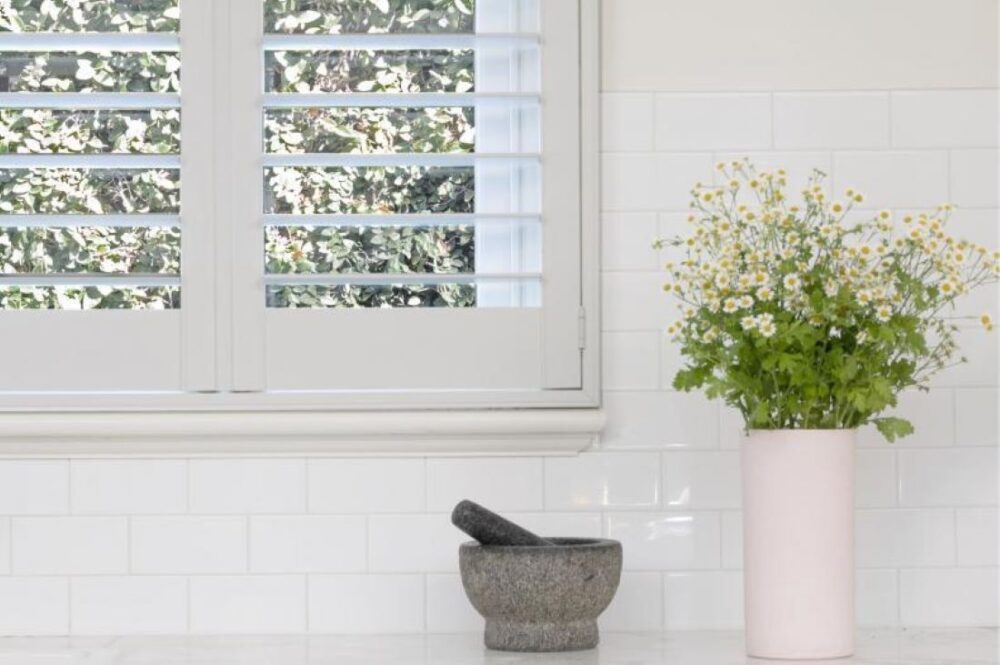
Greater control over natural light
One of the biggest benefits of plantation shutters is the amount of control they give you over natural light.
Rather than choosing between an open window and completely closing your curtains or blinds, adjustable louvres allow you to change the amount and direction of light entering the room throughout the day.
Open them fully when you want to maximise daylight, tilt the louvres to soften stronger sun, or close them when you want greater privacy.
This flexibility can be particularly useful in rooms that receive intense afternoon sun, where glare and heat can quickly become an issue. Adjusting the louvres allows you to filter the light without necessarily making the room feel dark.
It also gives you greater control over privacy. Depending on the orientation of the louvres, you can reduce direct sightlines into your home while still allowing natural light into the space.
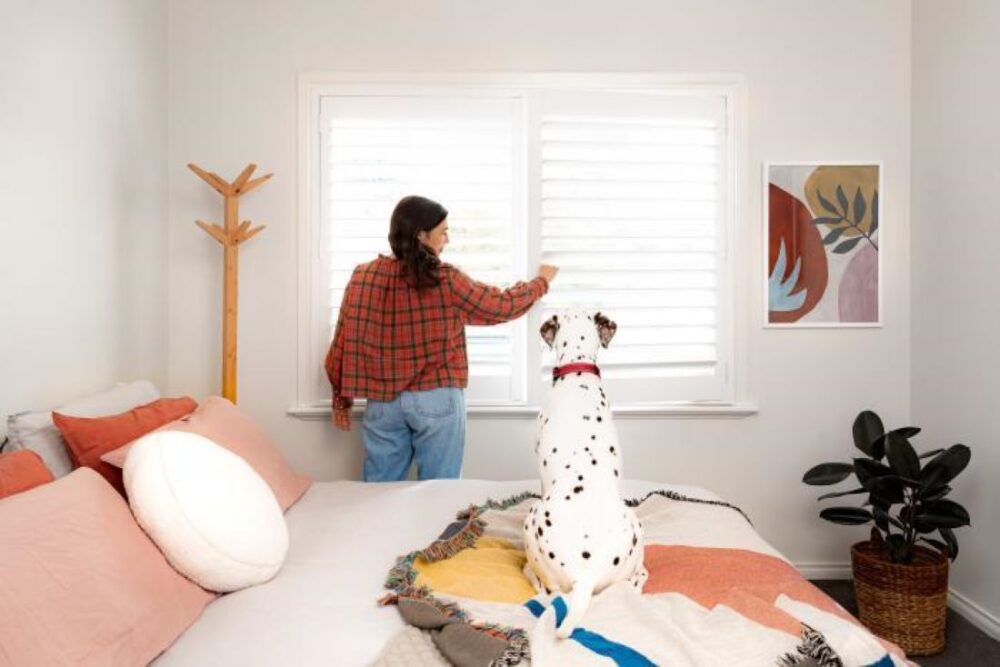
Fewer loose elements for curious pets
Anyone who shares their home with pets knows that interior design decisions sometimes need to account for paws, claws and lingering pet smells.
Floor-length curtains can become something to hide behind, rub against or climb, not to mention they can hold lingering odours. Some traditional blinds also feature cords and lightweight components that curious animals may find interesting.
Plantation shutters have fewer loose elements for pets to interfere with. The panels sit neatly within the window area, with no fabric pooling towards the floor or cords hanging beside the window.
They’re not completely pet-proof — we’re not sure any window covering could make that promise! — but their streamlined design can make them a practical alternative in homes where curtains and blinds have previously attracted unwanted attention.
There’s an aesthetic benefit too. You don’t have to sacrifice a beautifully finished window in the name of practicality. Shutters add architectural detail while keeping the surrounding area clean and uncluttered.
They can make life easier for indoor plant lovers
It isn’t just fur parents who may be drawn to plantation shutters — they also offer plenty of benefits for plant parents.
If you’ve ever moved an indoor plant around the house trying to find its happy place, you’ll know just how much difference the right amount of natural light can make.
Some plants thrive near a bright window, while others prefer softer, indirect light. Conditions can also change dramatically throughout the day and across the seasons.
This is where plantation shutters can be particularly handy. By adjusting the angle of the louvres, you can soften harsh direct sunlight while still keeping the room bright.
That can also give you more flexibility with plant placement. Rather than moving a large Monstera or Fiddle Leaf Fig away from the window whenever the afternoon sun becomes too intense, you have another way to manage the light reaching it.
Of course, every plant has different requirements and window orientation plays an important role, so shutters aren’t a substitute for understanding what your plants need. But greater control over natural light certainly makes creating the right conditions easier.
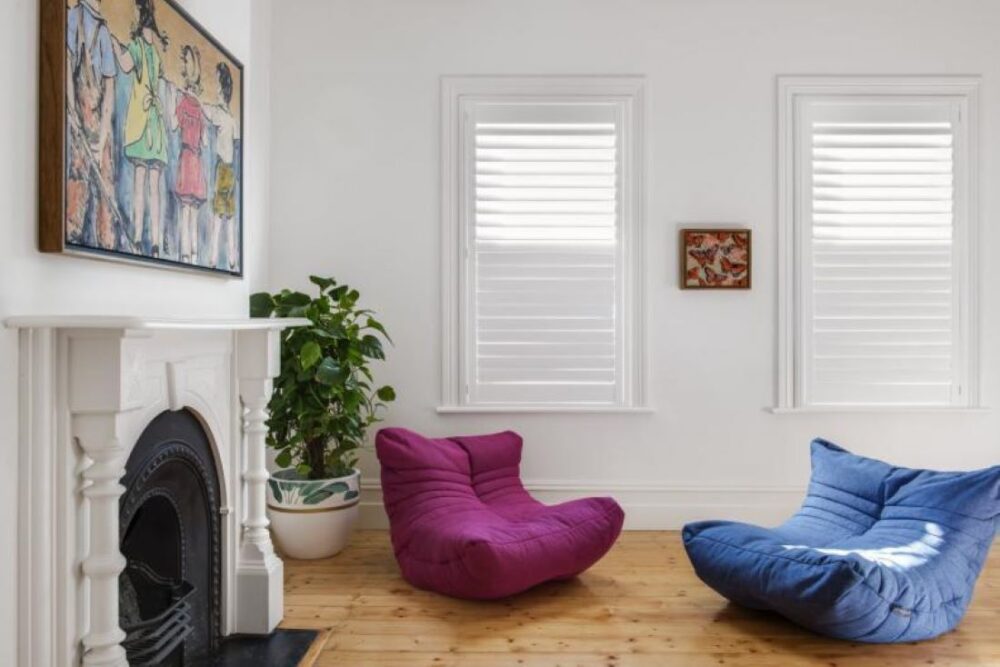
They free up space around windows
Window furnishings can take up more physical space than we sometimes realise. Full-length curtains need room to fall and stack at either side of the window. Blinds can also move or knock against furniture and plants positioned close to the glass.
Plantation shutters remain contained within the window area, which can make the surrounding space easier to use. This is particularly useful if you love styling plants near windows. Curtains can brush against broad leaves as they’re opened and closed, while pots and plant stands may make fabric difficult to access.
With shutters, you can generally make better use of that valuable patch of natural light without having to leave as much clearance for moving window furnishings.
Some materials suit moisture-prone areas
One of the main benefits of plantation shutters is that PVC versions are well-suited to moisture-prone areas (think bathrooms, laundries and kitchens).
While we wouldn’t recommend natural timber plantation shutters in rooms with high humidity or regular moisture exposure, PVC options can be a more practical choice. Unlike natural timber, PVC is less sensitive to moisture, making it a practical material to consider in hardworking areas of the home.
Material choice can also affect maintenance, durability and how easily your shutters can be cleaned, so it’s worth looking beyond colour and style when comparing options.
This becomes even more relevant in homes filled with pets and plants. Watering, misting, muddy paws, nose marks and pet hair all have a habit of finding their way onto nearby surfaces, so easy-to-maintain finishes can be worth their weight in gold.
Plantation shutters create a clean, architectural look
Of course, practicality isn’t the only reason we choose a window treatment. One of the things we love most about plantation shutters is the architectural quality they can bring to a room. Rather than appearing as another decorative layer over the window, they can feel more integrated with the interior itself.
It’s also why plantation shutters can work across a range of interior styles. Depending on their colour and the surrounding finishes, they can feel at home in everything from a classic coastal interior to a more contemporary space.
Best of all, they don’t just enhance the look of your interiors, they also add to your home’s kerb appeal.
As you can tell, there are plenty of reasons why we specify plantation shutters in the right spaces. We hope this article has helped you narrow down your window covering options and decide whether they could work in your home. Whether you share your space with curious pets, want greater control over natural light, need a practical option for moisture-prone areas or simply love the clean, architectural look of plantation shutters, they’re a versatile window treatment worth considering.