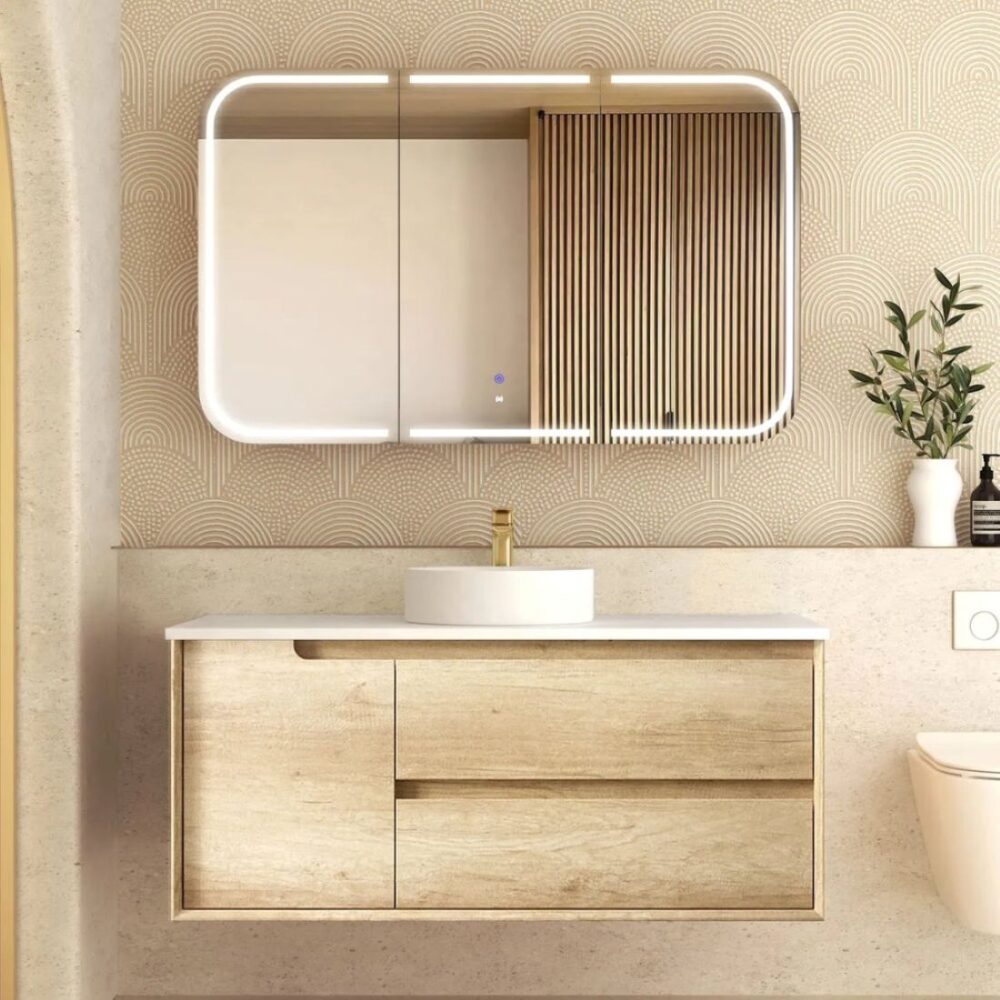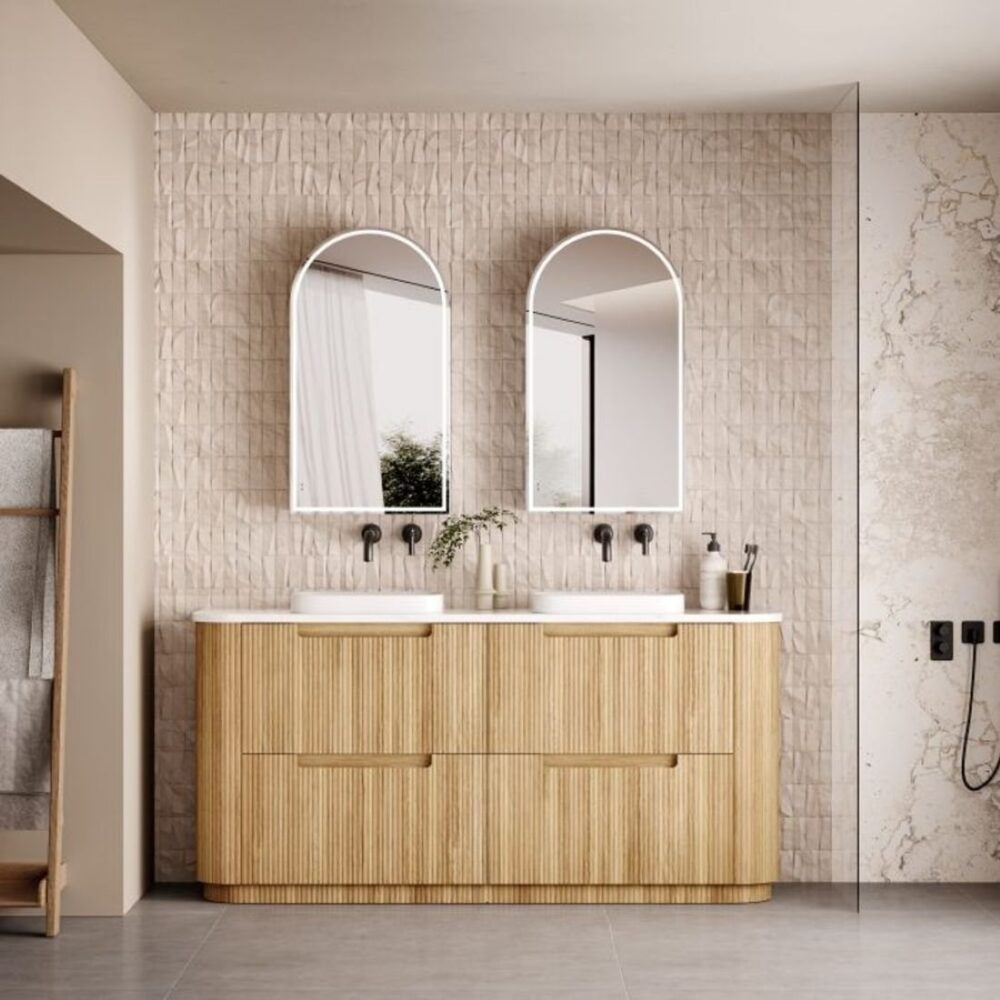
Planning a bathroom makeover is one of the most exciting parts of a home renovation, but it doesn’t take long to realise just how many small decisions go into getting the space right. While choosing fixtures and finishes like tapware, basin and tiles usually gets the bulk of your attention, the vanity is often one of the largest and most used elements in the space. It’s both a major design statement and the hardest-working piece of furniture you’ll use every day.
One of the main design decisions you’ll need to make when selecting a vanity is deciding between a wall-hung (floating) vanity and a freestanding (floor-mounted) vanity. Both styles have pros and cons, so to help you figure out which one belongs in your home, we’re breaking down everything you need to know.
Related article: Ultimate guide to choosing the perfect tapware for your home
Related article: What bathroom mirror to buy? Shapes and styles explained
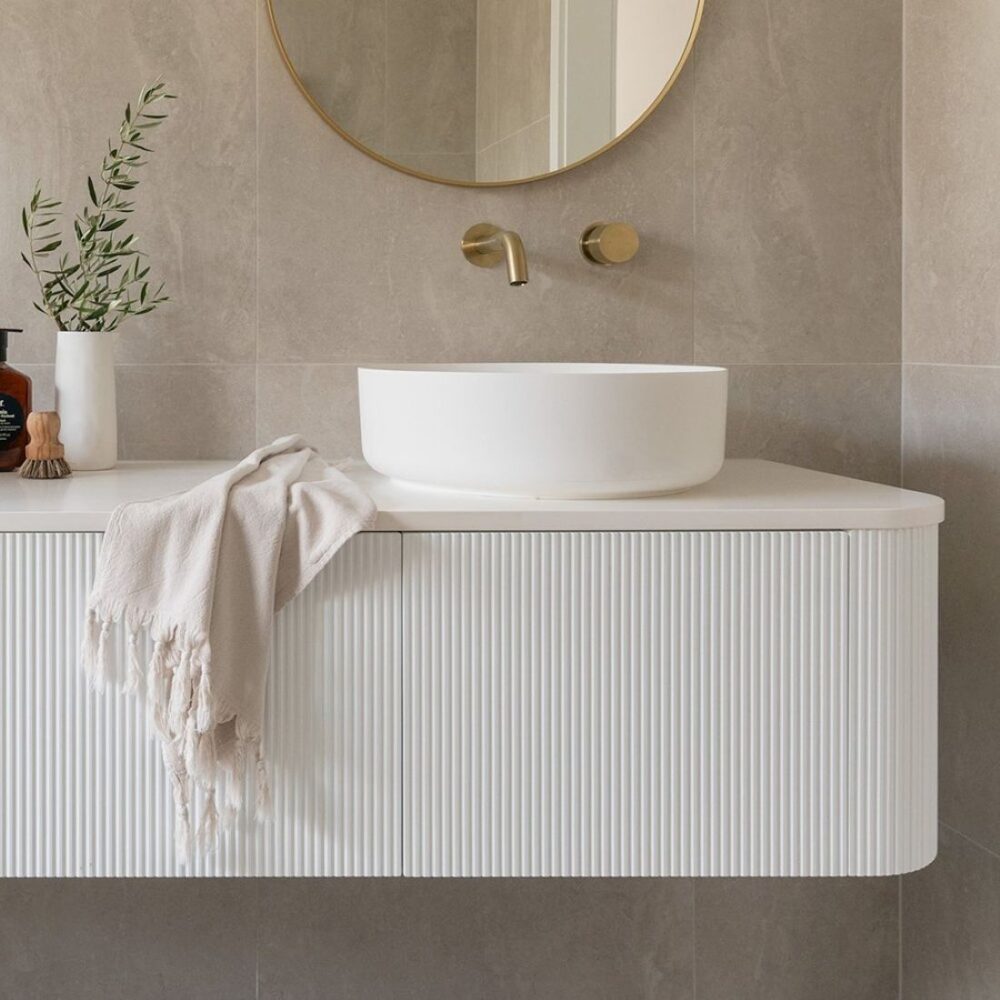
Wall-hung vanity: Light, minimalist & modern
Also known as floating vanities, wall-hung vanities are mounted directly onto the wall, leaving the floor space underneath completely clear. They are a firm favourite in modern interior design and for good reason.
Why you’ll love a wall-hung vanity:
- They trick the eye into seeing more space: By showing more of your floor area, a floating vanity creates the illusion of a larger space. This makes them particularly popular in smaller ensuites or powder rooms where floor space is tight.
- Cleaning is easier: You won’t have to wedge a mop into tight gaps or deal with that silicone joint around the base where dust, water, and stray hairs like to settle.
- Custom height placement: Floor mount vanities come in standard heights whereas wall-hung vanities can be placed at the exact measurement you want. Floating vanities give you the freedom to mount the unit at an ergonomic height tailored specifically to you or around other requirements of your space.
- Sleek architectural design: The clean lines give a refined, contemporary look that fits beautifully into modern, coastal luxe, or Japandi-inspired bathrooms.
A couple of things to keep in mind:
- Slightly less overall storage: Because the unit is lifted off the floor, you naturally lose that area of cabinet space compared to a full-height freestanding option.
- Requires sturdy framing: Wall-hung units need strong structural support hidden in the wall framework (like solid timber noggins or masonry) to hold the weight of the joinery, stone top, and basins securely.
- Plumbing may need to change: If you’re renovating your bathroom and want to switch from a floor-mounted vanity to a wall-hung design, you may find the existing waste pipe runs through the floor rather than the wall. This means you’ll either need to relocate your waste pipe into the wall or choose a wall-hung vanity that can accommodate the exiting plumbing (although this may mean the pipe is still visible underneath which can detract from the wall-hung design). Relocating plumbing can cadd to your renovation costs, particularly if it involves cutting into the concrete slab, so it’s worth checking before committing to a design.
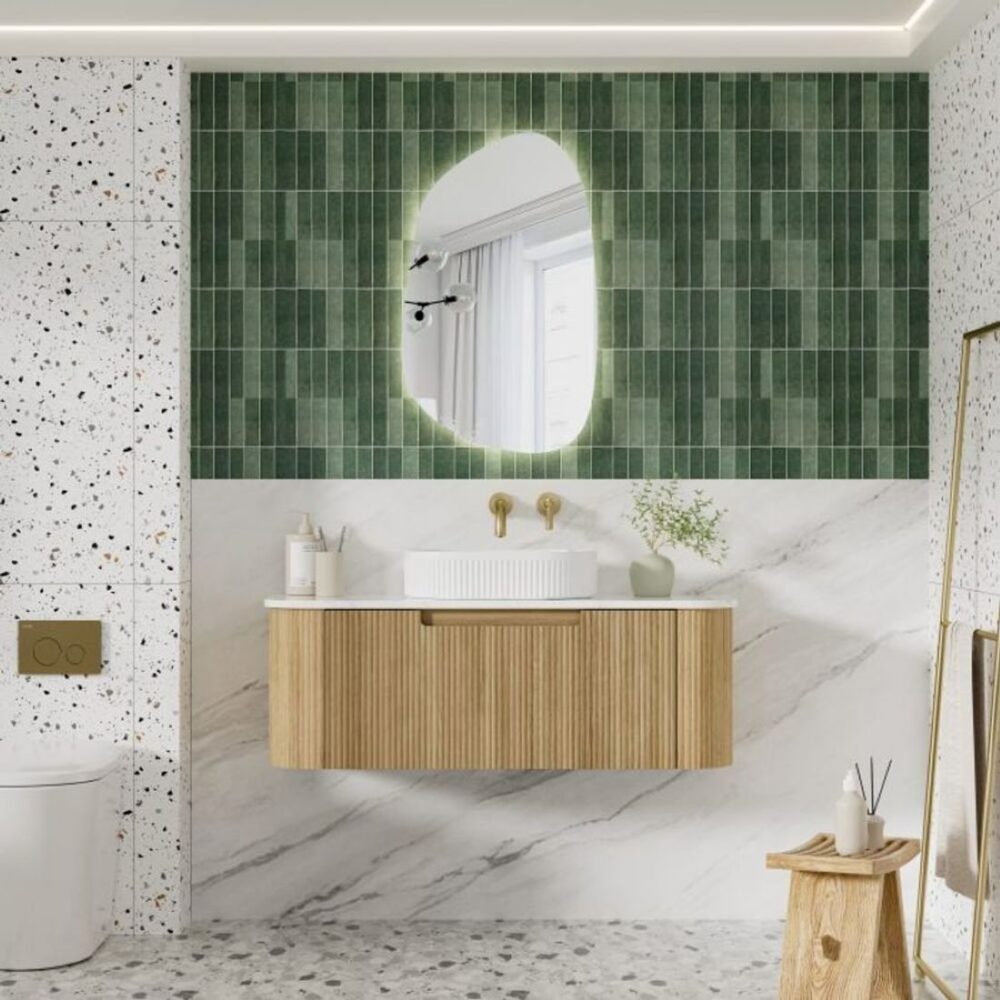
Freestanding vanity: Timeless, grounded & storage-maximising
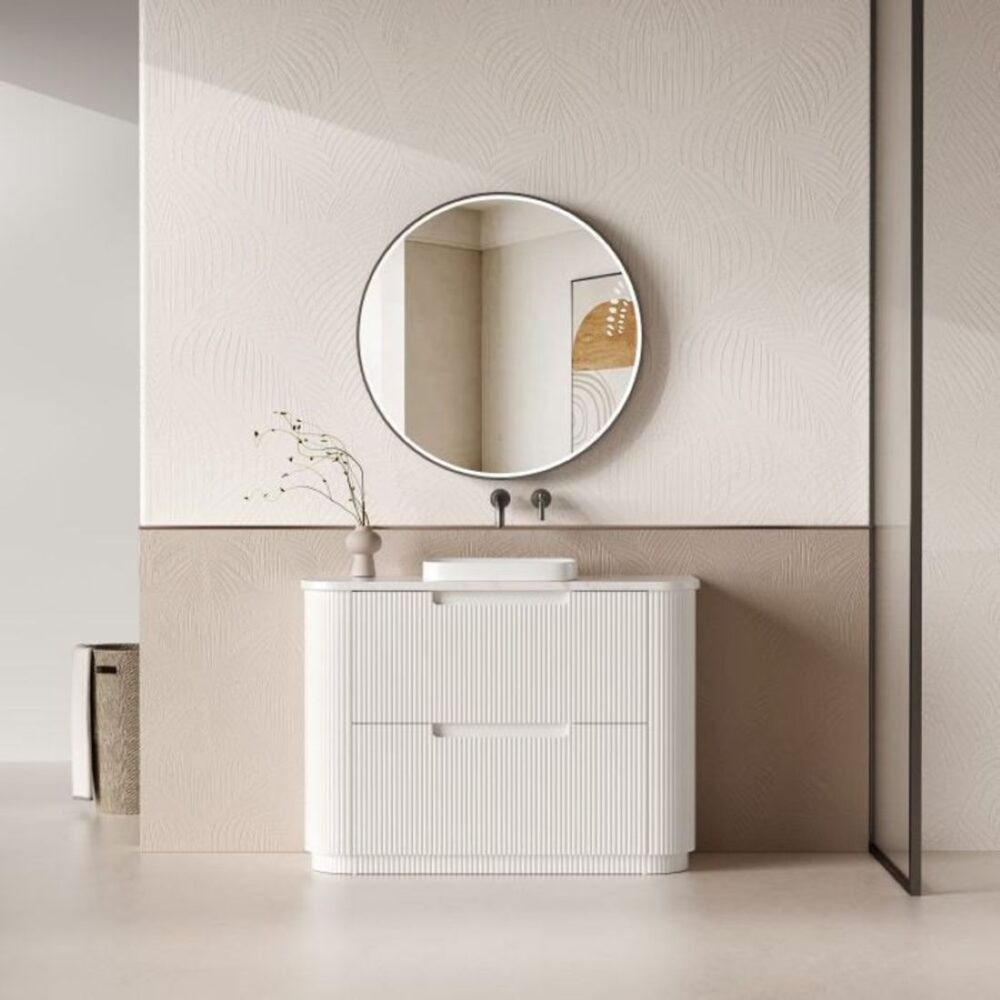
Freestanding vanities sit directly on the floor, supported either by exposed legs or a solid kickboard base. This style offers a grounded, classic shape that brings warmth and structure into a room.
Why you’ll love a floor-mount vanity:
- Maximum storage capacity: A floor-mounted unit uses every single centimetre of vertical space down to the floor. If you need generous drawer depth for towels, tall bottles, and hairdryers, a freestanding vanity is hard to beat.
- Easier plumbing concealments: If you’re refreshing a room without changing your layout, freestanding units easily cover existing plumbing pipes coming up through the floor slab or timber floorboards.
- Furniture-style character: Vanities featuring timber detail or decorative legs feel like a beautiful piece of custom furniture, injecting soul into classic, modern farmhouse, or transitional interiors.
A couple of things to keep in mind:
- Can feel visually heavy: In a compact room, a solid floor-to-ceiling base can occasionally feel a little bulky and weigh down the floor plan.
- Kickboard maintenance: Moisture and dust can slowly gather along the bottom edge over time, meaning kickboards may need replacement or repair over time, and you’ll need to be more mindful when cleaning.
Key things to consider before choosing
How is your plumbing set up?
If you’re doing a simple refresh rather than a full renovation, take a peek at where your waste pipes enter the room. Floor waste outlets are simple to hide inside a freestanding cabinet. If your heart is set on a floating vanity, you might need your plumber to move those pipes into the wall cavity before tiling starts.
What’s your storage style?
Be honest about how much stuff you actually need to store in your bathroom. If you like keeping your benchtops completely clear and need space for spare towels, a freestanding vanity gives you that extra drawer depth. But if you have a moderate amount of items to store, or have sufficient storage nearby, such as a linen closet, a sleek floating vanity will offer more than enough space for daily essentials.
Clearances and door swings
It’s easy to focus on cabinet width and forget about spatial clearance. Always measure the full swing of your vanity drawers or cupboard doors to make sure they won’t knock into the shower screen, toilet, or main entry door. If space is tight, floating vanities with deep drawers often feel less obtrusive than wide-swinging cupboard doors. Also, keep in mind that wall-hung units require enough vertical breathing room underneath to maintain that weightless, open aesthetic (aim for at least 200mm to 300mm of clearance off the floor).
Single vs. double vanity
Another important bathroom vanity design decision is deciding between a single basin vanity or double sink vanity.
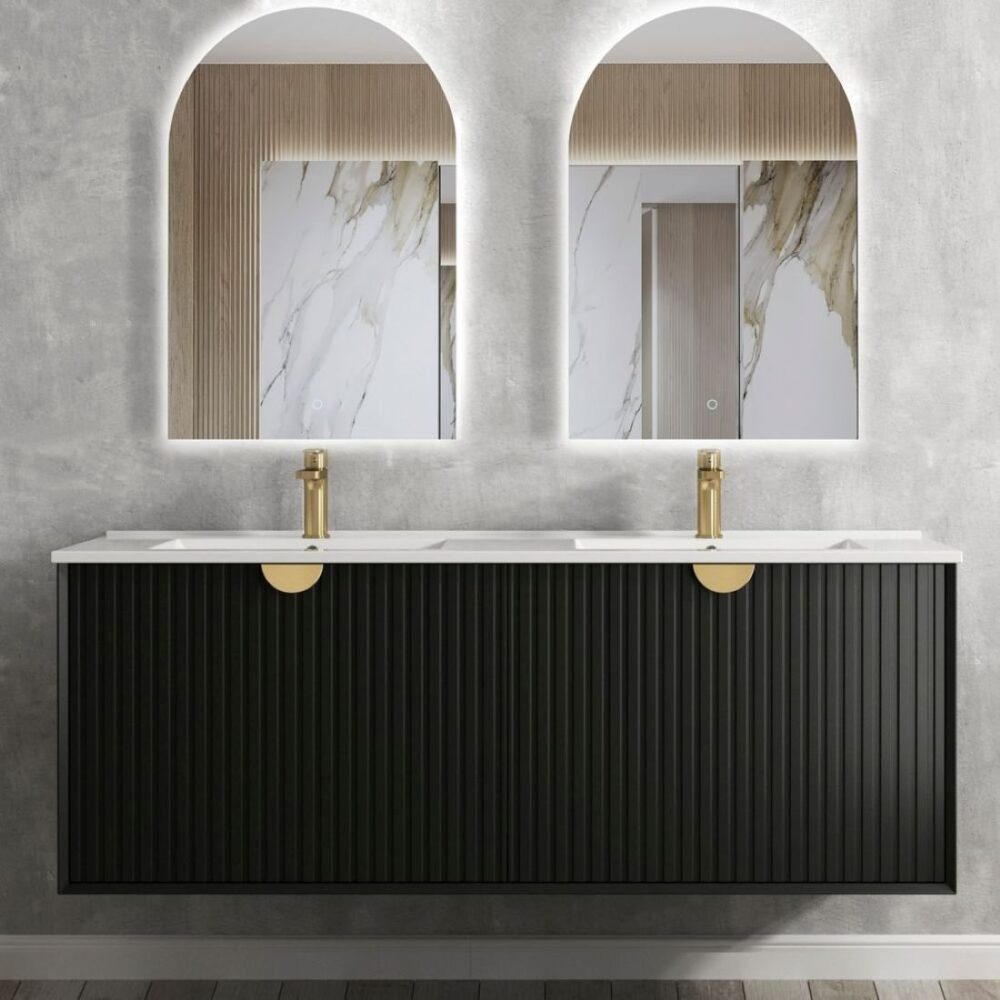
Double sink vanities are often promoted as a luxury design feature when selling a house but depending on the overall width of your vanity, having two basins could take up almost all of your available bench space. In a busy family bathroom, having more bench space may be more important than having a second basin. A single vanity also makes sense in a smaller bathroom, to allow a more functional layout than cramping two basins together.
However, if you have the room, a double vanity is a good idea for shared ensuite routines during busy weekday mornings. Just keep in mind, it does require a longer wall run — usually at least 1200mm to 1500mm minimum, while 1800mm is ideal. Two basins also require twice the amount of plumbing runs, which will add to the cost of your fixtures and labour.
Quality craftsmanship comes first
When comparing bathroom vanities, look beyond the exterior finish and consider the cabinet construction, moisture resistance, drawer mechanisms and warranty. Retailers such as Buildmat offer a range of bathroom vanities, including wall-hung and freestanding designs from brands such as ADP, Aulic and Otti, making it easier to compare styles, sizes and finishes.
So, which vanity style wins?
- Go wall-hung if… You want to maximise visual floor space, love clean modern lines, and want quick and easy cleaning.
- Go freestanding if… You need as much internal storage as possible, want to avoid shifting floor plumbing, or love a grounded, furniture-style aesthetic.
At the end of the day, there’s no ‘better’ type of vanity — it all comes down to your needs and design vision. While some bathroom design styles lend themselves particularly well to a type of vanity, for example floor-standing vanities often suit traditional bathrooms while wall-hung vanities look right at home in modern bathrooms, there’s such a wide range of styles now available that this isn’t a fixed rule.
We hope this guide to wall-hung vs freestanding bathroom vanities has helped you consider which option is right for your bathroom project. For all the latest design tips, as well as plenty of other home inspiration, be sure to subscribe to Style Curator.
More bathroom tips and inspo