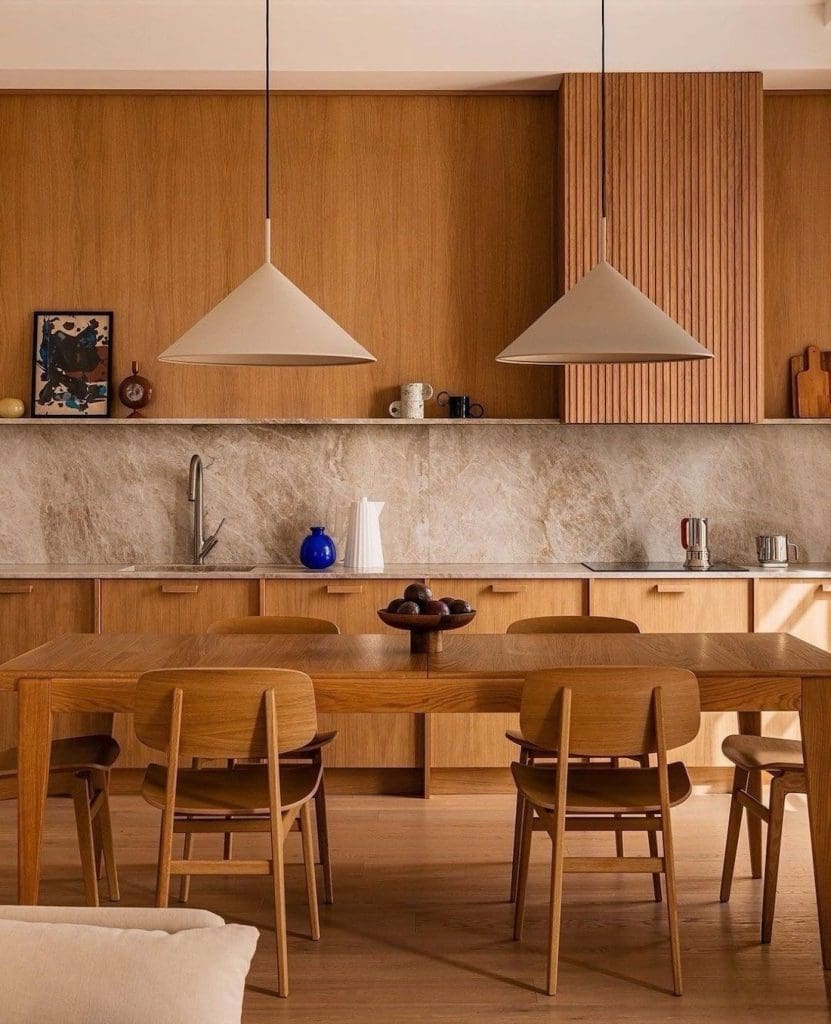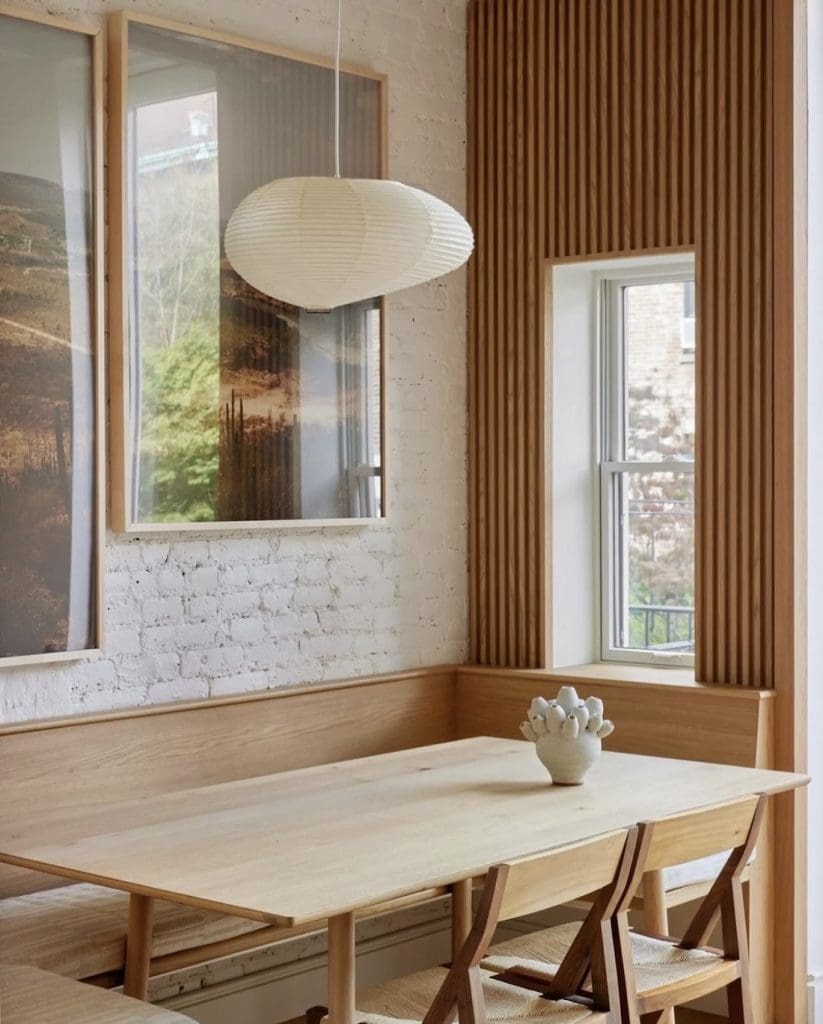
What do you get when you fuse minimalist Japanese aesthetics with warm, clean-lined Scandinavian design? Japandi interior design style.
Gaining popularity in Australia and around the world, Japandi blends the calm restraint of Japanese interiors with the cosy, functional comfort of Scandi living. Think natural timber, low-slung furniture, soft neutrals, and just the right amount of ‘perfectly imperfect’ texture.
We’ve called on design experts and put together a comprehensive guide with everything you need to know about Japandi style and how to bring it into your living areas, bathrooms and kitchens.
Related article: A guide to the 10 most popular interior design styles
Related article: Exploring Japanese bathroom design in Morecombe Home
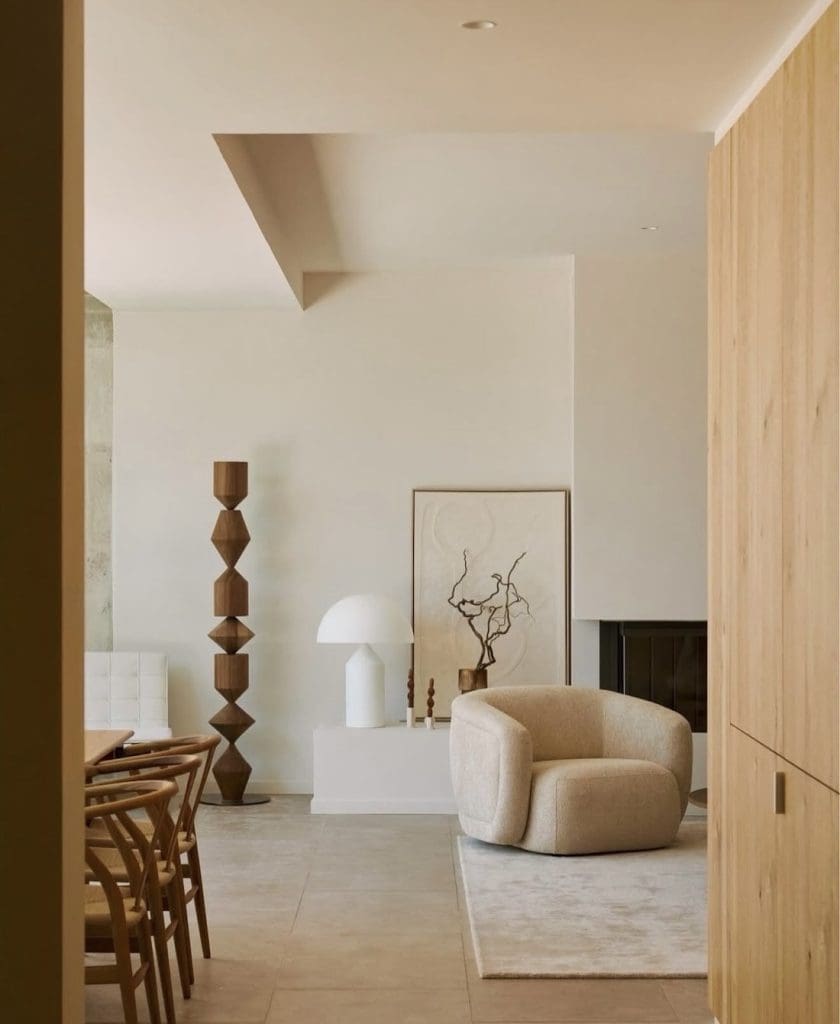
What is Japandi interior design?
At its core, Japandi interior design is a hybrid of Japanese and Scandinavian design — not just in looks but also in philosophy.
It takes the pared-back aesthetic and strong lines, natural materials and the wabi-sabi philosophy of finding beauty in imperfection and ageing from Japanese design, and fuses it with light-filled rooms, simple forms, and a cosy, welcoming feeling often described as hygge.
True Japandi goes beyond what many term as ‘Japanese meets Scandi.’ It is a shared philosophy of restraint, emotional calmness and craftsmanship.
“When I design Japandi spaces, I mainly focus on intentional, human-centered functionality and natural materials,” says Anh Ly, architect-turned-interior designer and founder of Mim Concept.
“The key to success is balancing minimalism with softness. For instance, you don’t warm up a Japandi room by adding more décor. Instead, you warm it up by choosing interior pieces with quiet texture. The goal is to keep the space serene but never sterile.”
Key characteristics of Japandi style:
- calm, muted colour palette: soft whites, warm beiges, stone, mushroom, clay, greige and charcoal accents. You’ll see nature-inspired tones rather than stark black-and-white contrast
- natural, honest materials: light to mid-tone timbers (oak, ash), rattan, bamboo, stone, linen, cotton, wool, paper shades and handmade ceramics
- low, grounded furniture: slimline sofas with timber legs, low coffee tables, floor cushions and simple joinery that sits close to the floor to create a grounded, restful atmosphere
- ‘perfectly imperfect’ finishes: plaster-look walls, handmade tiles, visible grain in timber, slightly irregular pottery — nothing feels overly glossy or showy
- decluttered but lived-in: Japandi is minimal but not sterile. Surfaces are edited, yet there are still books, a favourite mug, a linen throw or a single sculptural branch to give the space personality.
If you love interiors that feel quietly luxurious, functional and timeless, Japandi might be your design soulmate.

How to create Japandi main living areas
When people search for ‘Japandi living room ideas’ or ‘Japandi style homes’, the results are soft, layered spaces that feel calm but still warm and inviting. Here’s how to get that look in your living and dining zones.
“Characteristics of Japandi style include a neutral, earthy colour palette mixed with natural materials like wood and linen,” says Colleen of Satara.
1. Start with a Japandi colour palette
The foundation of Japandi style is a soft and neutral colour palette. Walls, ceilings and large surfaces are muted, earthy and warm.
Main colours for a Japandi interior:
- warm white or soft ivory
- light greige or stone
- pale putty or mushroom.
Accents can include:
- deeper taupe and cocoa
- charcoal or ink (used sparingly for contrast)
- muted forest green, eucalyptus or clay tones.
These colours echo both Scandi neutrals and Japanese nature-inspired hues, helping the space feel serene rather than stark.
2. Choose simple, low-profile furniture
Furniture choices are so important in achieving the Japandi design style in main living areas. Avoid overly ornate detailing or heavy, bulky pieces. Japandi furniture should feel quiet, functional and well-considered.
“It’s about clean lines, focus on functionality and craftsmanship,” explains Colleen of Satara.
“It embraces the Japanese concept of wabi-sabi, finding beauty in imperfection (which many of our timber pieces naturally do). And the Scandinavian idea of hygge, or cosy contentment as many of our designs represent proudly.”
Key furniture pieces and characteristics to embrace the style:
- a low sofa with clean lines, timber or black metal legs and textured upholstery (linen, cotton or a subtle weave)
- rectangular or oval timber coffee tables with rounded corners
- slim sideboards or wall-hung joinery to keep the floor feeling open
- dining tables in solid timber with straight but softened legs, paired with simple chairs in wood, paper cord or upholstered seats.
An interior design style that blends Japanese elegance with Scandinavian simplicity, creating a minimalist, functional, and tranquil aesthetic.
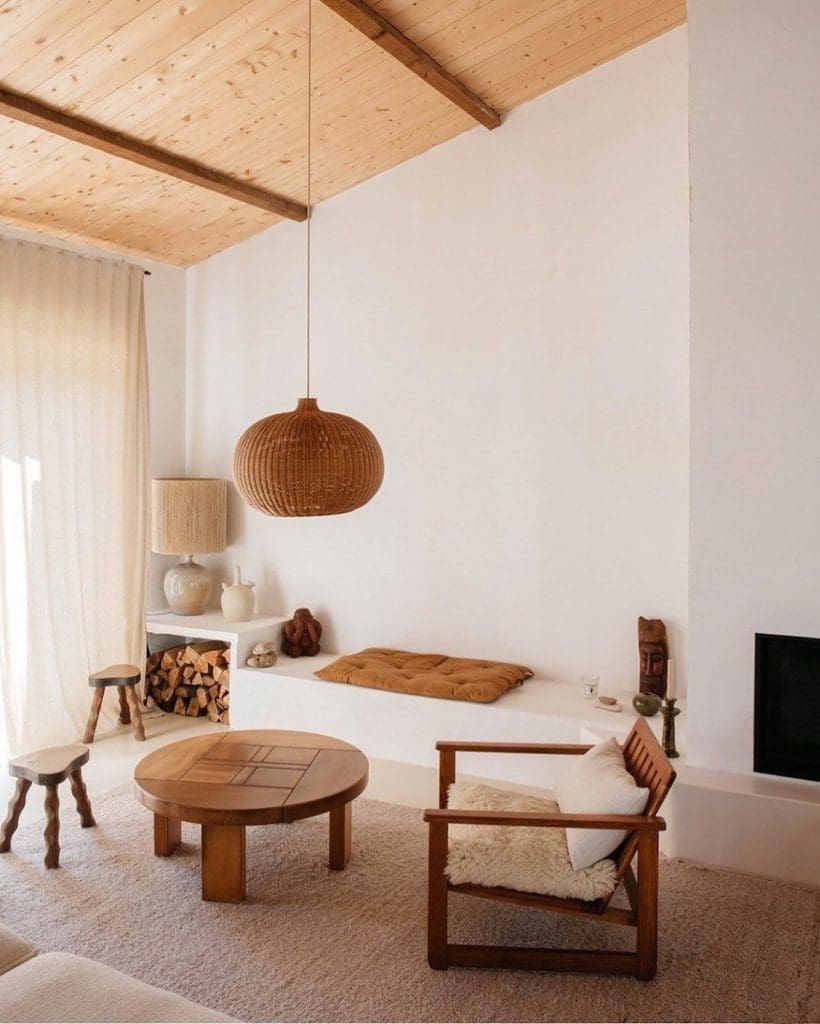
3. Layer texture instead of clutter
Rather than object stuffing your space, build interest through texture. Whether it’s cushions on the sofa or decor in a bookshelf, you want to embrace fewer things that at the same time tell a more interesting story. This will also create breathing room, instantly achieving that sense of calm and restraint the style is known for.
Favourite textures to achieve this fusion style:
- linen or cotton cushions in solid tones or subtle, small-scale patterns (longer lumbar cushions are a fave shape)
- flatweave or low-pile wool rug in a soft neutral, or jute rugs can also work well
- a single sculptural vase or handmade ceramic bowl on the coffee table or offset on a sideboard
- timber trays, woven baskets or paper lampshades.
4. Bring in nature (in a low-key way)
Connection to nature is a common denominator in both Japanese and Scandinavian design. The goal when bringing natural elements in is to create the sense of the outdoors gently flowing into your living spaces. It’s important not to go too hard or you’ll compete with the other elements in the space… or start giving it a bohemian vibe!
Easy ways to bring subtle hints of nature into your living area:
- simple stems of green foliage (or a single branch) in a vase instead of a full bouquet of flowers
- one or two potted plants with simple foliage, such as olive trees, rubber plants or monstera
- strategically placed mirror that reflects views of your garden, looking like a natural green artwork in your space.
5. Keep styling intentional
Finally, in keeping with the emotional calmness of this style, you need to style with restraint! An easy rule to follow is to think of every piece as having a job. For example, a lamp that gives soft light or a tray that holds remotes or smaller objects.
If something doesn’t serve a purpose (functional or emotional), you probably don’t need it in a Japandi space.
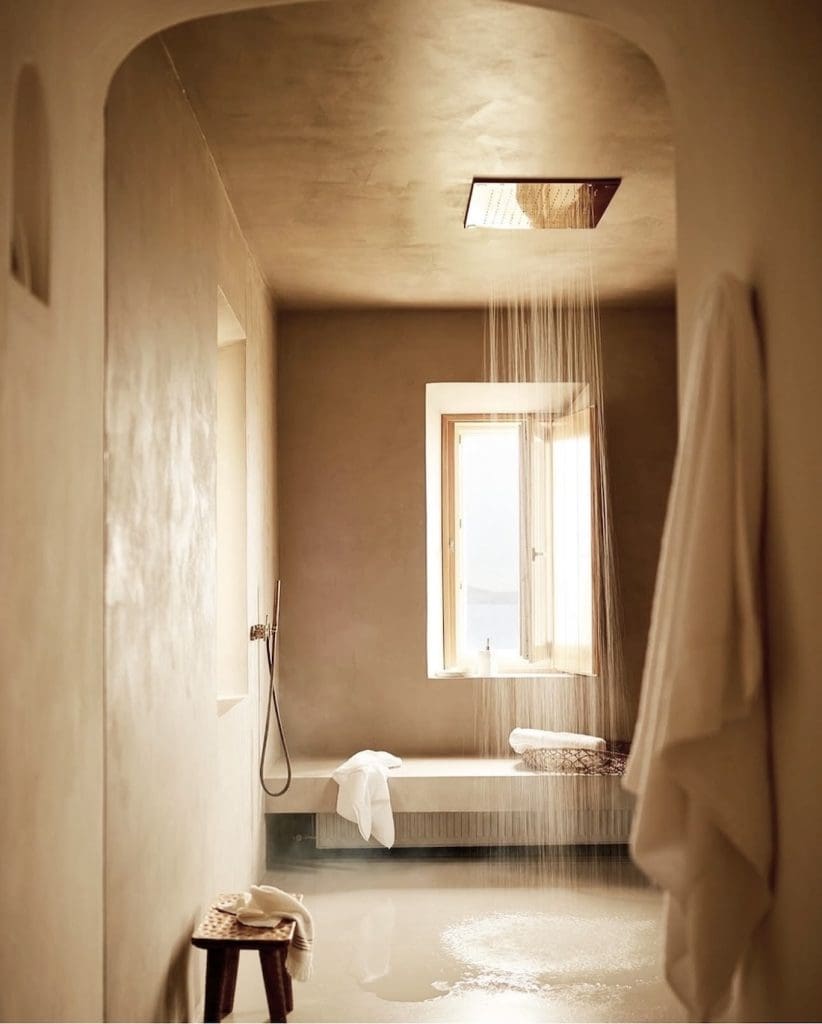
Japandi style bathrooms
Onto one of our favourite zones of the home — the bathroom. Designing a bathroom is an enigma to many… and when you throw a lesser known design style into the mix, it can leave you truly stumped!
We’re here to offer our design insights on how you can achieve a Japandi bathroom. One that feels spa-like, calming and refined.
1. Focus on warm minimalism
Just like decorating a living space, colour palette is one of the most important elements of a Japandi bathroom. All the colours and materials should feel inviting so avoid stark white and try this instead.
Colours and materials of a Japandi bathroom:
- warm white or light stone tiles (and bonus points for those with a speckled glaze or perfectly-imperfect finish)
- timber-look or real timber vanities
- natural stone tiles or vanity top.
You can add subtle contrast with matt white, brushed brass or brushed nickel tapware but keep the shapes clean and simple.
2. Hero natural materials and tactile finishes
The feeling you want to achieve when designing and decorating a Japandi-style bathroom is of a space that’s close to nature and invites slower moments of self care. The easiest way to create a space like this is by incorporating natural materials and finishes.
Ideas to bring natural materials and finishes into your bathroom:
- stone or stone-look tiles on floors or feature walls (or use feature tiles with an irregular finish or colour variation)
- timber framed bathroom mirror
- ceramic or handblown glass wall lights
- timber stools, trays or bath caddies
- linen or waffle towels in oatmeal, stone or soft charcoal
- indoor plant that loves humidity (like a fern or peace lily) if there’s enough natural light.
“Japandi interiors lean on natural, tactile materials: pale timber, veined stone, soft linens and clay tones. Neutral palettes of warm whites, oat, soft greys, and black accents create balance and depth,” says Lisa Goodsall, National Display Home & Studio M Retail Manager, Metricon.
Layering textures — smooth with rough, warm with cool — brings richness and quiet luxury to every room.
3. Keep lines clean and storage smart
Japandi bathrooms should feel calm, not cluttered. So avoid having baskets full of stuff on display or using the back of your door for extra storage. You want to keep all visual noise to a minimum.
Design tricks to achieve an uncluttered aesthetic in your bathroom:
- opt for a wall-hung vanity with integrated storage (remember a timber grain is our suggested finish)
- use built-in niches in showers to avoid caddies (think about where you can position these so they’re not in view as soon as you walk into the bathroom)
- recess a storage cabinet into the wall so it sits flush or mostly flush as pictured in the bathroom below
- keep benchtops mostly clear, with only a few daily essentials decanted into simple containers.
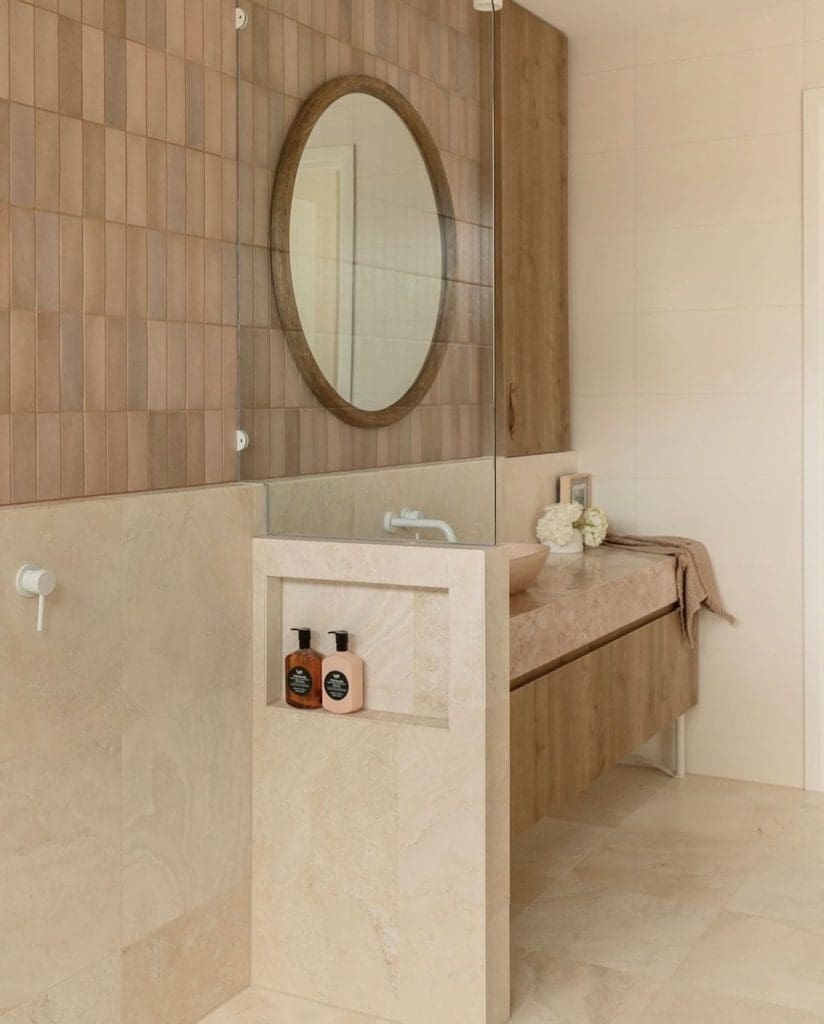
Kitchens with a Japandi style
Kitchens are the heart of the home so if you want to create a Japandi style interior, it makes sense to focus your attention on the kitchen. Japandi kitchens balance functionality with soft, considered design.
“True Japandi style is a harmonious blend of Japanese and Scandinavian aesthetics, grounded in core principles like quality over quantity and a deep appreciation for nature,” says Josh Qian, COO and Co-Founder of LINQ Kitchen.
“It’s a style that appreciates age and raw craftsmanship. It also invites a variety of natural materials, such as wood and stone, to create spaces that feel lived-in yet refined.”
1. Keep cabinetry simple and timeless
A common theme of all the Japandi-inspired kitchens we’ve gathered is timber or timber veneer cabinetry. It’s a fool-proof and timeless choice that will set the foundation for the space.
If you don’t want to use timber cabinetry — or all-timber cabinetry — a matte laminate in a warm neutral colour also fits this style to a T. We love how the kitchen below blends mostly timber door fronts with some matte white overhead cupboards. It gives the space a sense of balance and is a clever design trick to make this tight kitchen feel open and spacious.
Consider using handles and knobs on your cabinetry to bring in handmade and imperfect qualities. Aged bronze or hand carved timber handles, or even stone door pulls would add interest and help you lean into the craftsmanship of this design style.
Whatever you do, avoid high-gloss finishes and ultra-trendy colours!
When it comes to materials, colours, and textures for Japandi spaces, muted hues and earthy tones reign supreme. For kitchens, consider using dark and light wood cabinetry to create a stunning contrast that defines the style.
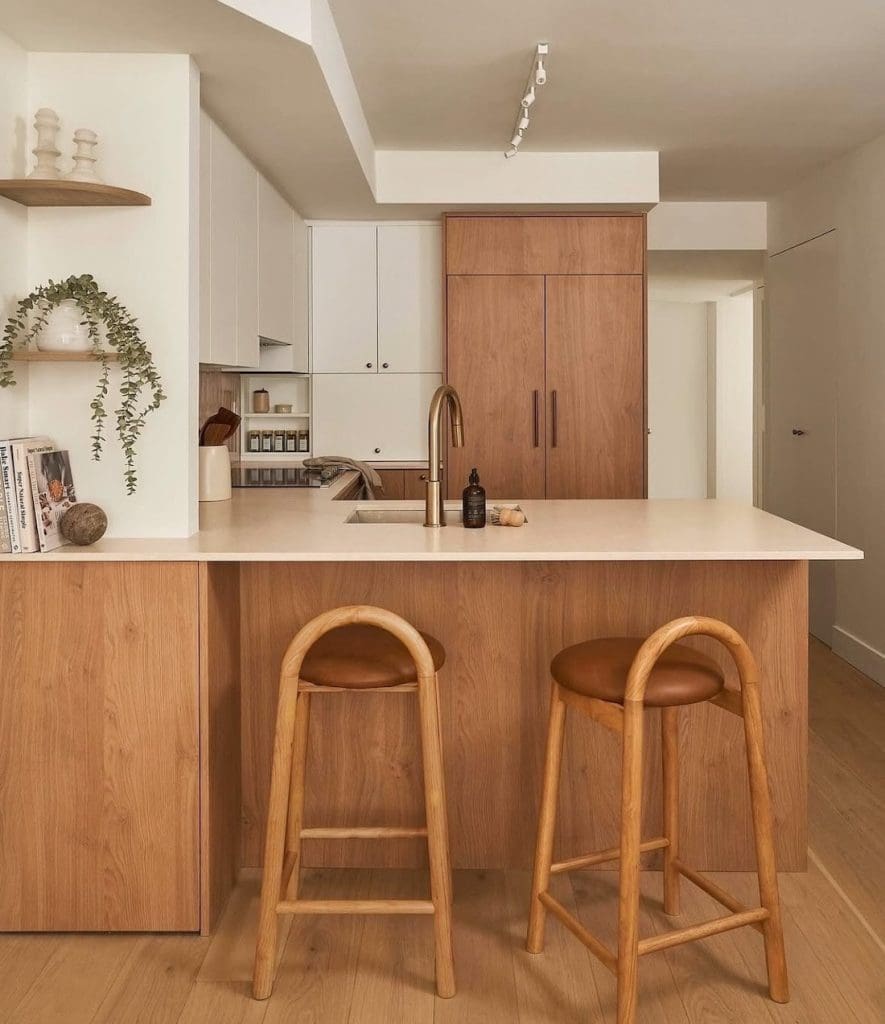
2. Embrace natural benchtops and soft shapes
If your budget can afford to stretch that far, a natural stone benchtop will anchor your kitchen in this design style. Otherwise, a light and neutral manmade alternative, with a warm base and subtle variation would be our go-to.
Japandi kitchen benchtop ideas:
- light to mid-tone stone or stone-look benchtops with gentle veining
- rounded island corners, bullnose or pencil-round edges instead of sharp, square profiles
- timber breakfast bars or shelves to add warmth.
“Warm minimalism is the heartbeat of Japandi,” says Lisa Goodsall of Metricon. “Clean architecture is softened with gentle curves, natural fibres, and diffused lighting. Practicality comes from storage-smart furniture and multifunctional pieces that maintain flow without sacrificing calm. The goal is uncluttered spaces that feel welcoming and lived-in.”
3. Calm, considered styling
Just like in other zones of the home we’ve already covered, the styling in your kitchen should be kept uncluttered. Keep benchtops clear where possible and just display a few functional pieces (think chopping boards, ceramic utensil holder, teapot or bowl of seasonal fruit).
If you have open kitchen shelves, this is where you could add a few decorative items without going overboard. For example, a trio of ceramics or some beautiful glassware. The kitchen should feel ready to cook in, but not visually noisy.
4. Lighting that feels gentle, not harsh
You’ve heard us say it time and time again, lighting is one of the most overlooked elements of design. Because the Japandi style is all about comfort and atmosphere, you can’t afford to overlook the lighting in your kitchen.
Create a layered lighting plan, including:
- general lighting with downlight on dimmers
- decorative, ambient lighting with wall lights or pendants over the island in paper, linen or simple metal
- under-cabinet task lighting for benches.
Tip: use warm white globes (not cool blue-toned light) to keep things cosy and inviting.
Natural light is essential — keep windows unobstructed to let sunlight animate textures.
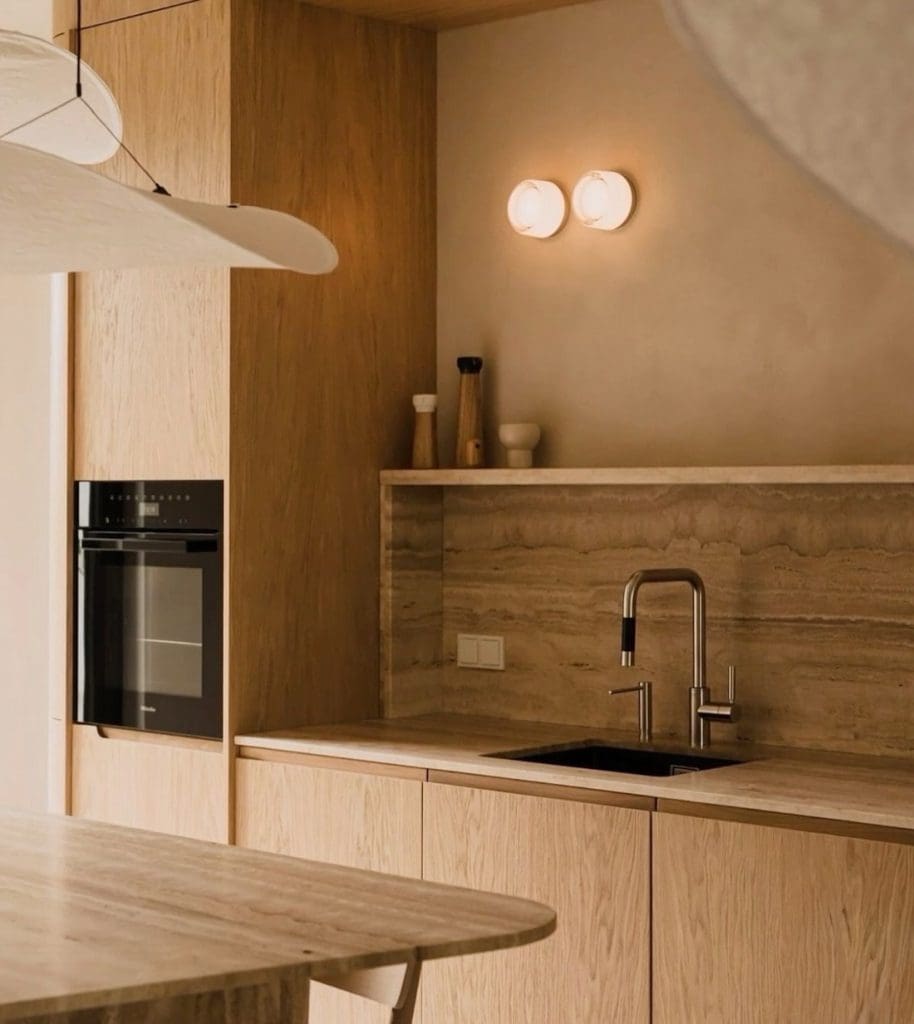
Japandi pitfalls to avoid
Throughout this guide, we’ve shared the principles of Japandi style and how you can translate that into your home… but sometimes it’s easier to learn by hearing what not to do.
“The biggest mistake I see people making when trying to make a space Japandi is trying to copy the look without adapting the mindset. They purchase pale wood furniture, add beige cushions everywhere, and wonder why everything feels so flat,” says Anh Ly.
“What they don’t know is that Japandi isn’t a colour scheme, it’s a discipline of editing. The first thing you need to do is get rid of visual noise before you add anything new. If you are operating on a modest budget, prioritise better lighting and at least one piece made from honest materials, such as ash wood, rattan or stone. This piece will anchor your room and instantly elevate the aesthetic.”
Lisa Goodsall says she sees people confuse Japandi with cold minimalism. “Empty spaces, oversized furniture, or too many decorative pieces can disrupt balance, particularly in smaller homes or rentals. True Japandi relies on harmony, warmth, and intentionality — every element should serve a purpose and contribute to calm. Avoiding patterns is also key.”
We hope this guide has given you a good insight into the essence of Japandi design, and plenty of practical ways you can incorporate it into your home. Is there another design style you’d like to know more about? Drop a comment below!
More design tips