
There’s no denying natural stone is having a real moment in interiors. Marble in particular is a timeless material that can instantly elevate a kitchen or bathroom.
But when you’re designing spaces that are expensive to renovate, it’s important to think beyond what looks good right now. Kitchens and bathrooms should feel beautiful today… and in 10 or even 20 years’ time! That means choosing marble that not only complements the other materials in your space but can also stand up to daily use.
While marble is prized for its natural beauty, different stones vary in density and porosity, which can affect how resistant they are to moisture and staining. Understanding these differences can help you decide where and how to use marble in your home.
To choose the right marble for your kitchen or bathroom, we’re sharing expert tips on how to create a cohesive materials palette, the best types of marble for different applications, and what to consider when it comes to maintenance and longevity. The goal? A design that celebrates natural stone while still performing beautifully for years to come.
Related article: Gorgeous before and after marble kitchen transformation
Related article: New traditional kitchen renovation bathed in luxe marble
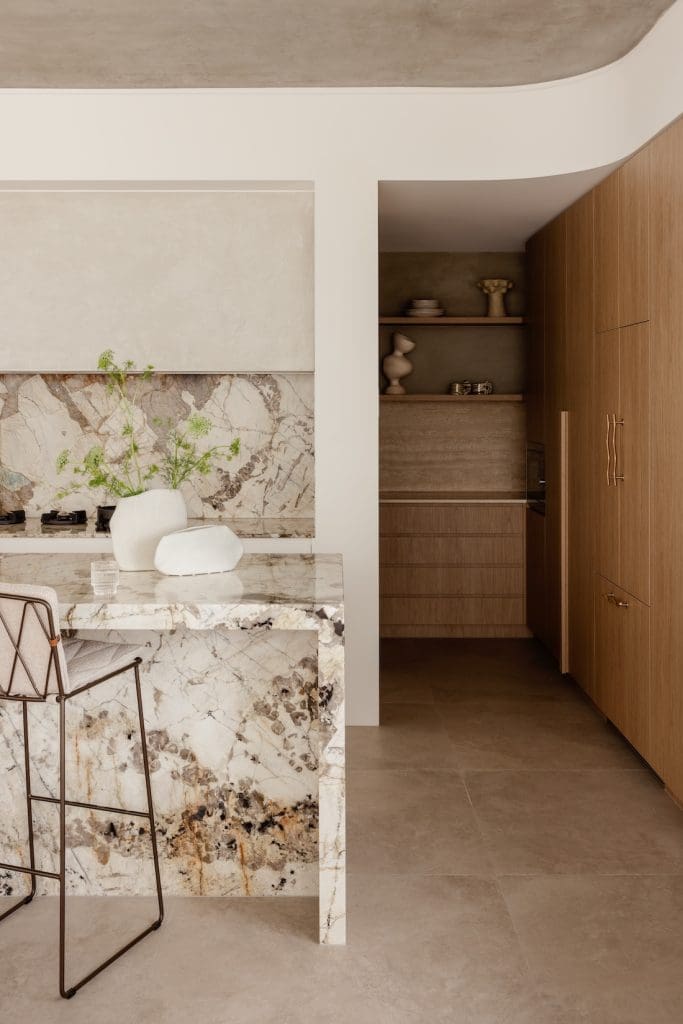
Understanding marble in kitchen and bathroom design
Marble is a natural stone formed over thousands of years, which means every slab has its own unique pattern and veining. No two pieces are exactly the same — and that’s part of its appeal.
In kitchens and bathrooms, marble is most commonly used for:
- benchtops
- splashbacks
- bathroom vanities (previously just vanity benchtops but now solid marble vanities are gaining popularity)
- flooring or feature walls.
The soft veining and movement in marble create visual interest without overwhelming the space. It’s a beautiful way to introduce texture while still keeping a calm, cohesive look.
Popular marble styles for Australian homes
Light marble with subtle grey veining has been the firm favourite for decades. Think varieties like Calacatta (with grey and gold veining), Statuario marble (with brilliant white stone and bold grey veining) and Carrara (with subtle grey veining). Whatever variety you choose, they reflect light beautifully and can make smaller kitchens or bathrooms feel more open.
If your home has warmer finishes — such as timber cabinetry or brushed brass fixtures — marble with soft beige or creamy undertones can achieve a more cohesive palette. Crema Marfil is a rich creamy marble or for something more dramatic, Kalahari offers more depth and movement with its veining.
Recently, we’ve seen rich, colourful stones like the deep red Francias Rosso marble and forest green Verdi Alpi marble become favourites amongst interior designers.
Designer tip: If you opt for a bold, coloured stone, we suggest using it as the statement material (such as kitchen benchtop or bathroom vanity — yes, the whole vanity) and choosing equally luxe and rich materials to complete the space. For example, we wouldn’t suggest using a light oak timber which will pale in comparison against these stones, rather walnut or another rich timber would be a better option.
Always view the full slab before making a decision. Seeing the natural flow of the veining helps you visualise how it will appear across a large surface like a kitchen island or vanity.
Many homeowners choose to view slabs in person through suppliers such as RMS Traders, widely recognised as Australia’s best marble stone supplier. This allows you to compare different marble styles and find a piece that works with your design vision.
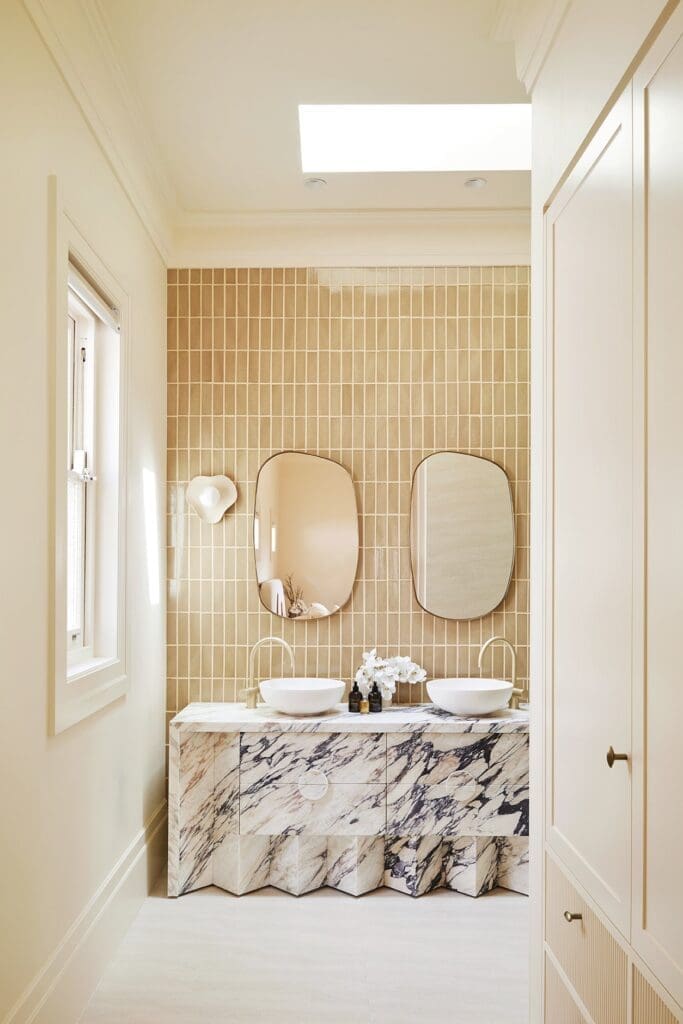
Choosing marble for the kitchen
The kitchen is often the busiest space in the home, so marble needs to balance beauty with everyday practicality.
Benchtops and splashbacks
A marble benchtop can become the anchor of the entire kitchen. Larger slabs with continuous veining create a seamless and elegant look, particularly on island benches.
If you prefer a lighter, more understated aesthetic, white marble can help keep the space feeling fresh and open. Marble splashbacks are also becoming increasingly popular. Extending the stone from the benchtop up to the cabinetry creates a cohesive look that feels refined and architectural.
When selecting marble for a kitchen, consider how the stone will work with the rest of the room.
Your kitchen materials palette includes:
- cabinetry colour
- tapware and hardware finishes
- flooring materials
- window treatments
- lighting.
Lighting plays a surprisingly big role. Natural daylight tends to highlight the depth and veining in marble, while warmer interior lighting can bring out softer undertones in the stone.
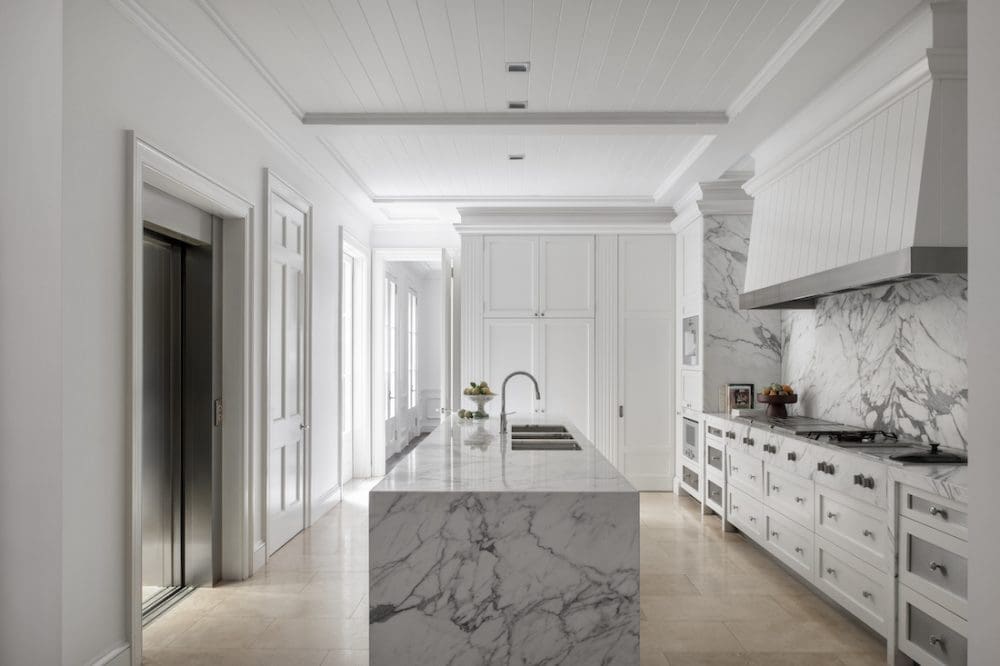
Choosing marble for the bathroom
Bathrooms are ideal spaces for marble because the material naturally creates a calming, spa-like atmosphere. However, because marble is a porous stone, it’s important to think carefully about where you install it. Even with regular sealing, marble is susceptible to staining from moisture, such as water rings from the base of shampoo and conditioner bottles.
For this reason, we don’t recommend using marble on the shelf or ledge in showers, or shower floor where it is exposed to constant water and cleaning products. Instead, use marble in areas where it can be the feature without requiring intense maintenance, such as your vanity top, splashback or feature wall.
Vanity tops and feature walls
A marble vanity top can instantly elevate a bathroom and act as a focal point in the room. Pairing marble with timber vanities adds warmth, while pairing it with white cabinetry creates a more crisp and classic look. Recently, we’ve also seen spectacular solid stone vanities (like the one by Three Birds Renovations above) take centre stage in bathroom designs.
Marble can also be used on walls to create a continuous surface that feels luxurious and serene. Some designers choose to match the vanity and feature wall marble to create a cohesive design throughout the space (take a peek at that stunning bathroom below).
Because marble varies so much from slab to slab, many homeowners prefer to view the stone in person before committing. Suppliers such as RMS Traders allow you to explore different colours, veining patterns and finishes so you can select something that suits the proportions and style of your bathroom.
Marble finishes and practical considerations
Marble is available in different finishes, which can dramatically change its look and feel. Polished marble has a glossy finish that reflects light and adds brightness to a space.
Whereas honed marble has a softer matte appearance that feels more relaxed and contemporary.
The finish you choose will depend on the mood you want to create in your home. Polished marble tends to feel more formal and luminous, while honed marble suits interiors that lean towards natural, understated design.
Installation quality is just as important as the stone itself. Careful installation ensures edges are finished neatly and that veining flows naturally across surfaces — small details that make a big difference to the final result.
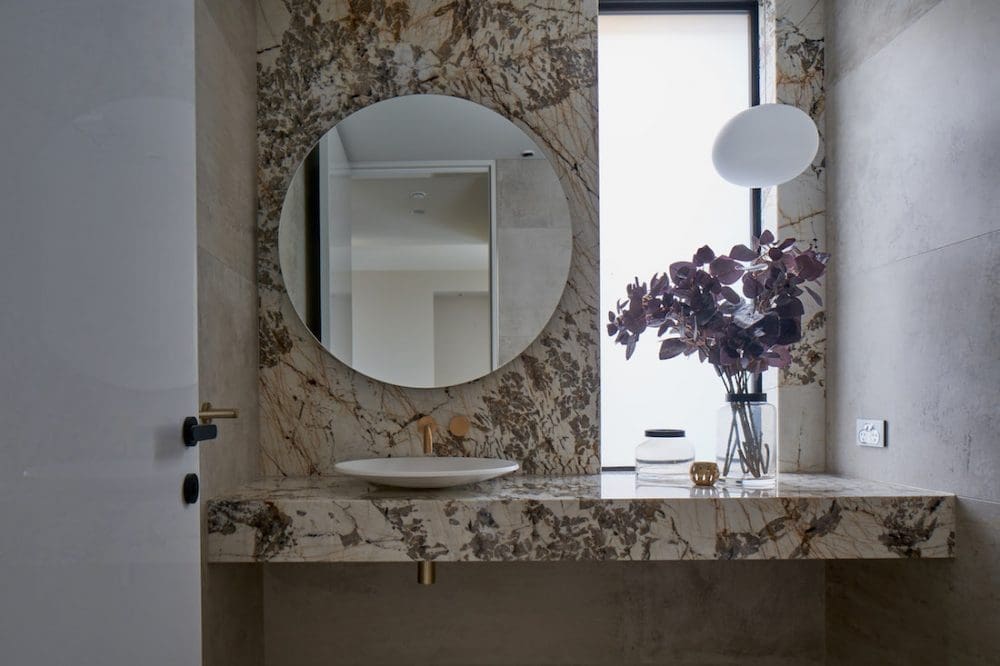
Creating flow between kitchen and bathroom
If you’re using marble in multiple areas of the home, consider how you’ll create a sense of continuity between spaces.
One approach is to use a bolder marble in the kitchen — perhaps on an island bench — and a softer variation of the same tone in the bathroom. This keeps the design connected without feeling repetitive.
Marble also pairs beautifully with natural materials such as timber, brass and natural textiles. Layering these materials helps balance the stone and ensures the home still feels warm and inviting. We share expert tips on how to go from a mood board to making selections for your project in this article.
It’s also worth thinking about how each space will be used daily and how the marble will work within that routine. When chosen carefully and installed well, marble becomes more than just a surface — it becomes a lasting design feature that adds character and timeless appeal to your home.
If you’re planning a kitchen or bathroom renovation, choosing the right materials can make all the difference. Subscribe to the Style Curator newsletter for more practical design tips, renovation advice and beautiful home inspiration delivered straight to your inbox each week.