
Supported by Spotlight
Minimalist bedrooms can have a habit of looking dreamy in photos… and a bit drab in real life! White walls, a low timber bed frame, one ceramic vase on the bedside table and not a single thing out of place. These rooms can feel more like a display home than an inviting bedroom. Perfectly nice, but not somewhere you’d happily read for an hour on a Sunday afternoon.
That gap between how a minimalist bedroom looks and how it feels comes down to a few things and one of the most overlooked is the textiles. Compare flat white bedding with a bed layered in tonal neutrals, subtle texture and natural fibres and you’ll immediately notice the difference. You can still have a calm and pared back aesthetic while creating a room that feels warm and inviting.
So today we’re delving into the role of textiles in bedroom styling thanks to our friends at Spotlight. Because minimalist doesn’t have to mean cold or boring!
Related article: Bedroom textile design trends for 2026
Related article: 7 ways to add unique character to your bedroom decor
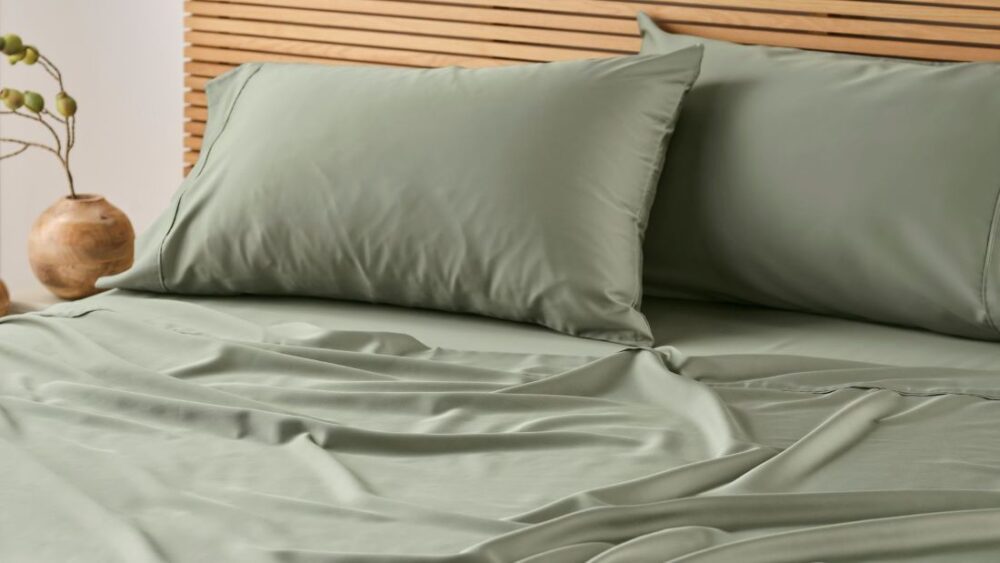
Let the bed carry the visual weight
Your bed is usually the largest object in the bedroom, so it makes sense to let it do some of the design heavy lifting.
In a warm minimalist space, your bedding can replace much of the home decor you might otherwise introduce through wall art or smaller accessories. Rather than adding more things, add interest through layers, texture and subtle tonal variation.
Start with the pieces you actually sleep in. Your bed sheets create the base layer, while your quilt cover is an opportunity to introduce more texture or a subtle pattern. From here, you could add a lightweight throw or coverlet and 1 or 2 feature cushions. Keeping these pieces within a similar colour family will create depth without losing that calm, minimalist feel.
And don’t feel the need to style everything to perfection. A crushed linen quilt, casually draped throw blanket or relaxed stack of pillows can soften the clean lines of a minimalist bedroom and make it feel more lived in.
Look for texture before pattern
Pattern is an obvious way to add interest to a room but when it comes to warm minimalism, we suggest looking to texture first. Crinkled cotton, waffle weaves, washed linen and other tactile fabrics can bring plenty of subtle character, even when you’re working with just one colour.
This is where off-whites and earthy neutrals really come into their own. For example, a cream quilt cover with a visible weave will generally feel warmer and more inviting than crisp white bedding with a completely smooth finish. It’s a subtle difference that can completely change the feel of your bed.
That doesn’t mean pattern is off limits. A fine stripe, small-scale check or subtle woven pattern can sit beautifully within a minimalist bedroom. The trick is to choose patterns that complement rather than dominate the space.
Styling tip: when you’re working with a restrained colour palette, pay attention to the undertones. Warm whites, creams, oatmeal and beige generally sit more harmoniously together than mixing cool blue-based whites with warmer neutrals.
Keep the palette tight but vary the finish
Building on the idea of texture, a warm minimalist palette doesn’t need much colour to feel interesting. You could style an entire bed in shades of white, oatmeal and warm beige, then create contrast through the materials and finishes.
Try smooth cotton sheets beneath a relaxed linen-look quilt cover, finished with a heavier knitted or woven throw across the foot of the bed. You’re still working within a tight colour palette, but the different finishes create layers and depth.
Carry the same approach throughout the room. A plush rug can soften timber flooring, while sheer or linen-look curtains introduce movement and filter natural light beautifully.
Just don’t fall into the trap of adding every texture you love. Boucle, linen, velvet, chunky knits, faux fur and rattan all competing for attention will quickly take you away from minimalism. Choose a handful of complementary finishes and give them enough breathing room to shine.
Let softness balance the harder elements of the room
Take a look around your bedroom and you’ll probably notice plenty of hard surfaces — walls, flooring, bedside tables, bed frames and cabinetry all bring straight lines and solid finishes into the space. Textiles are one of the easiest ways to soften these elements.
Full-length curtains can soften the lines around a window, while a quilt that falls loosely over the sides of the bed can balance a boxy bed frame. Even a rug extending beyond the bed can break up a large expanse of hard flooring and make the room feel cosier underfoot.
You don’t need to cover every hard surface, though. In fact, it’s the contrast between hard and soft materials that makes both more interesting.
Timber is a perfect example. Pair a simple timber bedside table with relaxed linen bedding or a tactile quilt and you’ll create enough contrast to make both materials sing. There’s no need to cover the bedside table with decorative objects just to make the room feel styled.
Know when the room has enough
Finally, remember the golden rule of minimalism: know when to stop!
Once your bed has softness and layers, the floor has warmth and your windows feel balanced, take a look around before adding anything else. Negative space is an important part of the look too.
That might mean keeping your bedside table mostly clear or resisting the urge to add another cushion just because there’s room for it. Your bedroom should feel calm and easy to use, especially at the end of a long day.
The best warm minimalist bedrooms find character in pieces that are both beautiful and functional. Your sheets feel amazing to sleep in, a textured quilt brings warmth to the largest surface in the room, curtains soften the light and a rug feels beautiful underfoot.
Get those foundational pieces right and your bedroom doesn’t need much else. The warmth comes from what you can see and touch, while the simplicity comes from knowing when to stop.