
Outdoor living is one of the best things about the Australian lifestyle. From long lunches on the terrace to lazy afternoons by the pool, our outdoor spaces often function as another living area — blurring the lines between indoors and out.
But the same climate that makes outdoor living so appealing can also be tough on furniture. Strong UV exposure, heat, sudden downpours, humidity and, for coastal homes, salty air can all take their toll. So while style will naturally influence your choice of outdoor furniture, it shouldn’t be the only consideration. Materials, construction, finishes and even what’s inside your outdoor cushions can all affect how furniture looks and performs over time.
Before investing in your next outdoor setting, here are some of the key things to consider to find furniture that suits both your home and the conditions it will face.
Related article: 7 ways to design an outdoor space that exudes resort-level luxury
Related article: Erskineville courtyard before and after: Inner city oasis
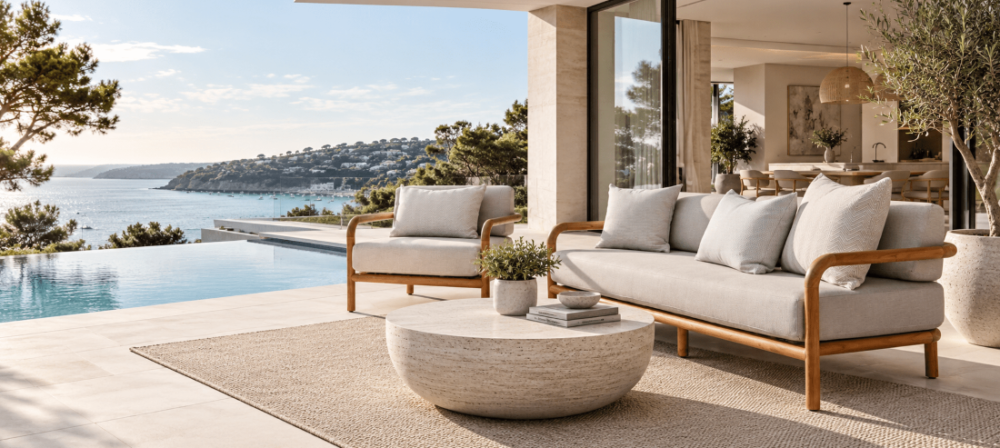
Start with where your furniture will live
Before falling in love with a particular setting, consider exactly where it’s going to sit.
A covered balcony in Melbourne has very different demands to an exposed pool terrace in Brisbane or a coastal deck in Sydney. How much direct sun does the area receive? Is it exposed to rain? Does wind regularly blow rain into the space? Are you close to the ocean?
Even within the same outdoor area, conditions can vary. A dining setting beneath a covered alfresco may have considerably more protection than a sun lounge beside the pool.
Thinking about exposure first makes it easier to choose materials suited to your particular space, rather than relying on a broad ‘outdoor’ label.
Look beyond what you can see
It’s easy to focus on the elements you notice first — beautiful timber, tactile woven details or the colour of the upholstery. But when comparing outdoor furniture, it pays to look a little deeper.
For example, aluminium is a popular material for outdoor furniture frames because it won’t rust in the same way as steel or iron, while an appropriate powder-coated finish can provide an additional protective layer.
Take a closer look at joins, fixings and finishes too. These aren’t necessarily the exciting parts of furniture shopping, but they can tell you a lot about the overall construction of a piece.
If you’re making a significant purchase, ask about the materials and construction of the entire piece rather than judging its quality on appearance alone.
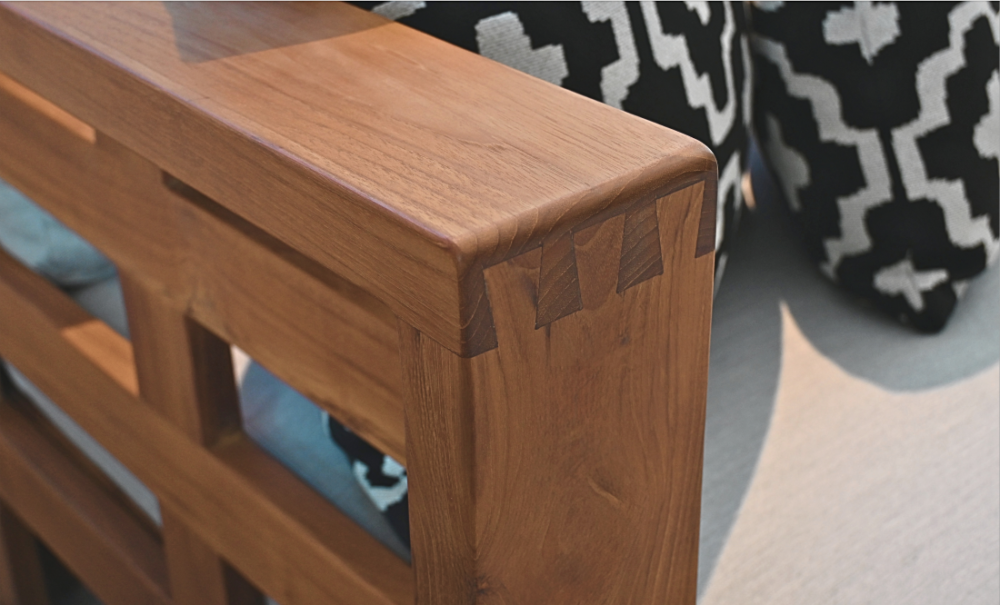
Choose timber with outdoor performance in mind
Timber is one of our favourite ways to introduce warmth and natural texture outdoors, particularly when a space already features harder surfaces such as stone, concrete or metal.
However, different timbers have different characteristics, so it’s worth understanding what you’re buying and how the manufacturer has treated and finished it.
Teak is a popular choice for outdoor furniture because its natural oils and stability help it withstand changing outdoor conditions. It’s also a material that changes beautifully with age. Depending on the look you prefer, you can let teak weather naturally to develop a silver-grey patina, or maintain it with an appropriate product to preserve more of its original warm colour.
Sydney-based outdoor furniture brand Osier Belle, for example, uses teak finished with Cutek across parts of its collection to provide additional protection in outdoor environments.
It’s a good reminder to look beyond the type of timber and ask about its source, finish and ongoing maintenance requirements.
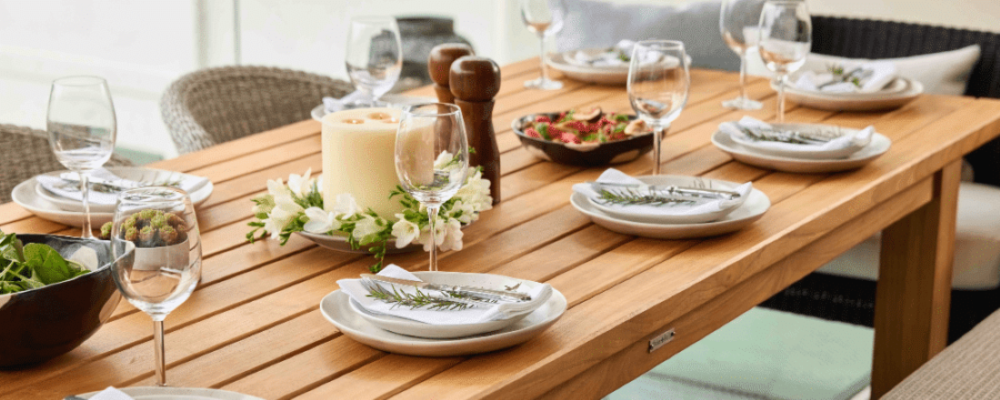
Know what you’re getting with outdoor wicker
We love using woven furniture to introduce texture and softness to an outdoor room, but not all outdoor wicker is created equally.
There can be significant differences between synthetic fibres, particularly when it comes to prolonged exposure to sun and changing weather conditions.
If your furniture will face regular exposure to the elements, choose synthetic wicker specifically engineered for outdoor use and check its UV stability and warranty. Established manufacturers such as REHAU and VIRO produce synthetic fibres designed for outdoor applications, while lower-quality materials may be more susceptible to fading or becoming brittle over time.
Take a closer look at the weave too. Consistent tension, neat finishing and a sturdy supporting frame are all worth considering.
And don’t be afraid to ask who manufactures the wicker itself. Understanding the material specifications can be just as useful as assessing how the finished piece looks.
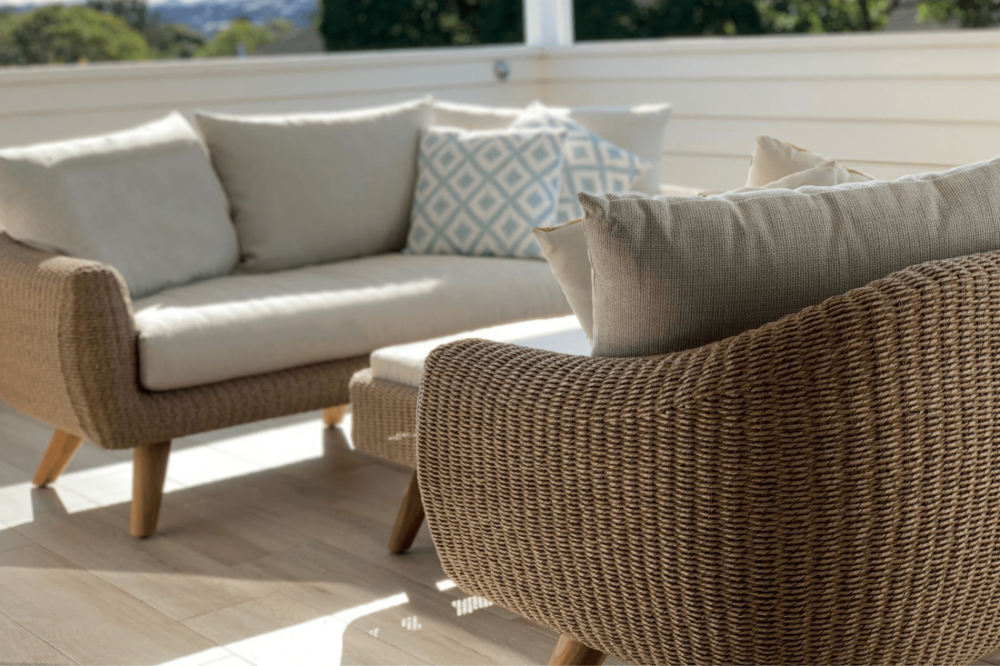
Don’t overlook what’s inside the cushions
Outdoor cushions have to withstand tough conditions. Rain, humidity, sunscreen, food and the occasional wet swimmer are all part of life outdoors, so both the fabric and internal filling need to stand up.
Solution-dyed acrylic works well for outdoor upholstery because the colour runs through the fibre, helping it withstand sun exposure and retain its colour for longer.
What’s inside matters too. Quick-dry foam and other outdoor-specific fillings are designed to help moisture drain and air circulate rather than trapping water within the cushion.
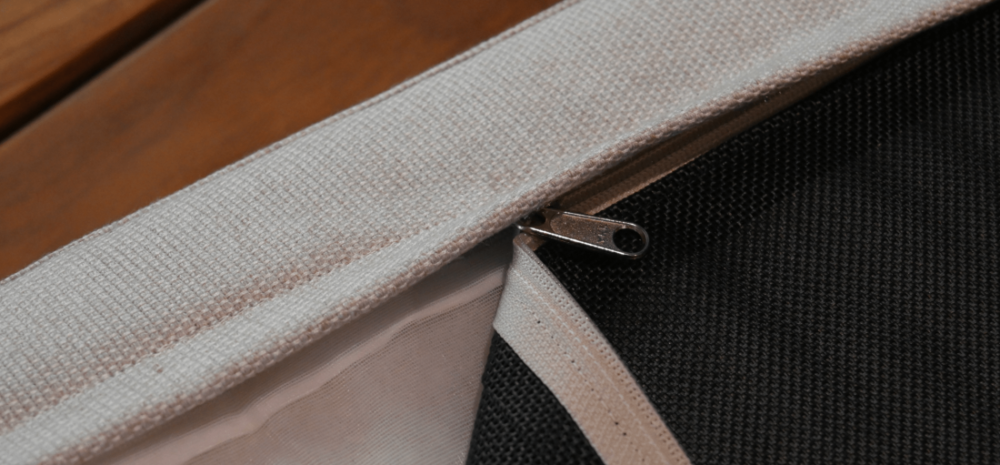
Then there’s cleaning. Look for removable covers with good-quality zips that allow them to be taken off and replaced easily, and check the manufacturer’s care instructions before buying. If the fabric comes with a warranty against fading or other deterioration, it’s worth understanding exactly what that warranty covers.
These details aren’t necessarily obvious when you’re testing a sofa for comfort in a showroom, so ask what’s beneath the fabric and how the cushions should be cared for.
Don’t sacrifice design for durability
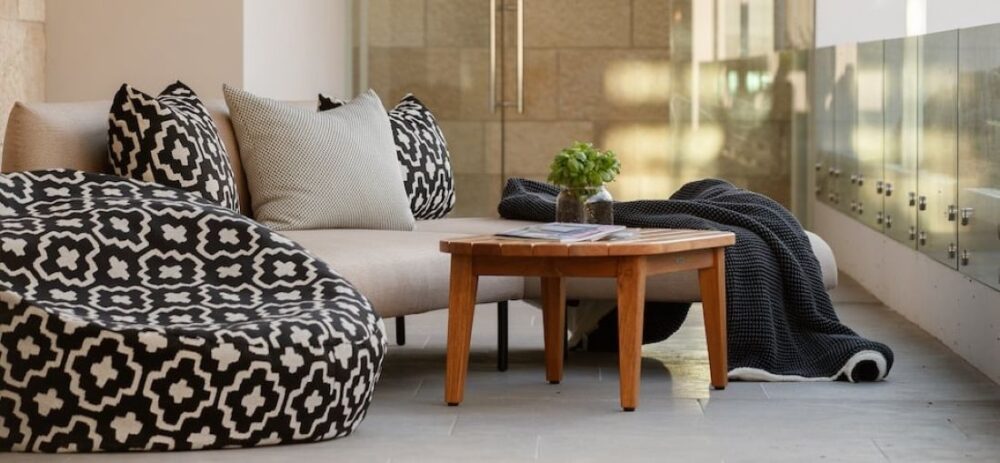
Choosing furniture for Australian conditions doesn’t mean your outdoor space needs to feel purely functional. The most inviting outdoor rooms borrow many of the same design principles we use indoors — considered proportions, a cohesive material palette and layers of texture.
Look at the finishes already surrounding the space. Warm timber can soften concrete, stone and dark metal, while woven textures bring a more relaxed quality to contemporary architecture. Repeating colours or materials from inside the home can also help create a stronger connection between indoor and outdoor spaces.
A generous modular lounge can anchor a large terrace, while a more tailored setting may make a compact balcony feel larger and easier to use. Scale and functionality should always be considered in any design project. Leave enough space for comfortable circulation rather than simply choosing the biggest setting that fits.
The goal is furniture that belongs in the space aesthetically and has the construction to stay there.
Think about how materials work together
There isn’t one perfect material for Australian outdoor furniture. What matters is how the different elements of a piece work together.
Furniture designers such as Osier Belle, combine materials such as teak detailing, UV-stable hand-woven wicker, solution-dyed outdoor fabrics and quick-dry foam depending on the design. Each element has a different job to do, from providing structural support to managing sun and moisture exposure.
When comparing furniture, consider the whole piece rather than focusing on one standout material. A durable frame can’t compensate for unsuitable upholstery, just as a high-performance fabric won’t solve issues with poorly finished components.
Consider how you actually use the space
Climate is an important consideration but so too is lifestyle. If your outdoor area is where everyone gathers after swimming, quick-drying upholstery and easy-care surfaces might be priorities. If you love entertaining, generous dining proportions and comfortable seating could matter more. On a compact balcony, getting the dimensions right may be the most important consideration of all.
This is also where made-to-order furniture can be useful. Tailoring dimensions, configurations, upholstery or finishes can help furniture respond to the architecture and function of a space rather than trying to make a standard setting work.
Be realistic about maintenance
Even well-made outdoor furniture benefits from some care. Regularly removing dirt, leaves and environmental build-up can help preserve finishes, while covers or protected storage can reduce unnecessary exposure when furniture isn’t being used. Coastal homes may require more regular cleaning to remove salt deposits, while timber finishes may need refreshing over time.
Rather than seeing maintenance as a sign that furniture isn’t suitable outdoors, think of it as part of keeping materials looking their best. Knowing what’s involved before you buy also means you can choose a level of care that suits your lifestyle.
Choose for more than one summer
The best outdoor spaces strike a balance between beauty and practicality. Furniture needs to work with the architecture, feel comfortable, suit the way you live and cope with the conditions it will face.
It’s also worth thinking beyond this season’s trends. A setting that feels very ‘insta-worthy’ today may not have the same appeal several years from now, so consider investing in timeless shapes, proportions and finishes for your larger furniture pieces. You can always introduce more current colours, patterns and textures through scatter cushions and accessories, which are much easier to update as your style evolves.
That doesn’t mean choosing the most expensive option available. It means looking beyond first impressions and asking better questions about materials, construction, finishes and care.
Ultimately, the best outdoor furniture should look beautiful, feel comfortable and suit the way you actually use your space — while being made from materials that can handle the conditions it will face. Take the time to look beyond aesthetics and consider construction, finishes and care, and you’ll be investing in an outdoor space you can enjoy for many years to come.