
When planning a home renovation, most of us focus our time on designing our dream kitchen, beautiful bathrooms and all those finishing touches that make a house feel like home. But there’s one decision that’s often overlooked, despite making up so much of our home’s curb appeal. Yep, we’re talking about the garage door!
It might not be the first thing you add to your renovation moodboard, but your garage door can have a surprisingly big impact on your home’s facade. In fact, choosing the right style, colour and finish can be the difference between an exterior that feels beautifully considered and one that looks a little under-thought.
In recent years, more design styles, colours and materials have become available so there’s never been more choice when it comes to garage door designs. From contemporary slimline profiles to warm timber-look finishes, suppliers of garage doors in Australia offer plenty of options to complement different architectural styles.
So, whether you’re planning a full exterior makeover or simply looking for ways to refresh your home’s facade, here are some things worth considering before choosing your garage door.
Related article: 10 external building materials you may not have considered using
Related article: Smart home upgrading: How to build a future-ready abode
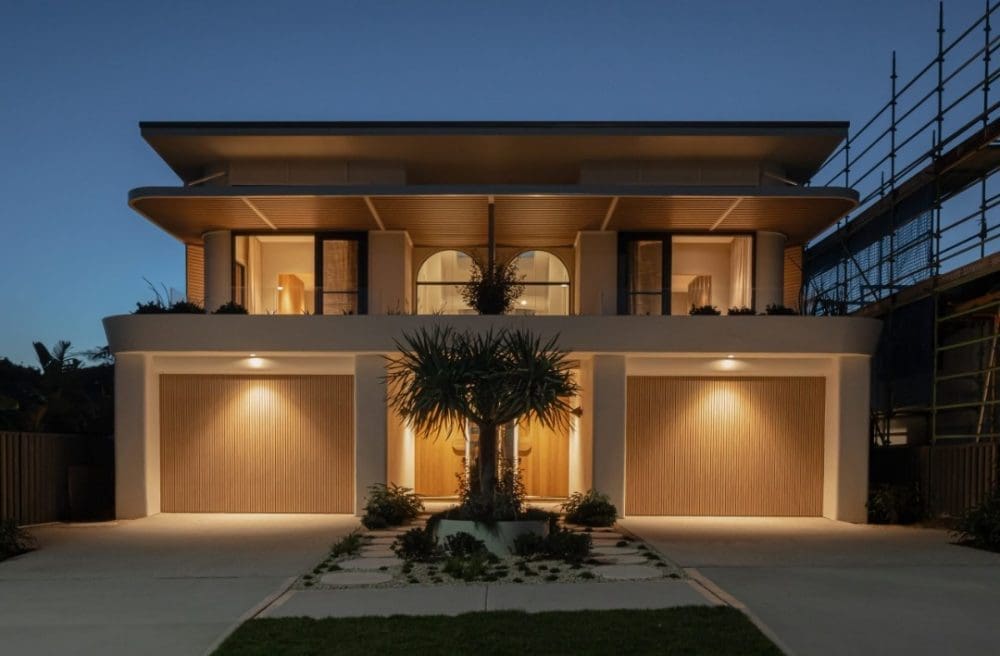
1. Your garage door has a bigger impact on street appeal than you might think
For homes with a street-facing double garage, there’s a good chance the garage door takes up a significant portion of the front elevation. And when one element occupies that much visual space, it naturally has a big influence on the overall look of your home.
You might have beautiful landscaping, freshly painted walls and a stunning front entry, but if your garage door is dated, damaged or doesn’t complement the rest of the facade, it can throw off the whole look.
That’s why we always encourage thinking about your home’s exterior as a complete design rather than a collection of separate elements.
Our tip: When creating your exterior renovation moodboard, include your garage door alongside your roofing, cladding, paint colours, windows and landscaping. Seeing these materials together will help you create a more cohesive look.
2. Choose a garage door style that complements your home’s architecture
Just like interior design, exterior design works best when there’s a clear direction. Rather than choosing a garage door simply because it’s popular, consider the architectural style of your home and the overall look you’re trying to achieve.
Popular garage door styles to suit interior design styles, include:
- Modern coastal: Think soft whites, warm neutrals and subtle panel profiles that complement weatherboards, natural stone and timber accents.
- Contemporary Australian: Clean lines, understated profiles and matt finishes work beautifully with modern facades. Timber or timber-look garage doors can also add warmth and contrast to rendered exteriors.
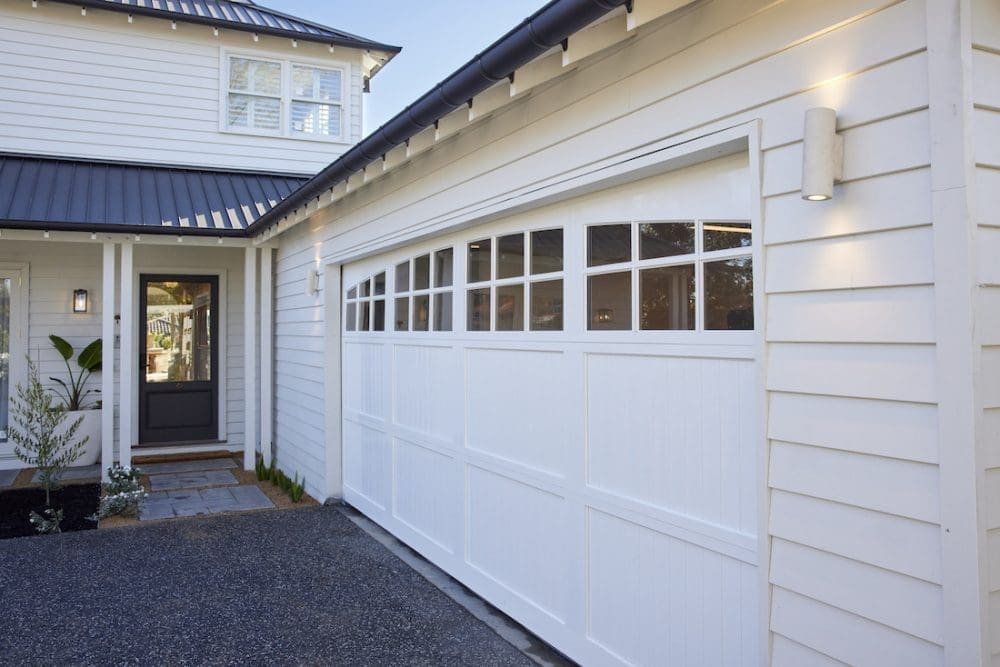
- Modern farmhouse: Panelled garage doors in classic whites, greiges or muted colours can complement the character of this style without feeling overly traditional.
- Mid-century modern: Simple horizontal lines, warm timber tones and earthy colours can help reinforce the architectural character of the home.
- Modern heritage: Look for garage doors with subtle detailing that complement the home’s original features without trying to replicate them exactly.
Of course, these aren’t hard and fast rules. Some of the most beautiful facades combine traditional and contemporary elements. Ultimately you want to choose a garage door that feels intentional and works with the proportions, materials and overall character of your home.

3. Decide whether you want your garage door complement or contrast
Here’s a design decision that can completely change the look of your facade: should your garage door be a feature that stands out or understated and blend in with your exterior scheme?
For a more seamless look, consider choosing a garage door in a similar colour to your exterior walls. This can help visually minimise a large garage door, particularly on homes where the garage dominates the front elevation. A flush or slimline profile can also create a more understated finish, allowing other architectural details, like a stone wall, to take centre stage.
For a statement look, consider introducing contrast through colour or texture. A warm timber-look garage door against a crisp white or charcoal facade can look stunning, especially when the same timber tones are repeated in your front entry, screening or other exterior features.
Designer tip: One of our favourite tricks is to repeat a material or colour at least 2-4 times across a space. The same principle works outdoors! For example, if you choose a timber-look garage door, consider echoing that finish in your front door, feature battens, letterbox or even your landscaping elements. It’s a simple way to create a cohesive, designer look.
4. Pay attention to colour, texture and profile
When choosing a garage door, it’s easy to focus on colour alone. But the profile and finish can have just as much impact on the overall result.
A few design details worth considering include:
- Colour: Rather than automatically matching your garage door to your roof and trims, consider how it works with your walls, window frames, front door and other exterior finishes. A tonal palette can create a sophisticated look, while a contrasting colour can introduce architectural interest.
- Texture: Timber-look finishes can add warmth to contemporary homes, while smooth matte finishes create a more minimalist aesthetic. Ribbed or textured profiles can also add subtle detail without introducing another colour.
- Panel profile: Horizontal lines can help visually widen a facade, while simple flush-style panels create a cleaner, more streamlined appearance. More decorative profiles may suit traditional or character homes.
- Windows: Glazed panels can introduce natural light into a garage and help break up a large expanse of solid material. Just consider privacy, security and how the window placement works with the rest of your home’s facade.
Designer tip: Always view physical colour and finish samples where possible. Colours can look surprisingly different in natural light compared with online images, particularly when you’re working with whites, greiges and darker tones.
5. Think about how you actually use your garage
While we’re all about creating beautiful spaces, good design should first and foremost be functional!
These days, garages often work much harder. They might double as a home gym, DIY workshop, storage area or hobby space. And if you’re planning to use your garage regularly, it’s worth considering how your garage door can make the space more comfortable and functional.
For example, an insulated garage door may help reduce heat transfer and improve temperature stability, particularly if your garage gets direct afternoon sun. Insulation may also help reduce some external noise, although the overall benefit will depend on the garage’s construction and ventilation.
Other practical considerations include:
- Security: Look into locking mechanisms and other security features, particularly if you store expensive tools, bikes or equipment in your garage.
- Noise: If your garage sits beneath a bedroom or next to a living space, consider a quieter door and motor combination.
- Ease of use: An automatic garage door is well worth it in our opinion! It’s a daily convenience, especially for busy households.
- Maintenance: Consider how much upkeep different materials and finishes require, particularly in coastal areas where salt exposure can affect exterior products.
It’s also worth checking the warranty and maintenance recommendations before making your final decision.
6. Don’t overlook measurements and installation
If you’re replacing an existing garage door as part of a renovation, it can be tempting to assume the new one will simply fit into the same opening.
But it’s not always that straightforward. Changes to exterior cladding, render, flooring levels or structural elements can affect the dimensions of your garage opening. Different garage door styles can also have specific clearance requirements for tracks, motors and other hardware.
That’s why it’s worth arranging a professional measure and quote before committing to a particular design. Ideally, your garage door supplier should be involved early enough to identify any clearance or structural requirements, with final measurements confirmed once the relevant building work is complete.
And while we’re big fans of DIY projects, garage door installation is one job best left to the professionals. Garage door springs and other components operate under significant tension and can be dangerous to handle without the right training and equipment.
7. Use a visualiser to see how different styles will look
One of the trickiest parts of choosing exterior finishes is imagining how everything will come together. A colour or texture might look fabulous in a showroom, but that doesn’t necessarily mean it will work with your home’s existing brickwork, roofing or architectural features.
Thankfully, some garage door suppliers now offer online visualiser tools that allow you to explore different styles, colours and finishes before making a decision. For example, Steel-Line Garage Doors offers a range of garage door designs and an online visualiser to help homeowners compare options. The company also offers measure-and-quote services, which can be useful when planning a renovation.
Our advice? Narrow your selection down to two or three options, then compare how each works with your broader exterior palette. And don’t forget to consider the view from the street, not just a close-up of the garage door itself. Sometimes the option that looks the most impressive on its own isn’t necessarily the one that creates the best overall facade.
Remember, it’s all in the details
When it comes to creating a beautiful home, it’s often the details that make the biggest difference. And while a garage door might not be the most glamorous part of a renovation, it can have a lot more impact than you first realise!
From choosing a colour that complements your facade to finding a profile that suits your home’s architecture, a considered garage door choice can help tie your entire exterior design together. Whether you’re planning a major renovation or looking for a relatively simple way to boost your home’s street appeal, we hope these tips help you.
Looking for more ways to transform your home? Explore our other home renovation, exterior design and DIY articles for practical advice, clever ideas and plenty of inspiration to help you create a home you love.