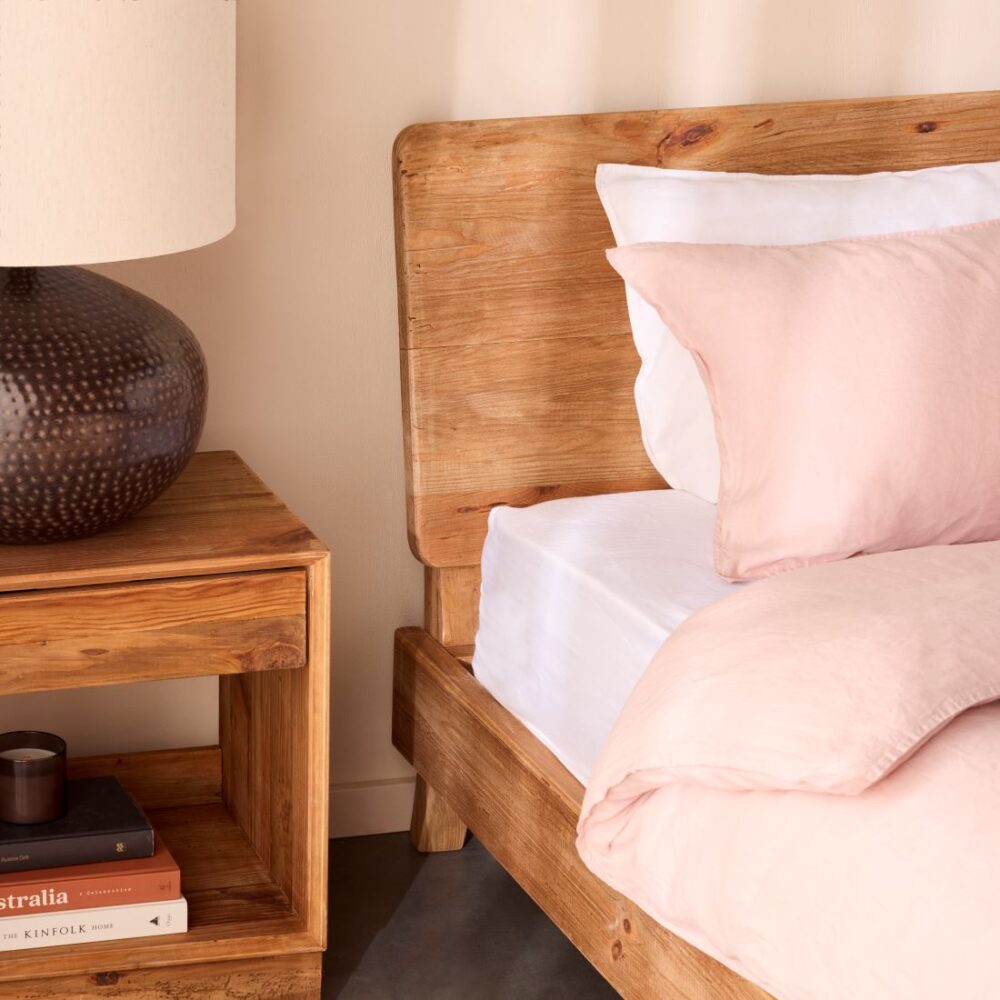
Supported by Early Settler
Bedside tables can be a surprisingly tricky piece of furniture to get right. As well as the obvious considerations of style and quality (which can vary significantly!), there are practical things like storage, size and proportions to think about too.
Often it isn’t until you’ve lived with a bedside table that’s far too small — and feel frustrated by the lack of space for everyday essentials — or one that’s too large it dominates the room and creates awkward flow, that you realise just how important it is to get the proportions right.
To help you avoid these mistakes, we’ve partnered with our friends at Early Settler, an Australian furniture and homewares retailer with a dedicated bedside table collection, to share the secrets to choosing the right bedside table proportions. From getting the scale right to minimum size considerations and those all-important practical details, keep on reading for our top bedside table design tips.
Related article: Elevate your space with the ultimate guide to bedroom feature walls
Related article: 20 bedside styling ideas: How to style your bedside table
Start with the mattress height
Unlike dining tables, which generally come in a fairly standard height, bedside tables are available in all sorts of proportions. From low-lying Japandi-style designs to taller 3-drawer traditional styles and everything in between, there’s plenty of variation when you start browsing bedside tables.
That’s why one of the most important measurements to get right is height. A bedside table that sits noticeably too high or too low against your bed can throw off the proportions of the whole room — and it isn’t particularly comfortable from an ergonomic perspective either.
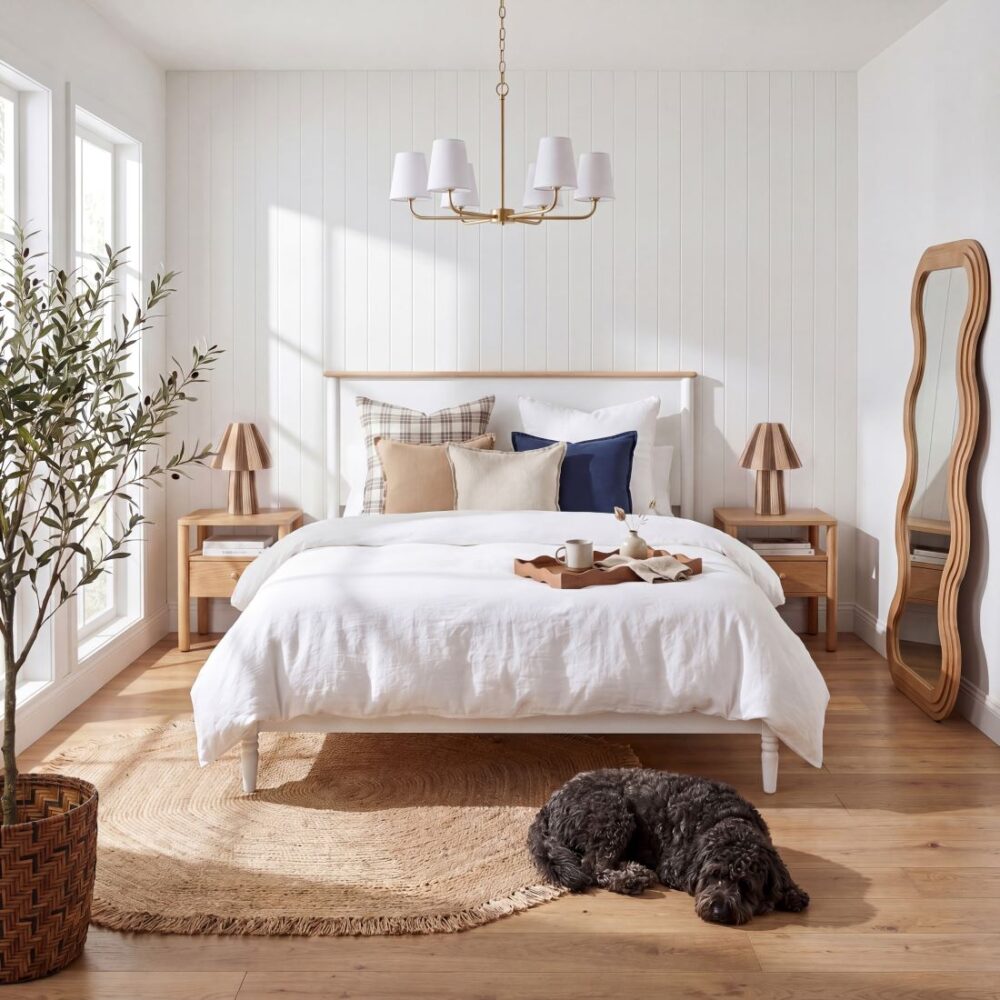
So, what height should your bedside table be? Take your cue from the mattress. Ideally, the top of your bedside table should sit roughly in line with the top of your mattress. This keeps your nighttime essentials literally within arm’s reach, without awkwardly reaching up or down from bed. Visually, it also creates a more harmonious relationship between your bed and bedside tables.
Just remember to take this measurement once your bed base and mattress are in place. Mattress thicknesses can vary significantly, so measuring the bed frame alone won’t necessarily give you the right height.
Let your bed and lifestyle set the width
The next dimension to consider is width and, again, there’s a huge variety of sizes on the market. Rather than following a strict formula, we suggest considering your bed, available space and how you actually use your bedside table.
Here are some of the key things to consider:
Available space: You may be constrained by the dimensions of your bedroom, but where possible, avoid squeezing furniture tightly into your space. A little breathing room around your bedside table not only looks better, it also makes it easier to access power points, run charging cables and clean around your furniture.
Your lifestyle: Are you an avid reader who keeps a stack of books beside the bed? Perhaps you enjoy a nightly cup of tea, need room for a table lamp and phone charger, or have a collection of nighttime essentials. Wherever possible, design for the life you actually live. If you need more surface area, look for a wider bedside table. On the other hand, if you prefer a minimalist setup with just a candle or small vase, you can comfortably opt for something more compact.
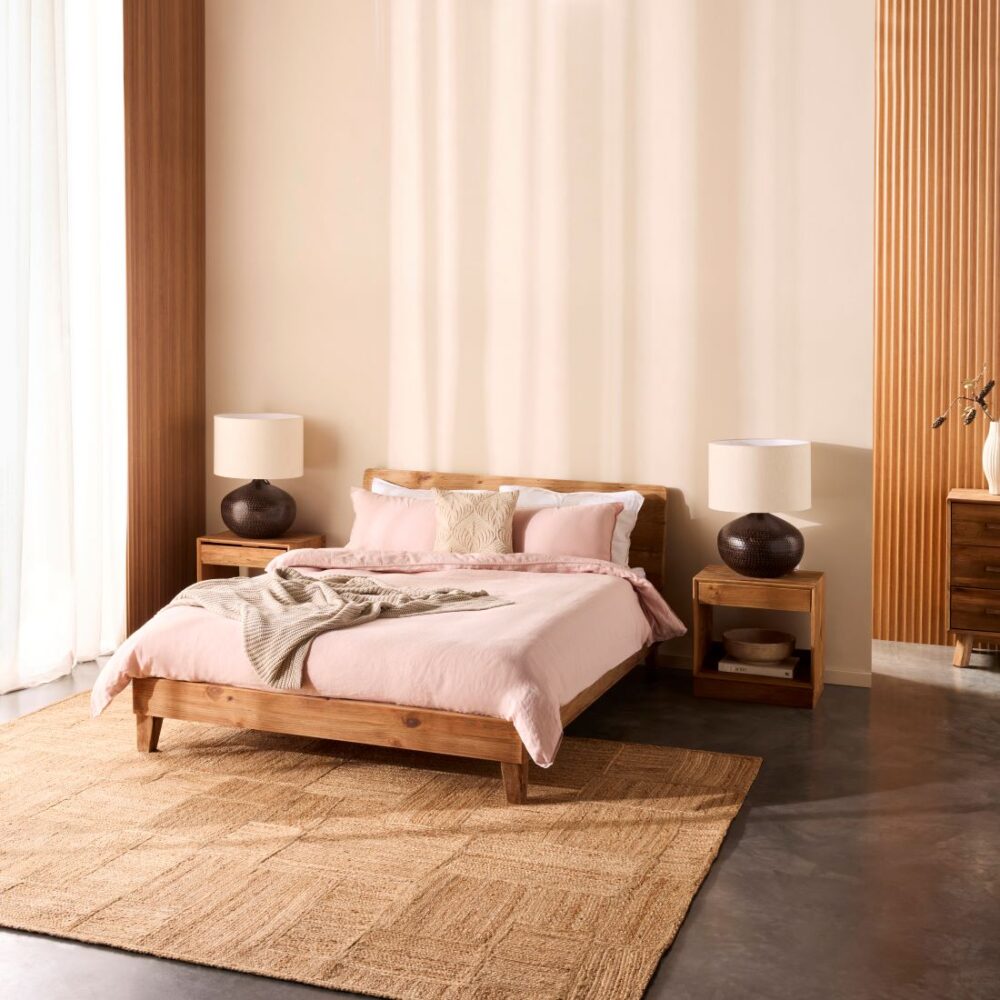
Proportion to your bed: Generally speaking, a bedside table looks best when its scale feels balanced against the bed. Queen beds and smaller can work with a broad range of bedside table widths, but once you move up to a king or super king, a particularly narrow bedside can start to look a little lost. In this case, upsizing your bedside tables can help anchor the bed and create a more considered look.
Your bedroom’s characteristics: Finally, pay attention to the specific architecture and layout of your room. Is there a window you don’t want to obstruct? A wardrobe door that needs clearance? A power point you need to access? Or perhaps your bed sits slightly off-centre because of the room layout. These practical considerations should always trump a design ‘rule’.
Visual weight changes the maths
The next factor in getting your bedside table proportions right is a little trickier to define and it has to do with visual weight.
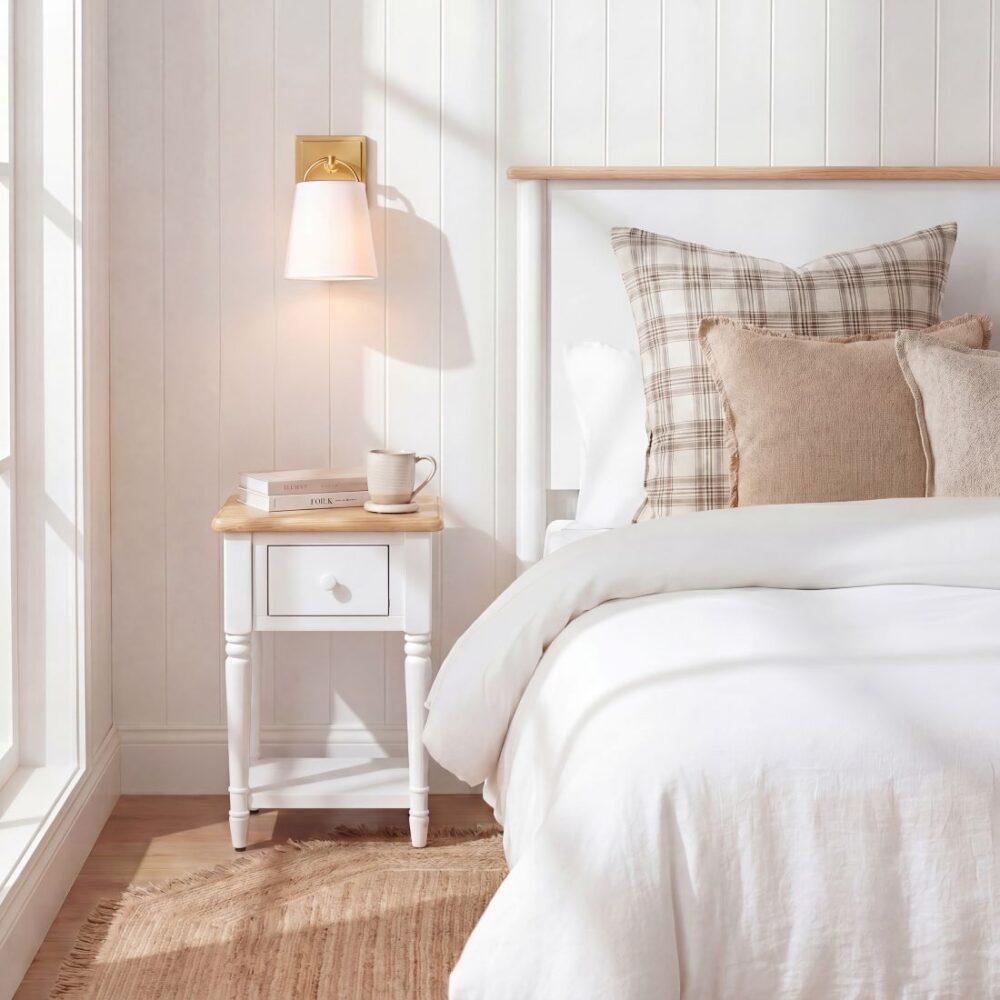
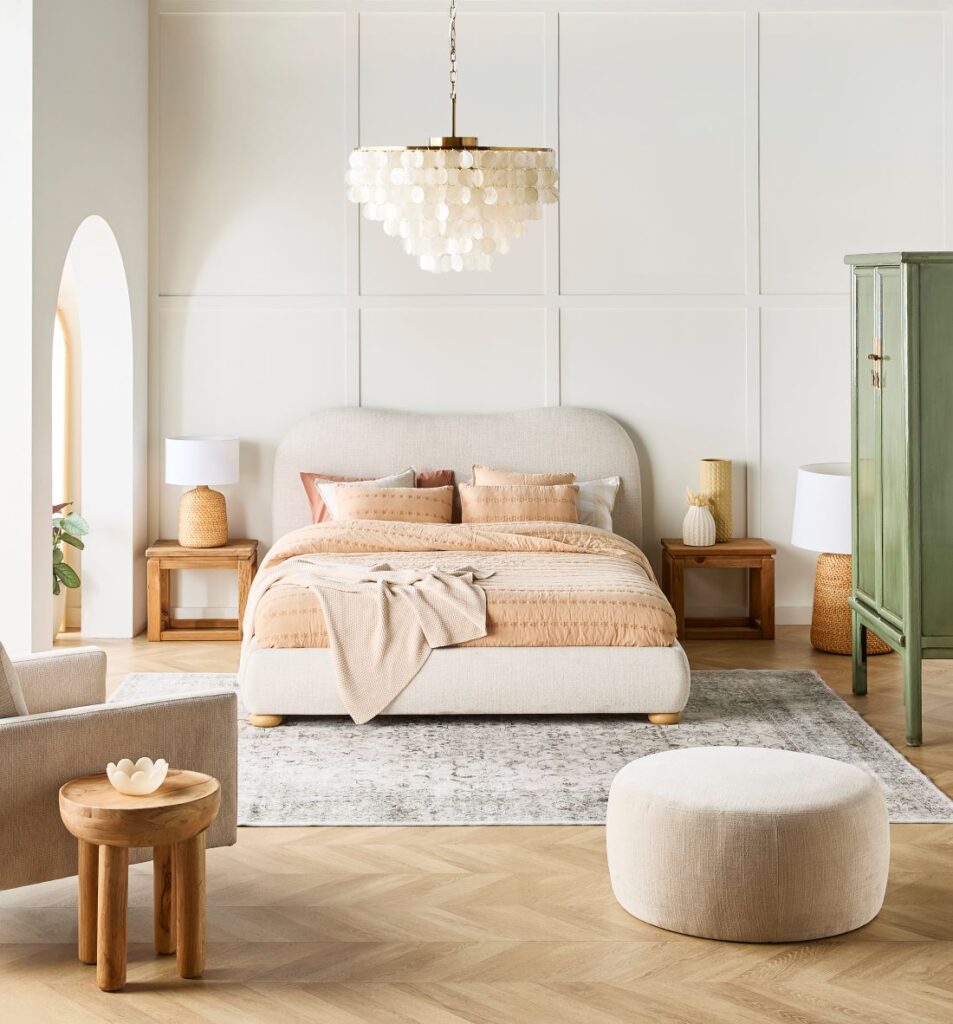
This interior design term refers to how visually ‘light’ or ‘heavy’ an item feels in a space. Slim furniture, open shelving and pieces elevated on legs generally feel lighter than solid furniture that sits directly on the floor. This is because your eye can see through or underneath the furniture, creating a greater sense of space.
Material and colour can affect visual weight too. Lighter colours and materials such as glass, pale timber or rattan tend to have a lighter visual presence, while darker colours, solid timber and chunky forms can feel heavier and more dominant.
Why does this matter when choosing bedside tables? Because two pieces with exactly the same dimensions can feel completely different once they’re in your bedroom. If you have a smaller room or a visually heavy bed — such as an upholstered bed with a substantial bedhead — a lighter bedside table can help to create balance. In a larger room, or alongside a simpler bed frame, you may have more freedom to introduce a solid or statement bedside.
If you’re unsure how a bedside table will work alongside the other furniture in your space, our top tip is to visualise it before you buy. A simple mood board is one of the quickest and easiest ways to compare furniture pieces, colours and materials. Alternatively, many AI tools can now transform a photo of your existing room based on your prompts. The results aren’t always completely accurate, but we find they can be a helpful way to get a general sense of scale, style and visual balance.
Think about depth as well
While we often focus on the height and width of bedside tables, don’t overlook depth. This measurement can have a big impact on how comfortably you’re able to move around your bedroom.
This is especially important if you have a doorway close to your bedside table, such as the entrance to an ensuite or walk-in wardrobe. A bedside table that protrudes too far into the room can obstruct this path of travel and make the space feel cramped. Similarly, in a narrow bedroom, those extra centimetres of depth can take up precious floor space and make the walkway around your bed feel tighter than it needs to be.
Before committing to a bedside table, check its full dimensions and consider marking out the footprint on your floor with painter’s tape. Then walk through the space as you normally would. Can you comfortably get in and out of bed? Does the ensuite door open freely? Can you access nearby drawers or wardrobes without having to manoeuvre around the table? It only takes a few minutes to check and this tip can save you money and headaches!
Ultimately, there’s no one-size-fits-all approach to choosing the perfect bedside table. The right proportions will depend on your bed, bedroom layout and, importantly, how you use the space. Take the time to measure, consider how the piece will function day to day and trust your eye when it comes to achieving visual balance.
Ready to find your perfect match? Explore the full range of furniture and homewares at Early Settler to find bedside tables in a variety of sizes, styles and finishes to suit your space.
More bedroom tips