
Supported by CanvasChamp
Gallery walls are one of the easiest and most effective ways to add personality to your home. Whether you’re showcasing family photos, favourite travel memories or artwork you’ve collected over time, a thoughtfully curated gallery wall can turn a blank wall into a striking focal point. Mixing poster prints with canvas prints adds texture and dimension, creating a layered display that feels curated.
While gallery walls can look effortless in photographs, anyone who’s created one at home knows there’s more to it than simply hanging a few frames. Achieving a cohesive look takes careful planning, measuring and editing. The secret is finding the right balance between consistency and variety, using repetition to tie the collection together while thoughtfully mixing image sizes, frame styles and print formats to create a display that feels personalised rather than perfectly matched.
Related article: Decorate your small rental apartment so it feels like home!
Related article: The most realistic faux olive trees for indoor decor and how to style them at home
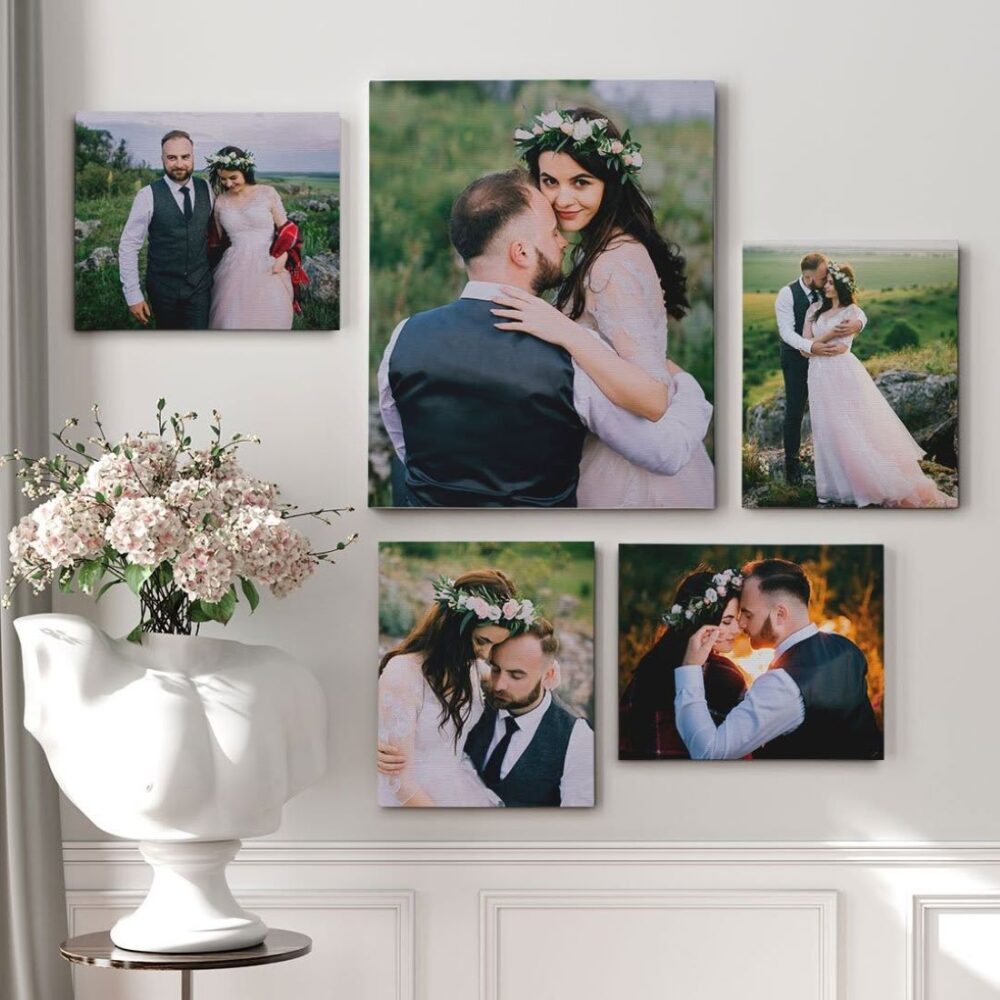
Choose a story for the wall
Start with the feeling you want the display to create. It could recall family holidays, celebrate favourite places, or bring colour into a neutral room. A loose theme makes it easier to decide which images belong together.
The connection does not need to be literal. Family photographs can sit beside abstract artwork if they share similar tones. Botanical illustrations may work with travel images linked by green, sand, or sky blue. Lay all the options on the floor, then remove anything that distracts from the group. Editing usually improves a gallery wall more than adding another piece.
Pick a natural focal point
Choose one image to lead the arrangement. It may be the largest work, the brightest photograph, or the piece with the most meaning. Position it near the centre, then build outward with quieter images.
A canvas often makes a useful focal point because its frameless depth gives it a different presence. A large family portrait, landscape, or piece of children’s artwork can hold the centre without needing an ornate frame.
The focal piece should attract attention without making the remaining art feel like filler. Repeat one of its colours elsewhere in the collection to connect it to the surrounding images.
Mix formats with a common detail
Paper and canvas have distinct visual qualities. Paper offers crisp detail and looks polished behind glass. Canvas has a softer surface, no reflective glazing, and visible depth at the sides. Using both creates a collected appearance.
Give the formats one shared feature. You might use black frames around every paper print, repeat warm timber in two or three places, or keep all images within the same palette. That small amount of consistency lets you vary subjects and sizes freely.
Canvas prints can be left unframed or finished with floating frames. If the wall already contains several frames, one or two unframed canvases can break up the hard edges.
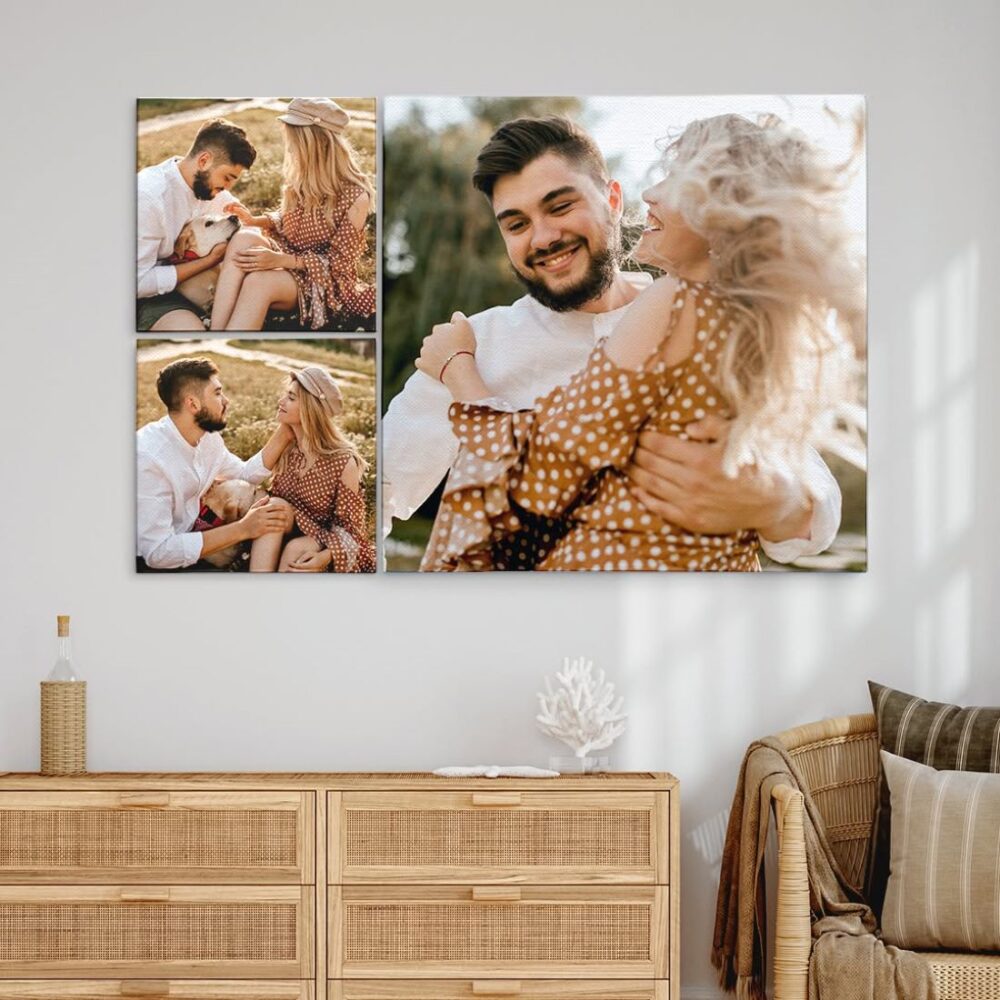
Plan the composition on the floor
Measure the available wall area before arranging anything. Use painter’s tape to mark those boundaries on the floor, then place the artwork inside them. This prevents the finished display from spreading too far across the wall or sitting awkwardly close to furniture.
Begin with the focal piece and add medium-sized works around it. Fill smaller gaps last. Aim for visual balance rather than perfect symmetry. If one side contains a dark or oversized image, offset its weight with two lighter pieces on the opposite side.
Keep the spaces between pieces consistent. A gap of two to three inches works for many arrangements, although larger art may need more breathing room. Step back and photograph each version. A phone image often reveals uneven spacing that is difficult to notice from directly above.
Prepare images for printing
Use the highest-resolution original files available. Screenshots and images saved from social media may appear clear on a phone but lose definition when enlarged. Crop each photograph to match the chosen print ratio before ordering, paying attention to faces and details near the edges.
A printing service such as CanvasChamp may offer previews for checking orientation and cropping. Review each preview carefully, especially when an image will wrap around canvas edges.
Consider the finish as well. Matte paper reduces glare in bright rooms, while a slight sheen can deepen contrast. For canvas, decide whether the edges should mirror the image, continue the photograph, or use a solid colour.
Hang with accuracy
Transfer the floor arrangement to the wall using measured reference points rather than guesswork. Start with the focal artwork and work outward. Check the height and spacing after every few pieces so that small errors do not multiply.
Tip: Using removable velcro hanging strips can help you place artwork more precisely and it’s also a renter-friendly way of creating a gallery wall at home.
The best gallery evolve over time as you collect new memories, artwork and inspiration. By thoughtfully combining poster prints with canvas prints, choosing a consistent colour palette and taking the time to plan your layout, you can create a feature in your home that feels cohesive and personal. Whether you’re styling a hallway, living room or bedroom, a considered gallery wall is a simple way to add personality and transform a blank wall into a feature you’ll enjoy for years to come.
More home styling ideas