
We spend roughly a third of our lives asleep, yet the bedroom is often the last room in the house to get any design attention. A great night’s sleep isn’t just about a good mattress. It’s shaped by colour, layout, lighting and even what’s sitting on your bedside table.
Principal Designer Nina Di Marco from YDM Design Studio shares the small, practical shifts that you can easily implement into your sleep space. And a bedroom designed for sleep is one that can actually help you sleep.
From choosing the right paint tone to the one thing you should never leave on your bedside table, these are designer tips you can start using tonight.
Related article: How to turn your bedroom into a sleep sanctuary
Related article: How to create a better sleep environment: 7 bedroom changes that improve sleep
Words by Nina Di Marco
Why your bedroom setup matters more than you think
Sleeping well is something we all know we should be doing, but it often proves to be a struggle. Some people find it much easier than others, but most of us would still benefit from better quality sleep. Sleep does more than help us feel awake the next day. It also:
- Supports brain health and emotional regulation. During sleep, the brain processes information and memories, and regulates mood and stress hormones.
- Allows the body to repair and heal. Deep sleep is when the body repairs tissue and muscles, and supports immune function.
- Regulates hormones and metabolism. Quality sleep helps regulate appetite, insulin sensitivity, and cortisol (the stress hormone).
- Protects heart and immune health. Restorative sleep reduces inflammation, lowers blood pressure, and supports immune response.
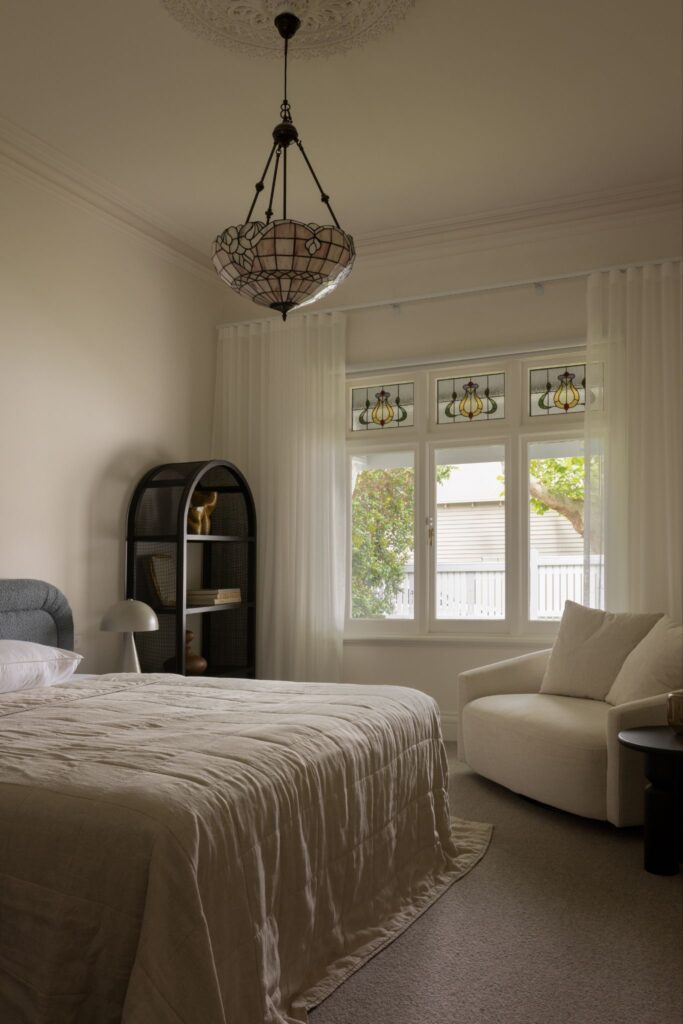
Good sleep changes how we experience our whole lives. And in a bedroom designed for sleep, it can improve focus, patience, resilience to stress, motivation and creativity.
But good sleep doesn’t just happen by chance. Our brains and bodies need the right conditions for it, from the colours and textures around us to the type of light we use before bed. We actually have a lot of control here.
With that in mind, here’s a two part method on how to set up your bedroom for a great night’s sleep. Getting the room right, and winding it down at night.
Creating a calm, relaxing bedroom
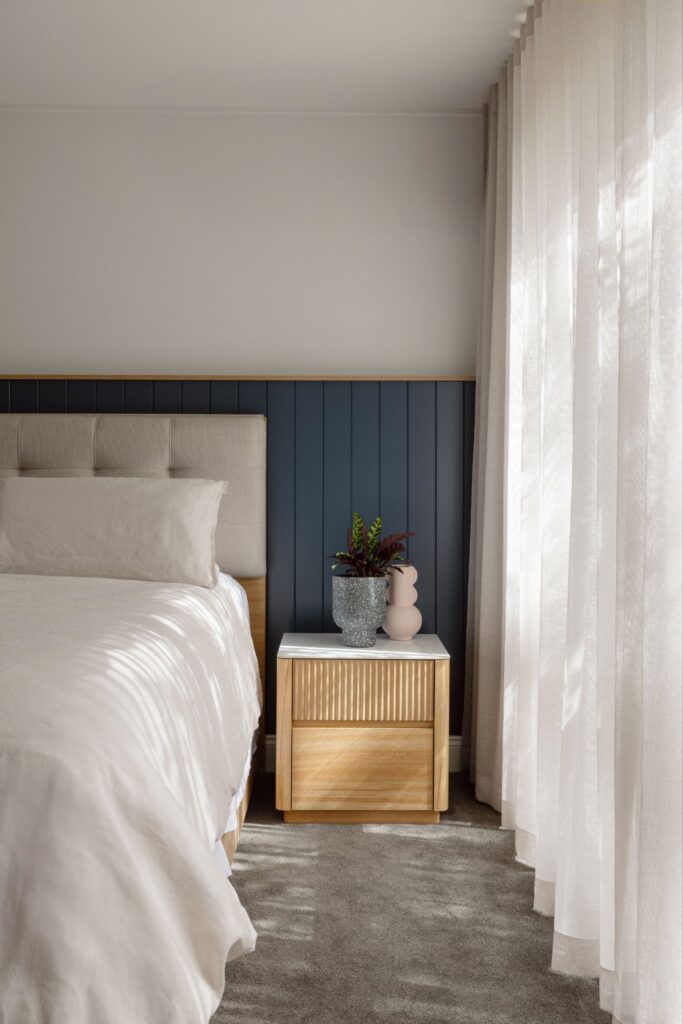
A space that minimises stimulation helps your brain prepare for sleep. Even when you’re not heading to bed, your bedroom should feel like a calm retreat you can escape to any time you need a break. Three things make the biggest difference.
Choose soothing, soft tones
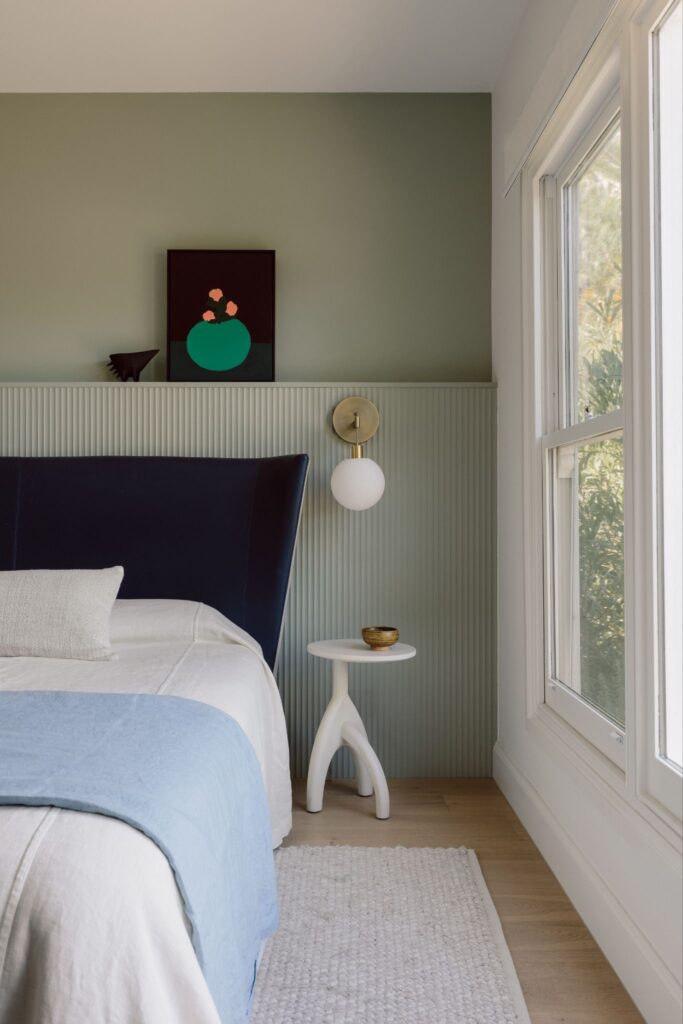
Colour creates a strong psychological reaction in us. It affects how our nervous system responds to a space. In the bedroom, use this to your advantage with softer, more muted tones that promote rest and calm.
Colour also has strong links to memory, which is why biophilic design leans on blues and greens. If you haven’t come across the term, biophilic design is about bringing the outdoors into the home, often through colour and texture, to create spaces that feel soothing and calm.
Nature-inspired colours tap into our natural response to greenery and water, which helps us relax.
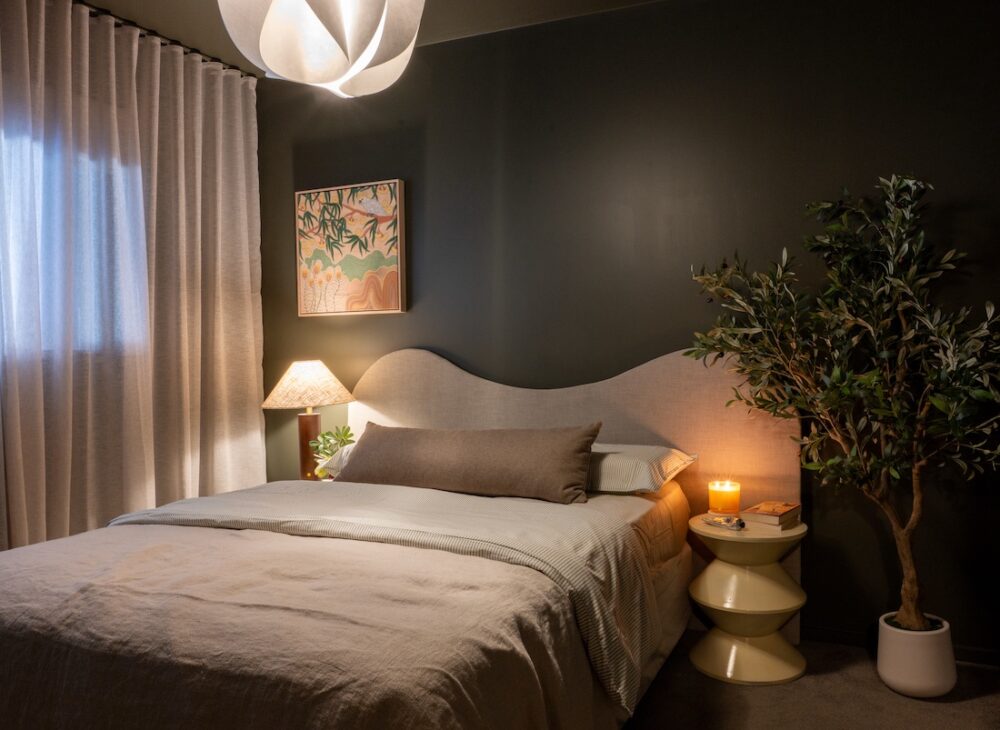
To maximise the effect, try colour drenching the space. This where you paint or finish most (if not all) the surfaces in the same tone. It’s become a popular way to give a room a cosy, moody feel, and it works especially well in the bedroom.
Get the layout right
Most of us have a natural preference for how we position ourselves in a room. Often this is against a solid wall, with a clear view of the space, but not exposed from the entry. It’s deeply instinctive, passed down from our ancestors. This positioning makes us feel more protected, which removes the sense of alertness we’d otherwise feel in a vulnerable spot.
Designing your bedroom with this in mind can add a real sense of safety and comfort. In practice, that means positioning the bed against a solid wall, angled from the door so you can see it without being easily seen from beyond it.
Keep noise to a minimum
Traffic, neighbours and other parts of your home can make it hard to relax and can disrupt sleep. Wall insulation, double-glazed windows and solid doors keep noise out best, but soft finishes also help dampen sound within the room itself.
Add carpet or rugs, upholstered bedheads or armchairs, soft fabric curtains, and timber furniture. These textures absorb noise instead of reflecting it, keeping the room quieter.
Transitioning your room into wind-down mode
Once your bedroom is designed to enhance calm, a few small habits before bed make a big difference too.
Soften your lighting
We all know about our circadian rhythm, but may not think much about what it actually needs. It’s our internal clock, telling us when to feel awake and when to feel sleepy, and it takes its cues from the light around us.
In the evening, it needs lower light and increased darkness to prepare the body for sleep.
To create a bedroom designed for sleep (and even throughout the rest of your home), avoid bright overhead lights.
Use floor lamps, table lamps and wall lights in the evening instead. And if you do need to switch on a ceiling light, fit a dimmer to lower the brightness. Warmer globes throughout the bedroom help too.
Block out light pollution
Light from street lights, neighbouring houses, car headlights and commercial signs can disrupt sleep. Closing the blinds or curtains helps, but not all window furnishings are equal. Common options like inset roller blinds and shutters don’t always fully block outdoor light.
To block as much light as possible, choose furnishings that extend at least 200–300mm past the window on all sides. The wider and taller they are, the better the coverage.
When specifying curtains, go floor-to-ceiling and wall-to-wall where you can. A pelmet (or one recessed into the ceiling, if you’re building or renovating) blocks light from the top too.
And make sure your window furnishings use genuine block-out material, not just ‘room darkening’ fabric, which won’t fully block light.

Put things away
The ‘clothes chair’, a basket of laundry still waiting to be put away, one too many spare blankets. Bedrooms tend to accumulate clutter. Visual clutter gives the brain more to process, adding a layer of stress that can stop you from properly relaxing.
As with every other room in the home, the right storage solves most of this. Think about your specific pain points and the storage that would work best for you:
- Underbed storage suits extra blankets and off-season doonas you want on hand without the clutter.
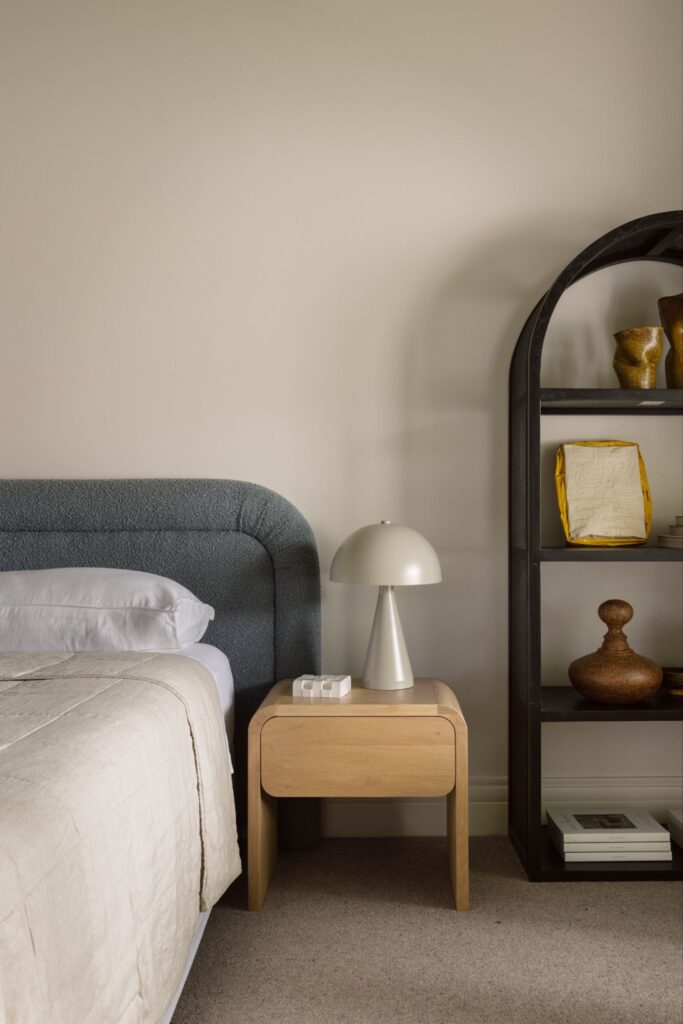
- Bedside tables with drawers, rather than open shelves, work well if you like everything close by ‘just in case’.
- Floating shelves make a great spot for your ‘to be read’ pile, if you like to read before sleep.
And one more thing to put away before bed: your devices. Studies consistently link screen use before bed to poorer sleep quality, largely because it suppresses melatonin production and keeps your brain alert.
For more small changes that really add up, take a look through this guide on 14 ways to make your bedroom healthier.
A bedroom designed for sleep won’t fix every sleep problem, but it removes a lot of the friction that gets in the way of a good night’s rest. Start with one or two changes, soften the lighting, sort the clutter, and build from there.
Thank you to Nina Di Marco for sharing her tips with us on Style Curator. For more from projects from YDM Design Studio, visit their website, or give them a follow on Instagram.
More bedroom inspo here
About the author

Nina Di Marco is the founder and interior designer behind YDM Design Studio. She specialises in creating thoughtful, nature-inspired interiors, with a strong focus on biophilic design and wellbeing. Through careful use of natural materials, light and spatial planning, Nina designs spaces that feel calm, functional and deeply connected to their environment.